by Marion Nestle

Currently browsing posts about: Plant-based

Mar 26 2026

Catching up with meat alternatives

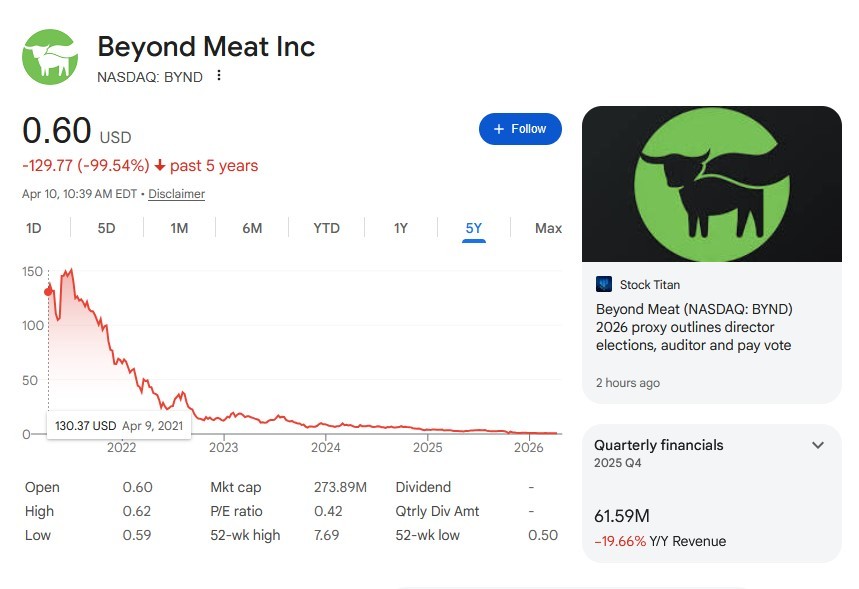
Plant- and cell-based meats are not doing as well as expected, and the new dietary guidelines, pro-meat and anti-highly processed don’t help this cause much.  Here are some items I’ve collected lately on this topic.

Comment

Alt-meat products comprise their own industry, one hard at work to make these products desirable, accessible, affordable, and acceptable.  Clearly, it has work to do on all counts.

Jan 29 2026

What’s happening with plant-based meat: a roundup

Here’s my most recent collection of items about plant- and cell-based meats, in an effort to try to figure out what is happening with the market for these products.  Prospects are not as bright as they were at the height of this trend, but these product have considerable staying power.  Time will tell.

Trends

Successes

Difficulties

Regulation

Jun 19 2025

The latest on plant-based foods: a round-up

Every now and then I like to collect items on what’s going on in the plant-based food world.

These products have their ups and downs, with much inconsistency.

Here are some recent items demonstrating some of those inconsistencies.

Apr 23 2025

Annals of food marketing: What’s new in food product development.

I’ve been collecting items on new and emerging food products.  Enjoy!

And then,

It’s a brave new food world out there.  I wonder how cell-cultured dinosaur meat tastes…

Mar 27 2025

Update on plant-based

Here’s a short collection of recent items on the plant-based food market.

Plant-based products

Research

  • Plant-based diet linked to good gut health: Could two of the biggest trends in the food and beverage sector be powerful allies? And what opportunities could this create for food and beverage manufacturers?… Read more
  • ProVeg International’s latest research assessed 422 plant-based meat and 251 plant-based milk alternatives across 11 countries and spanning four continents. It found that most plant-based products outperformed their animal-based counterparts in terms of environmental impact, using less land and water while generating fewer greenhouse gas emissions.  Nutritionally, plant-based meat substitutes were found to contain less saturated fat and more fiber than traditional meats. However, salt content remains a concern…inconsistent fortification and high salt and sugar levels remain challenges for the industry.
  • A multicriteria analysis of meat and milk alternatives from nutritional, health, environmental, and cost perspectives (PNAS 121 (50) e2319010121.  https://doi.org/10.1073/pnas.2319010121): Unprocessed plant-based foods such as peas, soybeans, and beans performed best in our assessment across all domains. In comparison, processed plant-based products such as veggie burgers, traditional meat replacements such as tempeh, and plant milks were associated with less climate benefits and greater costs than unprocessed foods but still offered substantial environmental, health, and nutritional benefits compared to animal products.

Comment: There is clearly a market for such products and they certainly seem to provide environmental advantages.  Whether their taste and texture shortcomings will allow the market to expand significantly remains to be seen.

Mar 19 2025

Dietary Guidelines in the MAHA era

USDA and HHS have announced an update on the dietary guidelines process.

A quick recap: The Dietary Guidelines Advisory Committee released its report last year.  The agencies are responsible for writing the actual guidelines, based on that report or not.

The USDA Secretary, Brooke Rollins, writes:

Secretary [of HHS] Kennedy and I have a powerful, complementary role in this, and it starts with updating federal dietary guidance. We will make certain the 2025-2030 Guidelines are based on sound science, not political science. Gone are the days where leftist ideologies guide public policy.”

Leftist ideologies?  She has to be kidding.  Since when did leftist ideologies influence the dietary guidelines?

Oh.  Wait.  Silly me.  I get it.  She means meat. 

Plant-based = leftist ideology.

You don’t believe me?  See Nina Teicholz’s editorial in the Wall Street Journal:  Meat will make America Healthy Again.

Ms. Rollins and Mr. Kennedy should reject suggestions from an expert committee that the 2025-30 federal guidelines place an even greater emphasis on plant-based proteins and that they recommend “reducing intakes of red and processed meats.” As the Agriculture Department found in 2010, there is either “no relationship” or a “limited inconsistent” relationship between any protein type and chronic diseases, including obesity, diabetes and cardiovascular disease.

Protein, sure.  But meat?  Consistent evidence for years indicates that people in industrialized countries would be healthier eating less meat and more plants.  Less does not necessarily mean none; it means less than currently consumed and a lot less in some cases.

If USDA and HHS are serious about Making Americans Healthier Again, they will revise the Dietary Guidelines according to the science.  In my view, that means advising eating less of ultra-processed foods, as well as meat.

Nov 25 2024

Industry-funded study of the week: plant-based meat alternatives

Plant-Based Meat Analogs and Their Effects on Cardiometabolic Health: An 8-Week Randomized Controlled Trial Comparing Plant-Based Meat Analogs With Their Corresponding Animal-Based Foods. Toh DWK, Fu AS, Mehta KA, Lam NYL, Haldar S, Henry CJ. Am J Clin Nutr. 2024 Jun;119(6):1405-1416. doi: 10.1016/j.ajcnut.2024.04.006. Epub 2024 Apr 8.

Erratum in: Am J Clin Nutr. 2024 Aug;120(2):459. doi: 10.1016/j.ajcnut.2024.06.012.

This study compared effects on cardiometabolic health among people eating meat or plan-based alternatives for 8 weeks.

Conclusion: An 8-wk PBMA (plant-based) diet did not show widespread cardiometabolic health benefits compared with a corresponding meat based diet.

Funding: This study was supported by Pinduoduo Incorporated (HongKong Walnut Street Limited). Pinduoduo Incorporated had no role in study design, study conduct, laboratory analyses, data collection, management and interpretation or the writing, reviewing and approval of the manuscript.

Comment

This study was sent to me by a reader, who viewed it as a rare example of an industry-funded study with results unfavorable to the sponsor’s interests.  He thought the “Walnut” in the company’s name indicated a plant-based bias.

I wasn’t so sure and wondered what Pinduoduo did, exactly.

According to Wikipedia, “Pinduoduo Inc. (Chinese拼多多Pinyin: Pīn duōduō) is a Chinese online retailer with a focus on the traditional agriculture industry. The business is the largest product of PDD Holdings, which also owns the online marketplace Temu.”

But it gets even better.  The American Journal of Clinical Nutrition published a correction to the paper:

The original funding statement was insufficiently elaborated and has been revised for greater clarity: Christiani Jeyakumar Henry [the senior investigator on this study] reports partial financial support provided by Pinduoduo Incorporated (HongKong Walnut Street Limited) which is an agricultural research firm.

This, then, is a standard example of an industry-funded—and conducted—study producing just the results wanted.  Another example of marketing research, alas.

Jun 11 2024

Interesting study of the week I: diet and Alzheimer’s

This seems to be a slow news week so I’m going to get caught up on research papers I think worth reading.

I first heard about this study from this video, from Dr. Greger’s newsletter announcement (I subscribe).

Here’s the study: Ornish D, et al.  Effects of intensive lifestyle changes on the progression of mild cognitive impairment or early dementia due to Alzheimer’s disease: a randomized, controlled clinical trial.  Alzheimer’s Research & Therapy volume 16, Article number: 122 (2024).  https://alzres.biomedcentral.com/articles/10.1186/s13195-024-01482-z.

It put 50 or so people in their 70s or older on “an intensive multidomain lifestyle intervention compared to a wait-list usual care control group” for 20 weeks.

People on the lifestyle intervention—diet, exercise, stress management, group support—did better.

The first author, Dean Ornish, runs a lifestyle modification program.

Comment: Wouldn’t this be terrific!  At the very least it is further evidence for the health benefits of a largely (not necessarily exclusively) plant-based diet.  Eating plant foods is strongly associated with prevention of any number of undesirable conditions.  The Alzheimer’s Association already recommends the DASH or Mediterranean diet patterns; both are plant based.

Eat your veggies.  Do so cannot hurt and might help—a lot.