by Marion Nestle

Currently browsing posts about: Advocacy

Jun 12 2026

Weekend reading: Flagstaff anti-hunger efforts

In September 2025, I was invited by the Flagstaff Family Food Center to give a talk on “Anti-Hunger Politics 2025: Planting Seeds for Resilience.”  This is an organization in Northern Arizona doing outstanding anti-hunger work.

The Center has just produced its 2025 Northern Arizona Food Equity Report.  The online copy is here.  It is well worth a look.

The Center sent this to me with this message:

We hope this resource can serve as a resource for multiple stakeholders across the food landscape, like you. Data and lived experience should always be the guiding light in this work, and we are proud to be part of a community that shares that sentiment and helps carry it out.

I wrote the Foreword to the report (see page 4).  Here’s what I said—and I meant every word:

It is my honor and privilege to introduce the impressive and utterly compelling
2025 Northern Arizona Food Equity Report. The Flagstaff Family Food
Center (FFFC) has done a superb job of collecting what must have been
incredibly hard-to-get data on hunger and food insecurity in the rural and
tribal communities it serves.

These data reveal a shocking truth: many people—even those working full- or
part-time—lack sufficient resources to feed themselves and their families
and require government and private food assistance to survive. Even working
people cannot keep up with the rising costs of housing, rent, utilities, and food.

Today, government food assistance programs like SNAP and WIC are under
siege and targeted for cuts, not increases. Private groups like FFFC do the
best they can to fill the gaps and meet the ever-increasing demands for
food assistance, especially from the most vulnerable members of society-
-children, the disabled, and seniors.

This report presents the stark facts: too many Northern Arizona residents
experience food insecurity, and their numbers are rising. It explains the
reasons for food insecurity, particularly for these communities, and draws on
the lived experience of community members to describe why this problem
requires an immediate solution. It describes potential policy solutions, and
the reality-based barriers to achieving them. And it presents this critically
important information without ever losing sight of the cultural context in
which food insecurity occurs in Northern Arizona.

These are tough times in America. Northern Arizona is fortunate to have a
group like the FFFC doing the hard work and clear thinking needed to solve
some of the most difficult problems facing our society today.

Aug 22 2025

Weekend reading: legal advocacy action guide

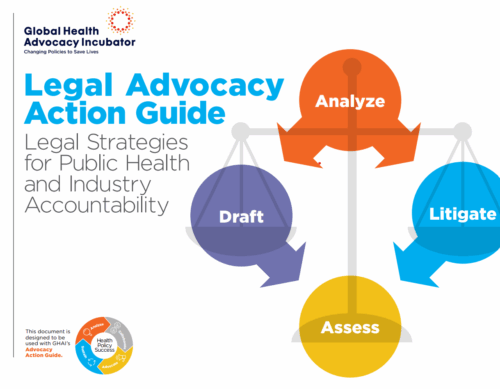
The Global Health Advocacy Incubator has issued an action guide to legal advocacy.

As GHAI puts it,

GHAI has launched a new Legal Advocacy Action Guide to show how legal professionals can advance public health objectives by identifying the most feasible legal strategies, drafting robust laws and regulation and using strategic litigation to promote and protect public health policy. Download it here, or read our sponsored Devex article summarizing how legal strategies can help advocates draft stronger laws and hold health-harming industries accountable. The new legal guide complements our Advocacy Action Guide.

This is a how-to manual for lawyers and advocates about how to use the legal system of a country to promote public health.  It’s divided into the 4 sections shown on the cover: Analyze, Draft, Assess, Litigate.

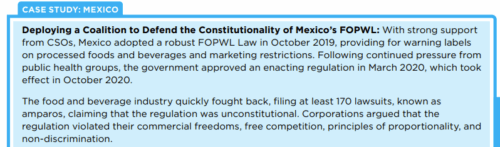
Each of these discussions comes with international case studies.

Here is an excerpt from the litigate section.

This guide is really useful.  Use it!

Apr 11 2025

Weekend reading: how to do research for advocacy purposes

If you are going to do advocacy (or be an activist, if you prefer), it’s likely to be far more effective if done right.  The steps begin with identifying the problem you want solved, deciding what you want to do to solve it, and figuring out who or what you have to convince to solve the problem.

Note: the best thing I’ve ever read about how to do this is the Midwest Academy’s how-to manual for activists, Organizing for Social Change.

Research is a crucial component of effective policy advocacy; it’s the basis of convincing change agents to agree to make the change.

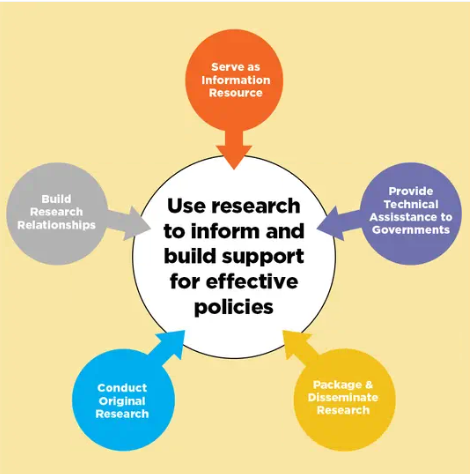
The Global Health Advocacy Incubator (“Changing Policies to Change Lives”) and the Campaign for Tobacco-Free Kids have  just published Research for Advocacy Action Guide: Five Stretegies to Use Research in a Policy Change campaign.

This tells you what to look for, how to find it, what to highlight, and how to present it. Download the Guide.

The research piece extends the information in these groups’ Advocacy Action Guide, a shorter version of the information from the Midwest Academy.

Advocacy done “by the book” has a much better chance of success than what might seem intuitive.  These guides are well worth reading.

Advocacy, by the way, is one of the words on the government’s new forbidden list.  This alone is why we need it more than ever.  Get to work!


Tags:
Mar 21 2025

Weekend reading: Thinking about food systems advocacy

The United Nations has issued a digital Food Systems Thinking Guide for UN Resident Coordinators and UN Country Teams with tools and information for working collectively towards food system transformation.

It is intended as a working draft.  It provides an easy mechanism for immediate feedback.

You have to do a lot of scrolling.  When you do, you will get to key questions:

  • What is a food systems approach and why does it matter?
  • What is the state of food systems in my country?
  • Who are the actors influencing the foods system?
  • What are barriers and entry points to food system transformation?
  • How can I integrate foods systems approach into programming?
  • How can I communicate and advocate for foods systems transformation?

I took a look at the actors.  This section provides resources for engaging with stakeholders.

I also looked at barriers.  It lists things to consider and provides resources.

And I looked at communication strategies.  This one is much more complete and has useful videos and key messages along with the resources.

I see this as an advocacy toolkit focused on food system transformation.  Happy to have it.  Try it and give the UN some feedback on it to make it even better and more complete.

Feb 12 2025

The new A-Word: Advocacy

As a long-time proponent of food advocacy, I’ve been collecting suggestions for what you and I can do to stop or counter presidential decrees that we think damaging to Americans and American democracy.

A lot of this is easy.  Do it!

  • State your opinion to Washington: Call the Capitol switchboard: (202) 224-3121.
  • State your opinion to your representatives. To find your representative, click here.  To find your Senator, click here.
  • Protect the vulnerable in your community; Urge your state’s attorney general to file complaints, injunctions, and restraining orders. To find your state attorney general, click here.
  • Join with others in your community to protest what needs to be protested. To find local organizations working on such issues, click Indivisible here.
  • Boycott companies enabling the illegal government takeover. Click here to find out a corporation’s politics.
  • Support groups doing the litigating. Track federal cases here.
  • Speak truth to power. Get news from reliable sources; spread it.
  • Take care of yourself; stay strong.

Much of this has been inspired by Robert Reich’s daily comments on current events, and his summary of needed actions. 

He says,

We will get through this, and we will prevail.”

But it will require confidence, courage, and tenacity. We need to stay healthy for this fight. We need to be fortified by those we care about. And we need to be there for those we love.

His final piece of advice: “keep the faith.”

Do not give up on America. Do not fall into the traps of cynicism and defeatism. Remember, Trump won the popular vote by only 1.5 points. By any historical measure, this was a squeaker…America has deep problems, to be sure. Which is why we can’t give up on it — or give up the fights for social justice, equal political rights, equal opportunity, democracy, and the rule of law.

Jul 31 2024

Food politics at the Olympics: Kick Big Soda Out

Here’s what started all this:

P&G, Coca-Cola make Olympics promotional push: Procter & Gamble and Coca-Cola are among the companies making a promotional push around the 2024 Olympic Games in Paris. P&G is planning to focus its efforts on specific brands such as Pampers diapers and Gillette razors, and Coca-Cola has plans for over 70 markets. Sponsors of the International Olympic Committee have spent 18% more than they did for the Tokyo Games in 2021, Comcast reports.

And here’s the response:

TODAY, the global digital campaign, “Hey Big Soda!”  was launched demanding an end to Big Soda’s sponsorship of sport…Please share the campaign with the hashtag #KickBigSodaOutofSport!

Sign the petition from Kick Big Soda Out urging the International Olympic Committee (IOC) to terminate the Coca-Cola Company’s sponsorship.

For more information: info@kickbigsodaout.org.

In its Week #2 report, Kick Big Soda Out says:

Over 34,000 people have signed the petition, and 60 organizations from 21 countries have endorsed the campaign as Campaign Partner Organizations!

Partner materials are here.

Examples from the Mexico team:

Food Politics in action!  Join the campaign.

Jan 18 2023

The School Nutrition Association calls for universal school meals

Will wonders never cease.  You might think that of course the School Nutrition Association, which represents people who cook and staff school meal programs, would be in favor of universal free meals for all school kids, but I was amazed to see its 2023 Position Paper.

This asks Congress to:

  • Make permanent the reimbursement rate increases for the National School Lunch and School Breakfast Program (NSLP/SBP), provided in the bipartisan Keep Kids Fed Act (PL 117-158).
  • Expand NSLP/SBP to offer healthy school meals for all students at no charge.
  • Ensure USDA maintains current school nutrition standards rather than implement additional, unachievable rules.
  • Reduce regulatory and administrative burdens.

I’m surprised because this is the same organization that fought improvements to the rules for school meals, as I have discussed previously.

I think it’s terrific that the SNA is now at the forefront of child nutrition advocacy.

Check out the resources on its website.

See what it’s doing to advocate.

Support these calls!

********

For 30% off, go to www.ucpress.edu/9780520384156.  Use code 21W2240 at checkout.

Jan 12 2023

Food Tank’s latest list

Here’s another one I found out from Twitter.

Food Tank’s lists are extremely useful, this one especially.

Here is one example:

11. Black Farmer Fund, United States

A community investment fund that aggregates and redistributes the wealth of social impact investors, Black Farmers Fund provides grants and loans to Black farmers and food businesses in New York. Their goal is to build resilient Black food economies. Through this work, the Fund seeks to repair Black communities’ relationships with food. “Black Farmer Fund seeks to provide an alternative way for community-driven Black farmers and food businesses in New York to access capital that is non-extractive, culturally-relevant, and governed by other Black farmers and food business owners,” says Olivia Watkins, President of the Fund.

I’m always asked: What can I join?  Who should I support?

This is one great starting place.

********

For 30% off, go to www.ucpress.edu/9780520384156.  Use code 21W2240 at checkout.

Tags: