by Marion Nestle

Currently browsing posts about: FAO

Dec 12 2025

Weekend browsing: FAO’s Statistical Yearbook

The Food and Agriculture Organization of the United Nations (FAO) has released its Statistical Yearbook 2025.

From the press release:

This edition of the Yearbook showcases a new indicator, the prevalence of minimum dietary diversity, which will support monitoring progress toward Sustainable Development Goal 2 (SDG 2): ending hunger and all forms of malnutrition. This indicator helps to measure progress by assessing whether segments of the populations, such as children and women, are consuming a diverse range of foods, which is crucial for ensuring adequate nutrient intake.

FAO also released a Statistical Pocketbook, which summarizes key facts and trends.

And it offers a FAOSTAT platform, the world’s largest database on food and agriculture, with free access to over 20 000 indicators across 245 countries and territories.

The data are almost entirely visual—charts and graphs.
I found it easier to fd things in the Statistical Pocketbook.
But all of these are terrific resources.  Enjoy!
Tags:
Oct 17 2025

Weekend reading: Progress (?) toward the Sustainable Development Goals

The Food and Agriculture Organization (FAO) of the United Nations has published a report measuring progress on achievement of Sustainable Development Goal (SDG) indicators for food and agriculture.

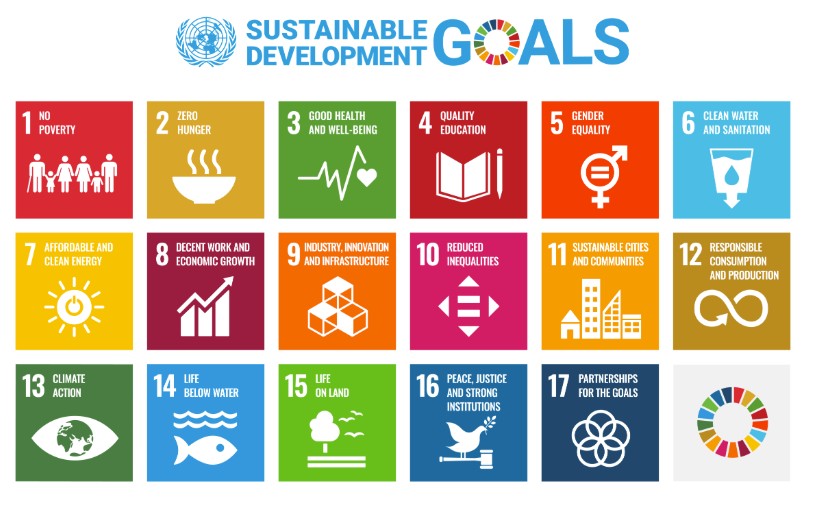
I am particularly interested in SDG #2: Zero Hunger: End hunger, achieve food security and improved nutrition and promote sustainable agriculture.

For example, for Indicator 2.1.1 for Target 2.1 (“By 2030, end hunger….”), the report says:

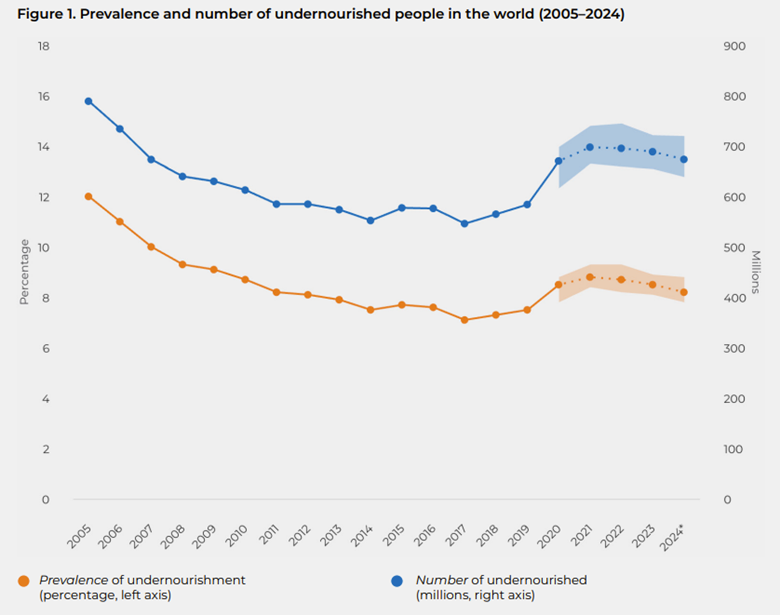
Updated global estimates point to some progress in decreasing world hunger in recent years. An estimated 8.2 percent of the global population may have faced hunger in 2024, down from 8.5 percent in 2023 and 8.7 percent in 2022. It is estimated that between 638 million and 720 million people faced hunger in 2024.

But the figures are considerably higher than they were in 2017, as shown here.

I also want to know what’s happening with chronic, noncommunicable diseases related to obesity.  For that, you have to go to the official UN progress report on the SDGs.

Target 3.4 41. Globally, in 2021, it is estimated that 18 million people under the age of 70 died from a noncommunicable disease. This figure represents more than half of deaths among people in this age range. The risk of premature death from any of the four main noncommunicable diseases (cardiovascular diseases, cancer, chronic respiratory diseases and diabetes) has decreased since 2015, but, despite increased awareness, the world is not on track to meet the target for the reduction of noncommunicable diseases by 2030.

Comment: Public health has a lot of work to do.  The SDGs were a great idea (with terrific iconography) but the 2030 deadline is fast approaching with attainment of most goals still well out of reach.  That is one reason why the destruction of the public health apparatus in the United States is so alarming, and the withdrawal of US support for international public health so deeply disappointing.


Tags: ,
Sep 12 2025

Weekend reading: Reports on food systems

Reports about one or another aspect of food systems are issued constantly and are hard to keep up with.  Here are links to two major sources.

I.  The International Panel of Experts on Sustainable Food Systems.

This group produces impressive food-system reports at regular intervals.

Its most recent is Fuel to Fork: What will it take to get fossil fuels out of our food systems?

Our food system is hooked on fossil fuels. From fossil-fuelled fertilizers and pesticides to plastic packaging, ultra-processed foods, and long-haul cold chains, fossil fuels are entwined at every link in the food chain. Food systems now consume 40% of all petrochemicals and 15% of fossil fuels globally – making them a key growth frontier for Big Oil. Yet food remains glaringly absent from the climate conversation…This report sets out what it will take to break that addiction – and why it must start now.

II.  FAO Committee on World Food Security, High Level Panel of Experts  

This group produces reports aimed at faciliating policy debates and policy making.  Its most recent is Building Resilient Food Systems (September 2025)

This report addresses the urgent need to enhance food system resilience amidst escalating environmental, political and economic challenges. It provides focused and action-oriented policy recommendations to build resilient food systems capable of withstanding shocks and stresses…The report highlights the need to shift…to approaches aimed at “bouncing forward” by means of transformative changes that address structural and systemic vulnerabilities…In sum, the report calls for immediate and sustained action to build food system resilience and ensure the right to food for all and the well-being of the planet for future generations.

Aug 15 2025

Weekend Reading: FAO food systems how-to

My former NYU colleague, Corinna Hawkes, who now directs the Agrifood Systems and Food Safety Division at FAO in Rome, sent a link to its new publication, Transforming Food and Agriculture through a Systems Approach.

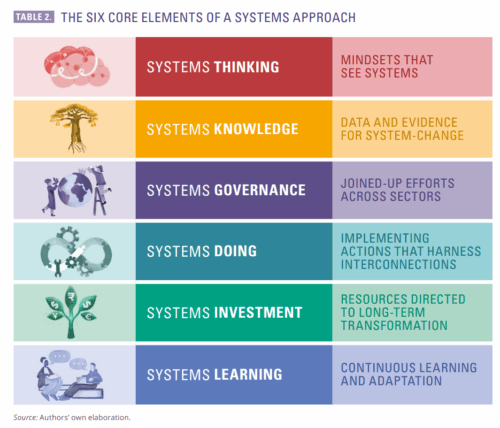
This publication provides an organizing framework for applying a systems approach to the transformation of food and agriculture. Building on evidence from systems science and practical real-world examples from countries, it identifies six core elements of a systems approach and specifies key practices and shifts needed to implement in practice. It includes examples from across the world of how systems-based practices are already being taken forward at different scales.

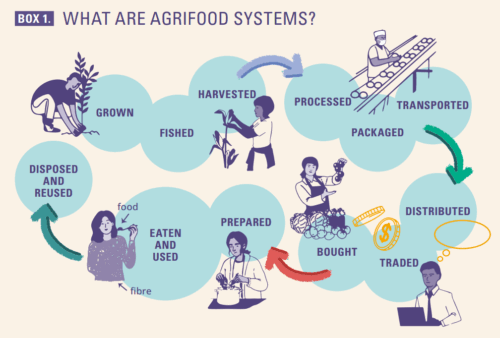
This publication is about food systems, why they matter, and how to use a food systems approach to improve food quality and access.

It is beautifully illustrated.  The definition:

And here’s how it works.

There is much more in this report.  I view it as a how-to manual. Use it!

Resources

Dec 6 2024

Weekend reading: FAO’s Statistical Yearbook 2024

Here’s the announcement:

The Food and Agriculture Organization of the United Nations (FAO) today launched its 2024 Statistical Yearbook, offering an in-depth overview of the most significant trends shaping global agrifood systems. This year’s edition highlights critical challenges, including increased temperatures over land, the ongoing global struggle with food insecurity alongside increasing obesity rates, and the environmental pressures faced by agricultural production….

The 2024 Statistical Yearbook is also available in a digital, interactive format and comes with a companion pocketbook, offering a clear reference to key data on agriculture, food security, and sustainability. It is part of FAO’s ongoing effort to improve data accessibility, complementing the FAOSTAT platform, which hosts the world’s largest collection of free agricultural statistics, covering over 245 countries and territories.

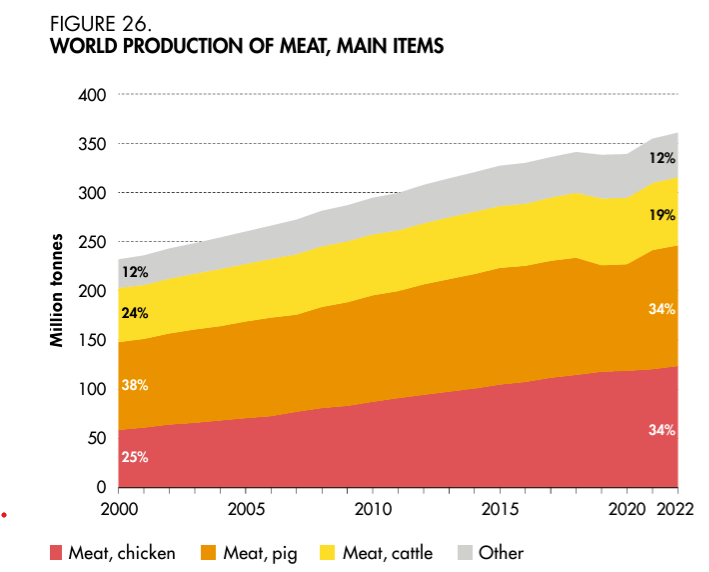
It’s got great graphics.  One example:

A few highlights:

  • The value of global agriculture: $3.8 trillion in 2022.
  • Proportion of global workforce employed in agriculture: a decrease from 40% in 2000 to 26% in 2022.
  • Hunger remains persistent: In 2023, between 713 and 757 million people were undernourished, 152 million more people than in 2019.  Most are in Asia and Africa.
  • Obesity is rising: More than 25% of adults in the Americas, Europe and Oceania are obese.
  • Meat production increased by 55% from 2000 to 2022, with chicken accounting for the largest share of this rise. 
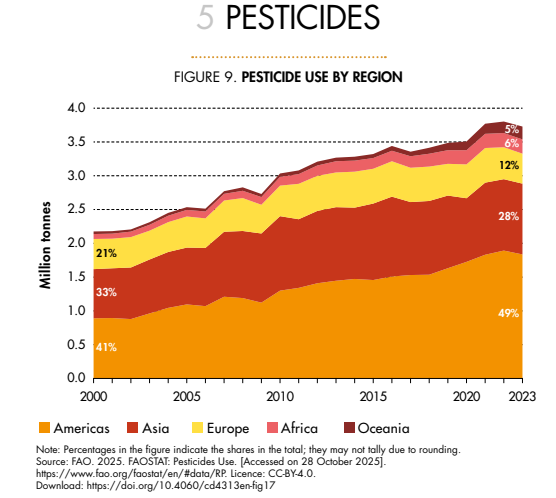
  • Pesticides increased by 70% between 2000 and 2022, with the Americas accounting for half global pesticide use.
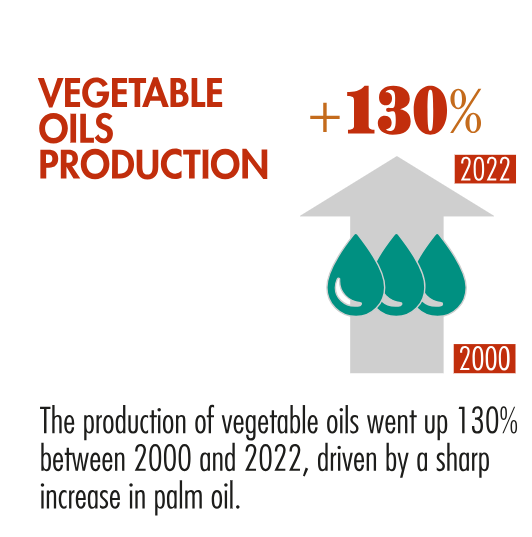
  • Vegetable oils grew by 133 percent between 2000 and 2021, largely driven by an increase in palm oil production.
  • Greenhouse gas emissions from agrifood systems rose 10% between 2000 and 2022, with livestock contributing to around 54% of farmgate emissions.
  • Kuwait, the United Arab Emirates and Saudi Arabia are withdrawing each year 9 to almost 40 times their renewable freshwater resources available.

Comment: Food systems need immediate transformation to become healthier and more sustainable. 

Nov 27 2024

This Week’s Report #2: WHO/FAO

What are healthy diets? Joint statement by the Food and Agriculture Organization of the United Nations and the World Health Organization

What this is about:

Healthy diets promote health, growth and development, support active lifestyles, prevent nutrient deficiencies and excesses, communicable and noncommunicable diseases, foodborne diseases and promote wellbeing. The exact make-up of a diet will vary depending on individual characteristics, preferences and beliefs, cultural context, locally available foods and dietary customs. However, the basic principles of what constitutes healthy diets remain the same.

The guiding principles: Adequate, Balanced, Moderate, Diverse.

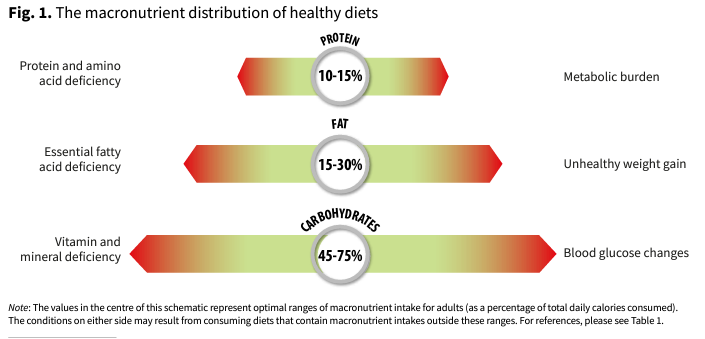
Here’s what they mean by Balance:

The actual guidelines are discussed under the Moderate principle.

  • Sodium: restrict to 2 grams/d (5 g table salt)
  • Sugars: restrict to 10% or less of daily calories.
  • Saturated fat: restrict to 10% of calories, with no more than 1% from trans fat

FAO and WHO duck making a clear statement about the next two issues, although their implications are clear.

  • Red and processed meat: even low levels may have negative health consequences
  • Ultra-processed foods: these have negative health consequences

I wish they had stated these recommendations more clearly.  Yes they are controversial with big industries lobbying against any suggestion to eat less of these foods, but these agencies, or at least WHO, should put public health first.

I recognize that these agencies have constituencies of nearly 200 countries, many with strong meat and ultra-processed food industries.  I also recognize that the agencies have no power other than leadership to get any of those countries to do anything.

They at least stated what they thought.  It’s up to country governments to take action.  I hope they do.

Nov 26 2024

This week’s report #1: FAO’s State of Food and Ag, 2024

It’s a slow-news holiday week so I’m going to use it to catch up on reports.  The first:

FAO: The State of Food and Agriculture 2024: Value-Driven Transformation of Agrifood Systems

FAO uses true cost accounting (TCA) to analyze global food systems.

  •  By improving on the hidden costs quantified in The State of Food and Agriculture 2023, this report unpacks the health hidden costs associated with unhealthy dietary patterns linked to an increased risk of non-communicable diseases (NCDs).
  •  Case studies show how targeted TCA assessments conducted across multiple agrifood systems categories provide more nuanced insights into the requisite agrifood systems transformation and potential actions moving forward.

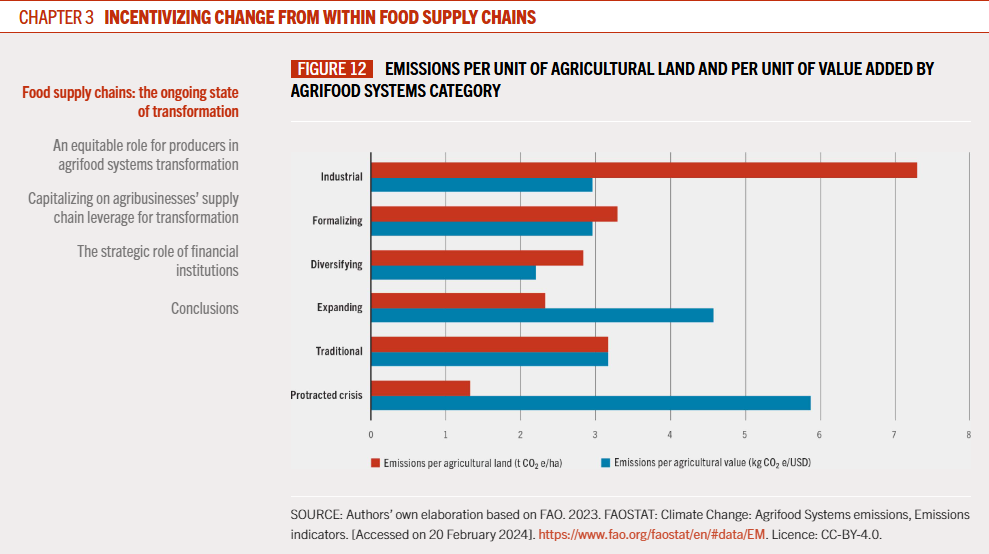
Here is an example of the kinds of analyses presented here.

And here are the resources:

Read the background papers:

Feb 23 2024

Weekend reading: FAO calls for food systems-based dietary guidelines

The U.N.’s Food and Agriculture Organization (FAO) is taking the lead on bringing dietary guidelines into the 21st Century.

It is calling for national dietary guidelines not only to be nutrient-based and food-based, but food systems-based.

Food systems-based guidelines extend beyond food-based guidelines that “provide advice on foods, food groups and dietary patterns to provide the required nutrients to the general public to promote overall health and prevent chronic diseases.”

Food system-based guidelines not only address health and nutritional priorities but also consider sociocultural, economic, and environmental sustainability factors.  This means

context-specific multilevel recommendations that enable governments to outline what constitutes a healthy diet from sustainable food systems, align food-related policies and programmes and support the population to adopt healthier and more sustainable dietary patterns and practices that favour, among other outcomes, environmental sustainability and socio-economic equity.

This is a huge advance.  It means that sustainability issues are essential components of dietary advice.

From now on, dietary guidelines that do not consider sustainability are out of date.

Note: By order of Congress, the 2015-2020 Dietary Guidelines did not consider sustainability in its meat recommendations and sustainability was off the table for the 2020-2025 Dietary Guidelines and also for the 2025-2030 version now underway.  This means the new guidelines issues in 2025 will be dated and largely irrelevant to the modern era.

Unless the Advisory Committee gets to work.  I hope it does.