by Marion Nestle

Currently browsing posts about: soy

Dec 2 2025

What’s going on with soybeans? Farm Action to the rescue

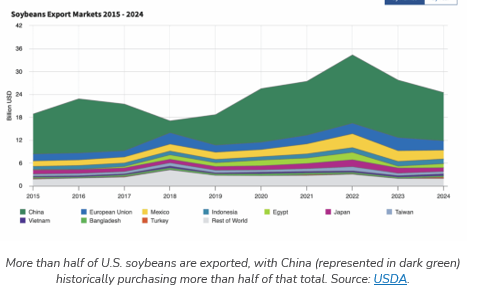
If you are wondering about the effects of China’s not buying US soybeans (and the Trump administrations bailout of Argentinean soybeans), Farm Action says the real problem started decades ago.  

Its analysis is well worth reading.

The numbers reveal how concentrated our agricultural system has become. In 2024:

The current crisis, it says, is “the result of decades of decisions that put export growth ahead of food security at home.”

Farm Action wants agricultural policies that will break the cycle of overproduction and bailouts.

  1. Grow food, not just livestock feed crops: Incentivize production of fruits, vegetables, and nutrient-dense crops for local markets.
  2. Reform subsidies: Redirect federal spending away from endless bailouts and toward programs that reward resilience and healthy food production.
  3. Rebuild local infrastructure: Invest in regional processing, storage, and distribution to give farmers alternatives to export markets.
  4. Break up corporate monopolies: Enforce antitrust laws to restore competition in input and processing markets.

How to do this, it does not say.  But these goals are worth advocacy.

Start on them now.

We might get lucky.
Sep 9 2025

Growing crops for fuel: Big Ag wins, the public loses

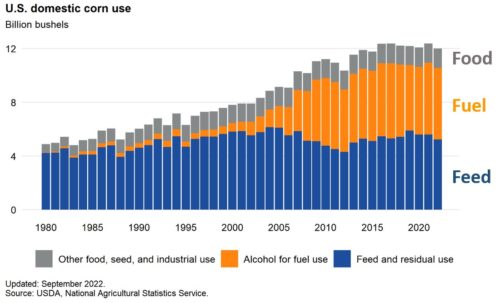
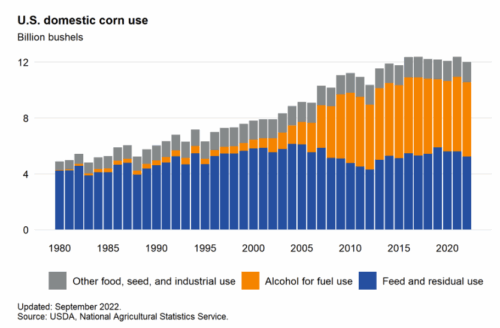
I know I’ve been posting this graph multiple times, but to me it sums up everything that’s wrong with the U.S. agricultural system.  Close to half the biofuels grown in the U.S. is used to make biofuels.

Here’s what happens to corn.

But that’s not all.  Roughly 40% of U.S. soybeans are converted to diesel fuel, according to a report from the World Resources Institute: Increased Biofuel Production in the US Midwest May Harm Farmers and the Climate.  

As the report explains,

  • Corn and soybeans are grown on 178 million acres of farmland.
  • They grown mainly in Midwest states — Illinois, Indiana, Iowa, Kansas, Michigan, Minnesota, Missouri, Nebraska, North Dakota, Ohio, South Dakota and Wisconsin.
  • 30 million acres of corn are used to produce ethanol, but ethanol from corn only supplied 4% of U.S. transportation fuel in 2022.
  • More than 40% of U.S. soybean oil supply has been used for biofuels since 2022; biodiesel made from soybeans supplied less than 1% of U.S. transportation fuel.

The rest is mainly used for animal feed.

All this means that the current subsidy system:

  • Encourages large agricultural producers to grow corn in places where it should not be grown (areas of low water, for example).
  • Takes up farmland that could be used to produce food for people.
  • Pollutes the environment with pesticides and herbicides, making local water sources undrinkable.
  • Promotes meat in the diet (it reduces the price of feed)

This is a really bad system that does nothing to help Make America Healthy Again.

Is the system likely to change?  Not a chance.

And now we have the One Big Beautiful Bill Act.

It is applauded by the trade association for ethanol and diesel producers.

The American Prospect, however, calls it “climate-wrecking.”

the Renewable Fuels Standard, created by the Energy Policy Act of 2005….was to cut down on greenhouse gas emissions by requiring the use of various biofuels for transportation and heating (and, not coincidentally, hand out gobs of cash to farm states like Iowa, a place which is kind of critical in presidential elections). Since these are created from plants that pull carbon out of the atmosphere, rather than digging up oil from the ground, it was thought this would cut emissions. [But] mainly it led to an explosion of farming corn and soybeans to be rendered into ethanol, which increased by about 500 percent between 2005 and today.

Take a look at who is made happy by this bill.

  • American Soybean Association
  • National Association of Wheat Growers (they want in)
  • National Cattlemens Beef Association

Big Ag wants to sell crops; it doesn’t care how they are used.

Add this to everything else that’s wrong with this bill.

Fortunately, there is at least one dissenting voice:

Meanwhile, House Agriculture Committee Ranking Member Angie Craig (MN-02) shared her negative sentiment towards the bill saying in a statement that “Today marks a grave turning point for our country, one which leaves rural communities and farmers behind, and places us on the road toward increased hunger, less prosperity and fewer opportunities for working families. This bill takes food away from millions of children, seniors, veterans and people with disabilities. Congressional Republicans have sold out ordinary Americans to pay for tax breaks for the ultra-rich and large corporations. The Republican budget is a disgrace, and every single person who voted for it should be ashamed.”

Tags: , ,
Jun 23 2025

Industry-funded study of the week: soy

I haven’t done one of these in a while.  This one is especially timely with all the fuss going on about the supposed toxicity of seed oils, soy among them.  To be clear: I do not see convincing evidence for this contention.

Still, it makes soy producers want to demonstrate that eating soy poses no health problems.  Hence, this study.

Effect of Soy Isoflavones on Measures of Estrogenicity: A Systematic Review and Meta-Analysis of Randomized Controlled Trials.  Gabrielle Viscardi, Songhee Back, Amna Ahmed, Shuting Yang, Sonia Blanco Mejia, Andreea Zurbau, Tauseef A Khan, Amanda Selk, Mark Messina, Cyril WC Kendall, David JA Jenkins, John L Sievenpiper, Laura Chiavaroli.  Advances in Nutrition, Volume 16, Issue 1, 2025, 100327, https://doi.org/10.1016/j.advnut.2024.100327.

The abstract begins:

Despite recommendations to increase plant food consumption for public and planetary health and the role that soy foods can play in plant-predominant diets, controversies around the effects of soy foods, especially soy isoflavones, are a barrier to their intake. Given their cardioprotective effects and ability to alleviate menopausal symptoms, addressing these concerns is particularly relevant to women…This systematic review and meta-analysis of randomized controlled trials aimed to determine the effect of soy isoflavones on measures of estrogenicity in postmenopausal women.

Conclusion: “Current evidence suggests that soy isoflavones do not exhibit estrogenic effects compared with non-isoflavone controls on 4 measures of estrogenicity in postmenopausal women.”

Funding: “This work was supported by the United Soybean Board (the United States Department of Agriculture soy check-off program)….”

Conflicts of interest:  Oh dear.  It’s hard to know where to begin, as the lists go on and on and on.  One of the authors “is the Director of Nutrition Science and Research at the Soy Nutrition Institute Global, an organization that receives partial funding from the principal funder, the United Soybean Board (USB).”  Others report financial ties to Soy Foods Association of North America, the Soy Nutrition Institute, and the United Soybean Board.

Comment.  Some of the authors on this review appear highly conflicted.  What is especially troubling is their apparent mocking of the concept of conflicted interests and conflating of personal views (which all researchers have, but these vary) with financial ties (which are discretionary and almost invariably produce results favorable to the sponsor’s interests).   Authors on this paper report as conflicts such things as awards, funding from professional societies, unpaid work for professional societies, vegan dietary preferences, and activities of their spouses and children—none of which are in the same category as financial ties to industries with direct interests in research outcome.  I don’t think this kind of conflicted research helps the soybean cause.

Mar 20 2024

Genetic modification of basic food-and-fuel crops: basically all

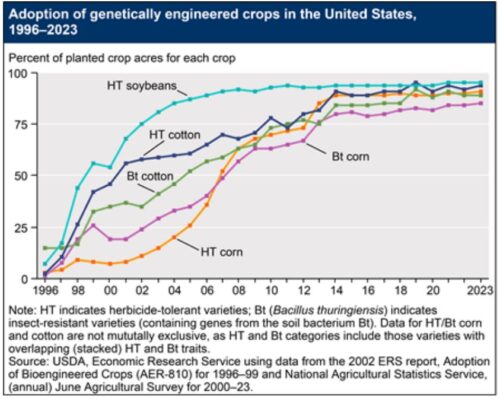
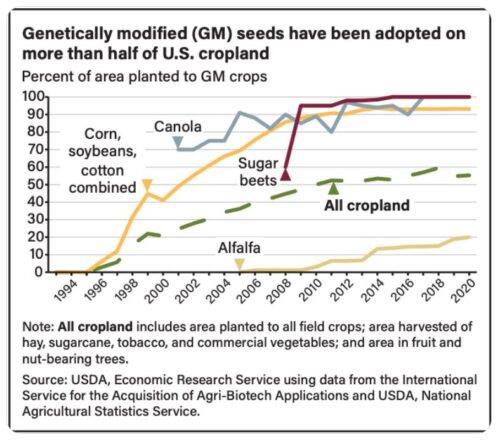
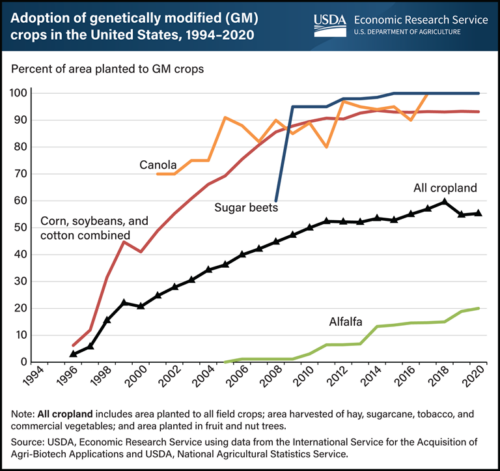
In case you haven’t been keeping track, virtually all corn, cotton, and soybeans (and sugar beets not on this graph) are genetically modified. 

Not only that, but they take up more than half of all cropland in the United States.

And half the corn is used to fuel automobiles.

Monoculture, control of the food supply, and lack of biodiversity, anyone?

Jan 11 2024

Food crops for biodiesel? Apparently so.

I’ve been appalled by the vast percentage of domestic corn production used to produce ethanol—nearly half.

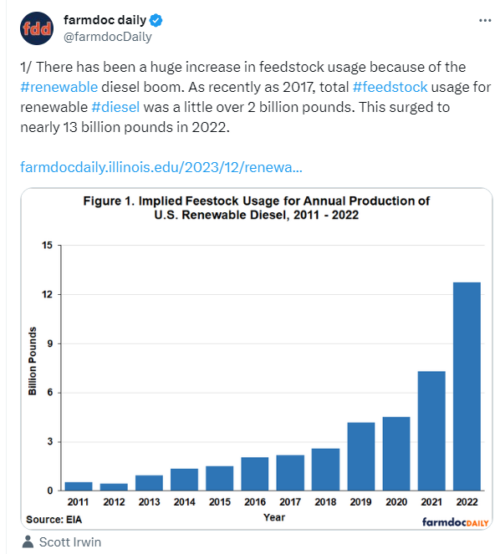
But I had no idea food crops were also being grown to make diesel fuels—until I saw this tweet/post:

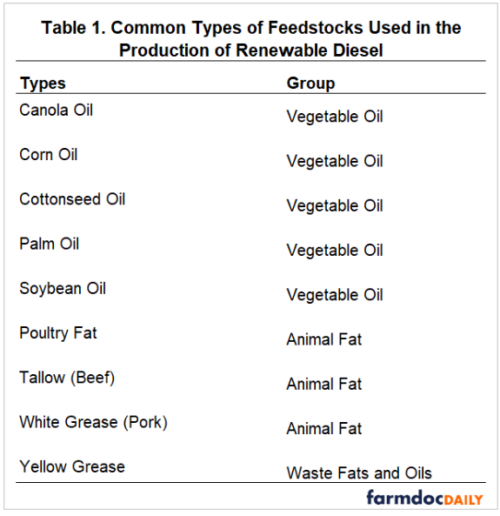
I went right to the source: Renewable Diesel Feedstock Trends over 2011-2022

The growth in renewable diesel production capacity in the U.S. was dramatic in recent years, with capacity in the last two years expanding by 1.8 billion gallons, or 225 percent (farmdoc dailyMarch 8, 2023). ..In a previous farmdoc daily article (May 1, 2023), we examined historical feedstock usage trends for the combined total of renewable diesel and biodiesel over 2011 through 2022.  Our most recent farmdoc daily article (December 11, 2023) article examined feedstock usage trends for biodiesel alone, and found that  soybean oil dominated as a feedstock for FAME [Fatty Acid Methyl Ester] production…(see the complete list of articles here).

Here’s what’s being used for biodiesel production.

I’m OK with animal fats for this purpose.  We aren’t raising animals specifically to produce biofuels.

But: Corn?  Soy?  Canola?

And don’t get me started on the implications of expanding palm oil production for this purpose, or what soybean production is doing to the Brazilian jungles.

This may be great news for Big Ag producers of these commodities, but could we please closely examine the implications of growing food for biofuels on food security, environmental degradation, water use, and climate change.

Note: The New York Times says our diets are to blame for ground water depletion--all those soybeans.  Another reason to question using soybeans to make fuel.  Biodiesel may be more energy efficient than ethanol, but growing crops for either depletes groundwater.

Oct 26 2023

Who knew? III. Corn-plus-soybean share of US crop acreage

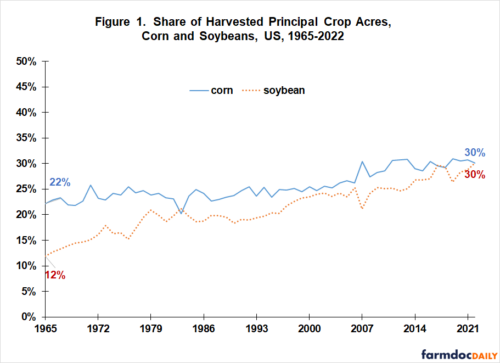
Here’s my third Who Knew post of the week, this one an at-a-glance explanation of what’s wrong with the US food system, courtesy of FarmDocDaily.

In 1980 or so, corn and soybeans comprised about 20% each of total crop acreage.  Now it’s 30% each.

To bring this point home:

Recall that more than 40% of US corn is used to feed animals and another more than 40% is used to make ethanol.

Monoculture, anyone?  Lack of biodiversity?  Greenhouse gas emissions?  A focus on feed and fuel, not food?

Time to rethink the food system!


Sep 28 2023

US industrial agriculture at a glance

A post on X (the site formerly known as Twitter) displayed this graph.

It comes from a policy report published on FarmDocDaily: Concentration of US Principal Crop Acres in Corn and Soybeans.

The bottom line: 30% of harvested acres is devoted to corn, and another 30% to soybeans.

These, of course, are largely genetically modified.

This is industrial agriculture at a glance.

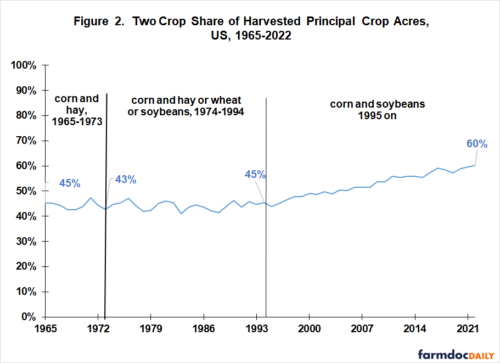
And here’s one more, worth seeing again in this context.

Regenerative agriculture anyone?

May 11 2023

The FDA warns molecular farming companies to watch out for food allergens

I was fascinated to see this article in Ag Funder News (to which I am now subscribing):  FDA warns molecular farming startups of risks if food allergens are not properly managed.  

If companies are putting the genes for animal proteins into crops, they need to be super careful not to introduce proteins known or likely to be allergenic.

The FDA’s  warning letter reminds companies to:

  • Consider the food safety risks posed by allergens
  • Plan early in development to manage the risks
  • Label products properly
  • Pay attention to legal requirements and food safety responsibilities

This took me right back to 1996 when I wrote an editorial for the New England Journal of Medicine about one such incident (scroll down to the third editorial in the pdf).

Investigators thought it would be clever to add a Brazil nut protein to soybeans to enrich the beans—used for chicken feed—in sulfur-containing amino acids especially needed by chickens for feather formation.  Unfortunately, some people are allergic to that protein.

The investigators were especially diligent about checking the allergenicity of the transferred protein.  By a truly remarkable coincidence, everything they needed to establish allergenicity was available.  The soybeans were withdrawn from the market, but all of this was somewhat of a miracle.

As I concluded,

This situation illustrates the pressing need to expand basic and clinical research on food allergies. More information about incidence, prevalence, dietary exposure, antigenicity, immune responses, diagnosis, and treatment would help researchers, regulators, and biotechnology companies predict whether transgenic proteins are likely to cause harm. In the special case of transgenic soybeans, the donor species was known to be allergenic, serum samples from persons allergic to the donor species were available for testing, and the product was withdrawn. The next case could be less ideal, and the public less fortunate. It is in everyone’s best interest to develop regulatory policies for transgenic foods that include premarketing notification and labeling. Industry benefits when the public is convinced that transgenic foods are safe, and stronger federal regulations would encourage such public confidence.

That was in 1996.  I could have written it yesterday.  No wonder the FDA is worried.