Feb 2 2010

Oh those Canadians: heart-checking McDonald’s!

Thanks to Dr. Yoni Freedhoff for keeping me current on Canadian food politics. His latest post is about the Canadian Heart and Stroke Foundation’s new program to heart-check fast food meals.  The Foundation hasn’t officially announced the program yet, although you can  find it buried in an obscure questionnaire on its website.  Pizza Hut also mentions its participation in the program on its website.   [Update February 3: Pizza Hut has now announced its participation in the program]

The program is coming soon and here’s Dr. Freedhoff’s political cartoon of what it is likely to look like .  No, this isn’t real.  Dr. Freedhoff’s point is that it could be.

What, you might ask, are the criteria for the heart check?  Let’s just try sodium: 720 mg per serving.   Even the late and not lamented Smart Choices program did better than that (480 mg per serving).

You think Dr. Freedhoff is exaggerating and this is improbable?  Alas, not so.  In Australia a couple of years ago, I took this snapshot at a McDonald’s on the Adelaide beach.

The check marks come from the Heart-Tick program of the National Heart Foundation of Australia.  So Canada is just now catching up.  Canadian readers: can’t you do something about this?  And American Heart Association: clean up your act too!

Addendum: Thanks to Lisa Sutherland for pointing out that what gets heart-checked in Canada is comparatively low in U.S. terms.  She sends McDonald’s nutrition information as proof.   Practically everything is higher in sodium than 720 mg.  When it comes to sodium, everything is relative, I guess, but all of it is way high.

Jan 1 2010

What’s up with food and nutrition in 2010?

My San Francisco Chronicle column, now appearing in print on the first Sunday of the month, is also online.

Its title:  “Hot food issues ready to boil over this year.”

Q: What do you think will happen with food and nutrition in 2010?

A: I wish I could read the leaves while I drink tea, but the best I can do is tell you which issues I’m going to be watching closely this year.

Hunter Public Relations recently asked 1,000 Americans which food-related issues they thought were most important in 2009. The top three? Food safety, hunger and food prices. For the decade, the winner was childhood obesity.

I have my own top 10 list of hot-button issues for 2010, and here they are:

  • Hunger: More than 35 million Americans get benefits to which they are entitled under the Supplemental Nutrition Assistance Program (formerly, food stamps). The economy may be improving, but not quickly enough for millions who have lost jobs, health care and housing. Will Congress do anything this year to strengthen the safety net for the poor? It needs to.
  • Childhood obesity: Rates of childhood obesity may have stabilized, but we all want to figure out how to prevent kids from gaining so much weight that they develop adult chronic diseases. I expect to see more efforts to improve school food and make neighborhoods more conducive to walking to school, riding bikes and playing outside.
  • Food safety regulation: Congress is sitting on a bill to give the Food and Drug Administration some real authority for food safety. The bill does not do what is most needed – establish a single food-safety agency – but is a reasonable step in the right direction. Let’s hope Congress gets to it soon.
  • Food advertising and labels: The long-dormant FDA and Federal Trade Commission are getting busy at last. In the wake of the Smart Choices fiasco, the FDA is working to make package labels less misleading and easier to understand. The agencies have proposed nutrition standards for products marketed to children. These voluntary standards fall far short of my preference – an outright ban on marketing junk foods to kids – but puts food companies on notice that their products are under scrutiny. The FDA is also working on designs for front-of-package labels. I’m hoping it chooses a “traffic-light” system that marks foods with a green (any time), yellow (sometimes) or red (hardly ever) dot. Expect plenty of opposition from the makers of red-dotted products.
  • Meat: The meat industry has been under fire for raising food animals under inhumane conditions, using unnecessary hormones and antibiotics, mistreating immigrant labor, and polluting soil and water. Now it is also under fire for contributing to climate change. Recent films like “Food, Inc.” and “Fresh” and books such as Jonathan Safran Foer’s “Eating Animals” are encouraging people to become vegetarians or to eat less meat to promote the health of people and the planet. I’ll bet the meat industry pushes back hard on this one.
  • Sustainable agriculture: The back-to-the land movement has loads of people buying local food, choosing foods produced under more sustainable conditions and growing their own food. The number of small farms in America increased last year for the first time in a century. Seed companies cannot keep up with the demand. It will be fun to follow what happens with this trend.
  • Genetically modified (GM) foods: My book, “Safe Food,” comes out in a new edition this year, so I am paying especially close attention to debates about GM foods. The FDA’s 1994 decision to prohibit labeling of GM foods continues to haunt the food biotechnology industry. By now, nearly all American soybeans and sugar beets (95 percent) are GM, as is most corn (60 percent). But when the U.S. Department of Agriculture approved GM sugar beets in 2005, it neglected to perform the required environmental impact assessment. On that basis, environmental groups want to ban further planting of GM sugar beets. The dispute is now in the courts.
  • Chemical contaminants: The FDA has yet to release its report on the safety of bisphenol A, the plastic chemical that acts as an endocrine disrupter. Shouldn’t it be banned? The bottling industry says no. Watch for fierce arguments over this one.
  • Salt: Nutrition standards allow 480 mg sodium (the equivalent of more than 1 gram of salt) per serving. A half cup of canned soup provides that much. A whole cup gives you 4 grams and the whole can gives you 8 grams – much more than anyone needs. Nearly 80 percent of salt in American diets comes from processed and restaurant foods. Companies are under pressure to cut down on salt. Will they? Only if they have to.
  • Dietary advice: The new edition of Dietary Guidelines for Americans, which the government publishes every five years, is due this year. What will it say? I can’t wait to find out.

Those are the issues I am tracking these days. My one crystal-ball prediction? We will be hearing a lot more about them this year.

Happy new year!

Dec 21 2009

Food labeling: yet another update

The FTC Forum last week got everyone going about food labels.  Here are the latest items to hit my inbox:

Traffic light front-of-package labels may do some good after all: As I explained in a previous post, British investigators did a study showing that the green-yellow-red traffic light dots on food packages do not necessarily help people make healthier choices.  Now, another British scientist argues that the study showed no such thing; at best, it showed that more research is needed to see how consumers interpret and act on those signals.

European Food Safety Authority (EFSA) approves some (weak) omega-3 claims: Under great pressure from food companies desperate to make claims for omega-3 fatty acids, EFSA is allowing three, if somewhat grudgingly:

  • DHA intake can contribute to normal brain development of the foetus, infant and young children
  • DHA intake can contribute to normal development of the eye of the foetus, infant and young children
  • DHA intake can contribute to the visual development of the infant

“Can,” I suppose, is a bit less conditional than “may,” but these are not strong claims.  And they say nothing at all about making kids smarter.  Under these rules, that  “brain development” claim on Nestlé’s omega-3-fortified Juicy Juice drink (the one I find so absurd), would be OK.  But anything more specific, the EFSA committee said, would have to be backed by further science.

FDA food labeling rules: if after all the fuss about serving sizes at the FTC Forum, you want to know what FDA really says about them,  you can find the details on the FDA food labeling website.  On that site, click on Label Formats/Graphics to find the current rules on serving sizes.  Good luck making sense of them.

That’s more than enough about food labels for the moment.  It’s the holidays and time to talk about something cheerier.  Stay tuned.


Dec 4 2009

Food agencies at work (or not): FDA

Front-of-Package Labels: The FDA is hard at work trying to do something about public understanding of food labels.  What with the fuss about the Smart Choices program (now withdrawn), FDA wants to get the front-of-package labeling under control.  It is considering various formats for giving a quick overview of the nutritional quality of food products.  FDA is asking for public comment on the various formats (see Federal Register notice).

The FDA chose five versions (plus variations) for comment:

  1. A mini Nutrition Facts version called Nutrition Tips
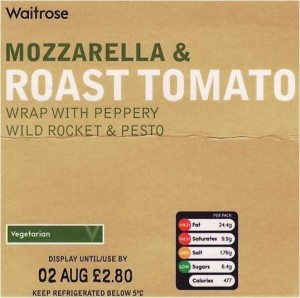
  2. A UK traffic lights version
  3. A version like Hannaford’s Guiding Stars
  4. A version like the discontinued Smart Choices
  5. One that just highlights calories/servings

I rather like this one, a variation of #1 (colorful, easy to understand, not too cluttered, and makes calories clear).

Scan10266

The Nutrition Facts Panel: The FDA also is taking another look at the Nutrition Facts panel on the back of food packages.  It is seeking public comment on  a plan for consumer research to test understanding of elements on the Nutrition Facts panel.  Here’s the Federal Register notice with all the information about what’s going on and where to file comments.

What’s interesting about this is that the FDA has great social science researchers on staff.  They’ve been kept under wraps the last eight years and apparently are being let loose again.  Even so, they don’t get to just go out and do studies like we academics do (with human subjects approval, of course).  Oh no.  First, they have to announce that they plan to do the studies (which they did some time ago) and get comments on the idea.  Then they do the research plan and have to ask for further comments on the research design.  That’s what this notice is about.  Once they deal with these comments, they can finally get to work.    It’s a miracle if they do anything at all.  Keep them busy: send comments!

Agency Transparency: The Association of Health Care Journalists (ACHJ) and ten other journalism organizations have filed a complaint.  The FDA, they say, is still requiring journalists to obtain permission from an agency official in order to conduct interviews with staff members.  This is a leftover from the Bush administration.  Time to get rid of it.

Blogging: It is especially time to open up to reporters because Michael Taylor, who is now senior advisor to the FDA commissioner, is now blogging on the Atlantic Food Channel (which also reprints my posts).  If he can blog, FDA staff can talk to reporters.

Addendum: Beverages pretending to be dietary supplements: The FDA has just issued guidance to the beverage industry to stop putting herbal supplements into beverages and calling them dietary supplements so they can get around food rules on health claims.  If a beverage is consumed as a food, it should be labeled as a food.  Guidance, of course, is non-binding but I see this as a warning that the FDA is going to be enforcing its own rules.  Good show!

Nov 10 2009

Raise your hand for chocolate milk?

Thanks to Marlene Schwartz of the Rudd Center for Food Policy and Obesity at Yale for alerting me to this Associated Press report about the new dairy industry campaign to rescue chocolate milk from the food police.  This, you will not be surprised to hear, is the latest activity funded by the milk checkoff program, a USDA-administered program that requires certain commodity producers to contribute funds to a kitty to be used for generic marketing.  One such program is MilkPep, the incredibly well funded marketing group that together with the Dairy Council invented the “Got Milk” mustache campaign.

MilkPep is now the proud defender of chocolate milk against efforts to get it out of schools.  Why would anyone be so mean as to want to do that?  Maybe because chocolate milk has more sugar and calories than plain milk?  No matter.  MilkPet is stepping up to the plate.  Its $500,000 to $1,000,000 “raise your hand for chocolate milk” campaign takes on those pesky nutrition advocates who think that kids ought to be eating something other than sweets in schools.

The rationale for the campaign?  If you get rid of chocolate milk, kids won’t drink milk.  You will deprive kids of the nutrients in milk and contribute to the “milk deficit.”   After all, this rationale goes, chocolate milk is better than soda (Oops.  Didn’t we just hear something like this relative to the Smart Choices fiasco?).

OK.  Let’s look at what this is really about:

  • Schools represent sales of 460 million gallons of milk – more than 7% of total milk sales
  • More than half (54%) of flavored milk is sold in schools
  • Chocolate milk is a key growth area for milk processors

MilkPep has produced a slide show to help companies take action (I apologize for not linking to it but I have not yet succeeded in uploading a large file, despite many attempts).  The slides advise allies to go on a “chocolate milk offensive”:

  • Do public relations
  • Get bloggers on board
  • Engage moms through social media
  • Take advantage of SuperBowl ads – the campaign intends to fund one
  • Reach out to media

Doesn’t this sound like something ripe for satire?  Colbert!  We need you!

Additions:  Do not miss the YouTube version.  And here’s theofficial MilkPep press release.  Note the testimonials to the benefits of chocolate milk.  It’s a health food!

Oct 30 2009

Industry abandons Smart Choices!

The Connecticut Attorney General, Richard Blumenthal, announced yesterday that all eight food companies involved in the Smart Choices program have agreed to drop out pending his investigation and the FDA’s decision about front-of-package labeling.  Says Blumenthal:

Food manufacturers now realize that continued use of the logo would only mislead and compound consumer confusion. Other food labels richly deserve the same scrutiny — which we will give them with relish.

My investigation into Smart Choices, now supported by the FDA, continues to seek any scientific research or evidence behind a program that promotes mayonnaise, sugar-loaded cereal and ice cream as Smart Choices.

Many in the food and beverage industry have sugarcoated their labels — diverting and distracting consumers from nutrition truth, and pushing them toward obesity and disease. Self responsibility and good parenting are key to healthy lifestyles, but impossible when food manufacturers misguide them.

Our initiative should send a message to other food manufacturers that labeling must be completely truthful and accurate without hype or spin, especially when appealing to children. I am strongly encouraged by interest in our investigation by other attorneys general who can form a powerful coalition against misleading or deceptive food labeling.

Keep an eye out for what other city and state attorneys will be doing about food labels.   FDA: get busy!

Oct 28 2009

San Francisco takes on Cocoa Krispies!

Now that the Smart Choices program is on hold, it’s time to take a look at what else is on food packages these days.  My current favorite example is the huge IMMUNITY banner across Kellogg’s Cocoa Krispies.

ImmunityI don’t know how you interpret this but my mind boggles at the very idea that eating Cocoa Krispies might protect kids against swine flu.

Apparently, the minds of the San Francisco attorney general’s staff are equally boggled.  They just sent a warning letter to Kellog:

“Specifically, the Immunity Claims may falsely suggest to parents that cereals like Cocoa Krispies are more healthy for their children than other breakfast foods that are not high in sugar and not highly processed.  The Immunity Claims  may also mislead parents into believing that serving this sugary cereal will actually boost their child’s immunity, leaving parents less likely to take more productive steps to protect their children’s health.”

The city attorneys are asking Kellogg to provide copies of all of the consumer and scientific research the company used to establish this claim, or else.  If they don’t get these documents, they will “seek an immediate termination or modification of the advertising claim….”

Good idea.  I can’t wait to see how Kellogg’s – ever at the leading edge of advertising claims – will respond.

But wait!  Shouldn’t the FDA be taking this on?

Oct 26 2009

Which cereals do companies push hardest? The sugary ones!

Kelly Brownell and his colleagues at the Rudd Center at Yale have produced another well researched – and in this case, gorgeously presented – report on the ways cereal companies market their products.

Even a quick look at its summary gives an unambiguous result: most of the marketing dollars are aimed at pushing sugary cereals at kids.  Companies use TV and the Internet to push the least nutritious cereals.

None of this is particularly surprising but it’s great to have the data.  Information about marketing budgets for specific products is hard to get.  It is easy to understand why companies would rather nobody knew how much they spent to get kids to pester their parents to buy Froot Loops or Cocoa Puffs.

Most troubling is the dual marketing.  Advertising aimed at kids pushes sugar.  Advertising aimed at parents uses health claims and self-endorsements like the late (and not lamented) Smart Choices program I discussed in previous posts.

Companies may argue that sugary cereals are good because they encourage kids to drink milk, but the Rudd Center researchers also have shown that kids are happy to eat non-sweetened cereals  Furthermore, if they add their own sugar, they are putting in less than the cereal companies put in.

The bottom line: forget industry self-regulation.  It doesn’t work.

FDA: it’s time to take on health claims.

Oct 23 2009

Smart Choices suspended! May it rest in peace.

Big news!  According to an AP report today, the group that runs the Smart Choices program has announced that it will “postpone” active recruitment of new products and will not encourage use of the logo while the FDA is in the process of examining front-of-package labeling issues.

Who says the FDA does not have any power?  I think it does.  And let’s welcome it back on the job.

As for my nutrition colleagues in the American Society of Nutrition, the group that competed to manage the program and has been defending it ever since, here’s what they now say:

Dear ASN Member,

Today the Smart Choices Program announced the decision to voluntarily postpone active operations and not encourage wider use of the Smart Choices Program logo. This move follows an announcement by FDA Commissioner, Margaret Hamburg, M.D. on Oct. 20, 2009, which said that the agency intends to develop standardized criteria on which future front-of-package (FOP) nutrition or shelf labeling will be based. In a letter captioned, “Guidance for Industry” and posted on its website, the FDA stated: “We want to work with the food industry − retailers and manufacturers alike − as well as nutrition and design experts and the Institute of Medicine, to develop an optimal, common approach to nutrition-related FOP and shelf labeling that all Americans can trust and use to build better diets and improve their health.”

ASN commends the FDA on its announcement of intent to develop standardized criteria on which front-of-pack nutrition and shelf labeling could be based. In addition, ASN fully supports the decision of the Smart Choices Program Board of Directors to postpone their active operations as FDA works to address both front-of-pack and on shelf labeling.  “ASN will continue to provide nutrition science expertise within the dialogue on front-of-pack labeling in order to best serve the interests of the health of Americans,” said ASN President Jim Hill in a statement to media.

Sincerely,

ASN Executive Board

As I have explained in previous posts about Smart Choices, the ASN should never have gotten involved in this dubious enterprise in the first place.  The organization was lucky to get out of this so easily.  I hope it does not make the same mistake again.

The press had a field day with the Smart Choices logo on Froot Loops.  As Rebecca Ruiz at Forbes puts it, “the uproar over the program has conveyed a definitive message to industry: Don’t try to disguise a nutritional sin with a stamp of approval.”

Oct 20 2009

FDA to clean up front-of-package mess

The FDA has a new “Dear Industry” letter announcing that it is going to set some rules for those “better-for-you” stickers on the front of junk food packages.  Why?   “FDA’s intent is to provide standardized, science-based criteria on which FOP [front of package] nutrition labeling must be based.”

What this is about, of course, is all those self-endorsement labels food companies like PepsiCo (Smart Spot),  Kraft (Sensible Solution), and many companies collectively (Smart Choices) have been putting on their products.

The companies set up their own nutrition criteria and then applied those criteria to their own products. Surprise!  A great many of their products qualified for the “better-for-you” labels.

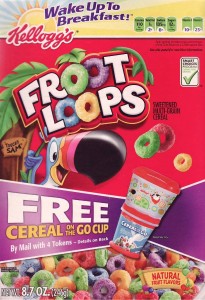
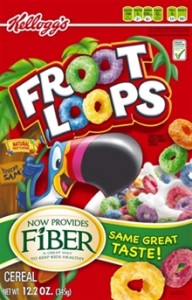
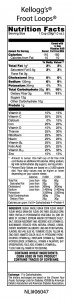
I’m guessing Smart Choices was the final straw for the FDA. The idea that the Smart Choices check mark could go onto Froot Loops was so astonishing, and the subject of so much ridicule, that the FDA had to act.  If nutrition criteria are developed independently, most junk foods would not qualify.

The FDA also says it will be testing how well consumers understand different kinds of package labels.  It gives a bunch of examples.  Want to know how the FDA is thinking about this?  Check out its handy backgrounder, which if nothing else is an excellent introduction to the entire issue of front-of-package labels.

Have a preference about what to use?  Write the FDA at this address:

Division of Dockets Management (HFA-305), Food and Drug Administration, 5630 Fishers Lane, rm. 1061, Rockville, MD 20852. All comments should be identified with the title of the guidance document: Guidance for Industry: Letter Regarding Point of Purchase Food Labeling.

Addendum, October 22: Here are two additional documents to add to the collection.  First, a letter to representative Rosa DeLauro responding to her complaint about the Smart Choices program.  Second, is a a summary of the talking points used by Commissioner Margaret Hamburg in her press conference on the new FDA initiatives.   My conclusion:  the FDA is back on the job!

It’s about time the FDA got back on the job. This is in reaction to the self-endorsements food companies have been making on package labels. The way this works is that companies set up their own nutrition criteria and then apply those criteria to their own products. Guess what. Lots of their products qualify for better-for-you labels. Examples: PepsiCo (Smart Spot) and Kraft (Sensible Solution), and now lots of companies working together (Smart Choices). I think Smart Choices was the final straw for the FDA. The idea that its check could go onto Froot Loops made it clear that the bar had to be set higher. Yes, they are suggesting something voluntary, but if the nutrition criteria are honest enough, junk foods won’t qualify.

Page 1 of 3123