Currently browsing posts about: Walmart

Mar 5 2013

Let’s Move! Celebrates its 3rd Birthday–At Walmart’s

Last week, First Lady Michelle Obama did a national tour to celebrate the third anniversary of her Let’s Move! campaign to end childhood obesity within a generation.  

As explained in the White House press release, the tour was to focus on school lunches, physical activity, and getting businesses involved—“Healthy Families, Thriving Businesses.”

To that end, she visited a Walmart in Springfield, Missouri to congratulate the company on its pledge to open 300 stores in communities with limited access to affordable healthy foods, to reduce salt and sugars in its products, to make healthier food more affordable, and to put front-of-package logos on healthier foods.

As the press release explained (and as Walmart says in its own):

Walmart is one of many businesses across the country that is making healthy changes to support their customers, because they recognize that what’s good for their customer’s health is also good for their business. Following the tour, Mrs. Obama will deliver remarks about how supporting the health of American families is also good for business, and remind consumers that it’s up to them to continue demanding healthier options.

Did this mean that the new emphasis of Let’s Move! would be on personal responsibility?  Mrs. Obama explained further in the Wall Street Journal:

Take the example of Wal-Mart. In just the past two years, the company reports that it has cut the costs to its consumers of fruits and vegetables by $2.3 billion and reduced the amount of sugar in its products by 10%. Wal-Mart has also opened 86 new stores in underserved communities and launched a labeling program that helps customers spot healthy items on the shelf.

The best reported account of this visit is by Eddie Gehman Kohan at Obamafoodorama.  She points out that this particular Walmart is not located in an underserved community.  She also did the math and calculated that the savings in the cost of fruits and vegetables work out to 16 cents per week per customer.

At this point, I thought it was time for a field trip.

I was in Ithaca, NY over the weekend and checked out its Walmart to see what its Let’s Move!-inspired actions looked like on the ground.  I particularly wanted to see how its “Great for You” labeling program was working out.   This, you may recall, identifies healthy products with this logo:
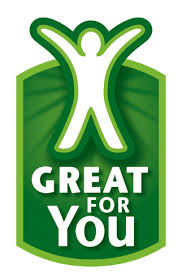
Although the labeling program was announced a year ago, I had to search hard to find any examples.  Here are a couple in the produce section.



Only a few bins of produce were marked with those labels.  There’s a tiny one in the picture below in front of some clementines from Honduras, but none of the other foods in that section had labels.



I could not find another such label anywhere else in the store.

How else was this Walmart promoting healthier eating?  Its big in-store promotion that day was right along the produce section: a large display of Oreo Mega Stuf cookies (the ones with twice the filling and twice the calories of regular Oreos).  A man was handing out free samples and dollar-off coupons.  When I picked up a package to read the label he said “Don’t do that. Treat yourself.”

The Ithaca Walmart is a quarter of a mile from Wegmans, so I did some comparison shopping.  I was surprised to find that the prices were remarkably close—about the same or only slightly higher (explaining why the Walmart price advantage is only a couple of cents a day).

But the people who shopped in Wegmans looked more affluent and healthier than Walmart shoppers.

Although the prices are similar—and the fresh foods at Wegmans are of higher quality—that Walmart is much less crowded, sparsely staffed by poorly paid employees,  and somehow makes it more comfortable for very poor people to shop there.

My conclusions:

  • Walmart makes produce available at market prices to people who don’t feel comfortable going to Wegmans.  
  • Walmart promises to open stores in low-income areas where Wegmans will not.

On this basis, does Walmart deserve this high level of White House praise and attention?

I don’t get it. 

Feb 1 2013

Wonder of wonders: food companies favor GMO labels!

Stephanie Strom reports in today’s New York Times that a group of food companies—among them several that put millions of dollars into opposing California’s Proposition 37 last November—are now favoring labeling of genetically modified foods.

Those companies won the election; Proposition 37 lost, although not by a very wide margin.   

But in the process, two things happened: they lost credibility, and they created a movement for GMO labeling initiatives in other states.

Advocates for GMO labeling figured out that although Big Food and Big Soda were willing to invest $40 million to defeat the California labeling initiative, they might hesitate if confronted with initiatives in many other states.

Good thinking.  Ms. Strom reports the previously unthinkable:

Some of the major food companies and Wal-Mart, the country’s largest grocery store operator, have been discussing lobbying for a national labeling program.

Executives from PepsiCo, ConAgra and about 20 other major food companies, as well as Wal-Mart and advocacy groups that favor labeling, attended a meeting in January in Washington convened by the Meridian Institute, which organizes discussions of major issues.

…“They spent an awful lot of money in California — talk about a lack of return on investment,” said Gary Hirshberg, co-chairman of the Just Label It campaign, which advocates national labeling, and chairman of Stonyfield, an organic dairy company.

…Mr. Hirshberg said some company representatives wanted to find ways to persuade the Food and Drug Administration to proceed with federal labeling.

I have to say that I never thought I’d live to see this happen.  I was one of four consumer representatives to the FDA’s Food Advisory Committee in the early 1990s when the FDA was considering approval of GMOs and whether or not to require them to be labeled.

We warned the FDA that if GMOs were not labeled, the public would wonder what the industry was trying to hide.  This, we said, would not only hurt the FDA’s credibility, but would end up hurting the GMO industry as well.

As I discuss in my book, Safe Food: The Politics of Food Safety, the FDA’s main arguments at the time were that (a) it would be misleading to label GMOs because they were no different from foods produced through traditional genetic crosses, and (b) the process by which foods are produced is not material.

Even then, it was evident that argument (b) made no sense.  The FDA already permitted foods to be labeled as Made from Concentrate, Previously Frozen, Irradiated, and, later, Organic.

As I’ve discussed previously, GMO labeling is no big deal.  All the label needs to say is “May be made from genetically modified corn, soy, or sugar,” as Hershey’s does in Great Britain.

Let’s hope the FDA takes notice.


Dec 19 2012

Walmart’s embarrassing bribery case: a reprise and then some

Yesterday’s New York Times contained an enormous—three full pages—investigative report on Walmart’s use of bribes to circumvent zoning restrictions in Mexico.

The article pulls no punches:

The Times’s examination reveals that Wal-Mart de Mexico was not the reluctant victim of a corrupt culture that insisted on bribes as the cost of doing business. Nor did it pay bribes merely to speed up routine approvals. Rather, Wal-Mart de Mexico was an aggressive and creative corrupter, offering large payoffs to get what the law otherwise prohibited. It used bribes to subvert democratic governance — public votes, open debates, transparent procedures. It used bribes to circumvent regulatory safeguards that protect Mexican citizens from unsafe construction. It used bribes to outflank rivals.

This is not the first time the Times has written about Walmart’s bribery in Mexico.  As I wrote at the time,

Wall Street pressures on corporations not only to make profits, but to grow profits every quarter, are the root cause of much food company corruption and corner-cutting.

But this report takes the investigations to another level. It documents how Walmart officials deliberately undermined efforts by the Mexican government to keep the historic area around the Teotihuacán pyramids free of commercial use.

It comes with:

Among other things, Walmart is the world’s largest supermarket chain. Its 10,000 stores in 27 countries sold $443.9 billion worth of goods—more than half from grocery sales—for net earnings of $15.8 billion in 2012.

As the Times’ article makes clear, the company resorted to whatever seemed necessary to get what it wanted.  This particular case may be an anomaly but it  could not have happened without a corporate culture deeply devoted to maintaining sales and profits.

A cautionary tale?

Jun 13 2012

Who benefits most from food stamps? Follow the money!

While Congress is fussing over the farm bill, Michele Simon’s new report, Food Stamps: Follow the Money, identifies the businesses that most stand to gain from the $72 billion spent last year on SNAP.  This program, formerly known as food stamps, gave 46 million Americans an average of  $134 per month to spend on food in late 2011.

Just as health and anti-obesity advocates are working to bring agricultural policy in line with health policy by getting the farm bill to promote production of healthier foods, they also are looking at ways to encourage SNAP recipients to make healthier food choices.  At present, SNAP recipients have few restrictions on what they can buy with their benefit cards.

In contrast, participants in the Women, Infants, and Children program (WIC), which is not a farm bill program, can only use their benefits to buy foods of high nutritional value.  The idea of requiring SNAP recipients to do the same has split the advocacy community.

Anti-hunger advocates fear that any move to restrict benefits to healthier foods, or even to evaluate the current food choices of SNAP recipients, will make the program vulnerable to attacks and budget cuts.  They strongly oppose such suggestions.

Follow the Money explains some of the politics behind efforts to maintain the status quo:

  • Food industry groups such as the American Beverage Association and the Snack Food Association teamed up with anti-hunger groups to oppose health-oriented improvements to SNAP.
  • Companies such as Cargill, PepsiCo, and Kroger lobbied Congress on SNAP, while also donating money to America’s top anti- hunger organizations.
  • At least 9 states have proposed bills  to make health-oriented improvements to SNAP, but  none have passed, in part  due to opposition from the food industry.
  • Coca-Cola, the Corn Refiners of America, and Kraft Foods  all lobbied against a Florida bill that aimed  to disallow SNAP purchases for soda and junk food.
  • Nine Walmart Supercenters in Massachusetts received more than $33 million in SNAP dollars in one year.
  • Walmart received about half of the billion dollars in SNAP expenditures in Oklahoma over a 2-year period.
  • J.P. Morgan Chase holds contracts in 24 states to administer SNAP benefits.
  • Banks and other private contractors are reaping significant windfalls from the economic downturn and increasing SNAP participation.

The point here is that banks that administer SNAP have a vested interest in keeping SNAP enrollments high and makers of junk foods have a vested interest in making sure that there are no restrictions on use of benefits.

Another point: data on use of SNAP benefits exist but are either proprietary or not made available.

The report concludes with these recommendations:

  • Congress should maintain SNAP funding in this time of need for millions of Americans;
  • Congress should require collection and disclosure of SNAP product purchase data, retailer redemptions, and national data on bank fees;
  • USDA should evaluate state EBT contracts to determine if banks are taking undue advantage of taxpayer funds.

I’ve not seen this kind of analysis before and this report deserves attention.  At the very least I hope that it will encourage Congress to make sure that the poor get their fair share of SNAP benefits.

Apr 26 2012

Walmart’s embarrassing bribery case

On April 22, the New York Times published an unusually lengthy account (front page plus three full pages) of how Walmart executives in Mexico bribed officials to allow the company to open stores in many locations in record time.

I was struck by the simplicity of the rationale for the illegal behavior (I’ve italicized the key points):

But The Times’s examination uncovered a prolonged struggle at the highest levels of Wal-Mart, a struggle that pitted the company’s much publicized commitment to the highest moral and ethical standards against its relentless pursuit of growth.

Under fire from labor critics, worried about press leaks and facing a sagging stock price, Wal-Mart’s leaders recognized that the allegations could have devastating consequences, documents and interviews show.

Wal-Mart de Mexico was the company’s brightest success story, pitched to investors as a model for future growth. (Today, one in five Wal-Mart stores is in Mexico.) Confronted with evidence of corruption in Mexico, top Wal-Mart executives focused more on damage control than on rooting out wrongdoing.

As I keep saying, Wall Street pressures on corporations not only to make profits, but to grow profits every quarter, are the root cause of much food company corruption and corner-cutting.


Feb 7 2012

Walmart’s new front-of-package “buy me” logo

This morning, Walmart announced a new FOP labeling program:

The logo will go on Walmart’s in-house brand products that meet the company’s nutritional criteria.  These criteria are similar (but not identical) to those recommended by the Institute of Medicine (IOM) in its recent report advising the FDA about what should be included in front-of-package labels.

Because the FDA has not yet acted on the IOM report, Walmart—like other retailers—is jumping the gun in doing its own thing.  Its thing, however, is a substantial improvement over the Facts Up Front scheme put in place by the Grocery Manufacturers Association and Food Marketing Institute.

In general, strict nutrition criteria for salt, sugar, and saturated fat exclude most supermarket products.

Walmart’s criteria are pretty strict.  They exclude 80% of Great Value products.

In the cereal category, for example, only these Great Value items qualify:

  • Extra Raisin Bran Cereal
  • Raisin Bran
  • Bran Flakes
  • Crunchy Oat Squares
  • Frosted Shredded Wheat
  • Crunchy Nugget Cereal
  • Toasted Wholegrain Oat Cereal

But these Great Value cereals do not:

  • Cocoa Cool Cereal
  • Cinnamon Crunchy Oat Squares Cereal
  • Apple Blasts Cereal
  • Sugar Frosted Flakes Cereal
  • Toasted Corn Cereal
  • Crisp Rice Cereal
  • Fruit Spins Cereal
  • Fruity Puffs Cereal
  • Crunchy Honey Oats Cereal
  • Vanilla Almond Awake Cereal

OK, but I wish the company had waited for the FDA to decide on a plan for FOP labeling (and I wish the FDA would get busy on that plan).

All of these schemes are ways to avoid putting negative information on package labels.  No seller or retailer wants a red traffic light—”don’t buy me”—on its products, especially because research shows that stop signals work.  Customers tend not to buy products marked with red traffic lights.

The IOM report concluded that negatives (“don’t buy”) worked better than positives (“buy me”) in guiding consumer choice.   A more recent study confirms that finding.

Companies much prefer green-light systems like the one Walmart is doing.

The Walmart press release explains:

Walmart moms are telling us they want to make healthier choices for their families, but need help deciphering all the claims and information already displayed on products…Our ‘Great For You’ icon provides customers with an easy way to quickly identify healthier food choices…this simple tool encourages families to have a healthier diet.

But does it?  Will Walmart customers buy more of the items marked with the logo instead of the other kinds?  The company says it is doing the research.  Will customers who buy products with the logo be healthier as a result?

I can’t wait to find out.

Addition, February 8: Here’s the way the New York Times dealt with this (I’m quoted).

Mar 28 2011

Liberals: Walmart wants YOU!

Walmart is not satisfied with being the biggest food retailer in the world.  It wants more.  It has saturated national suburban areas, says the New York Times, and is now lobbying hard to get into New York City—that bastion of liberal thinking: 

Wal-Mart is pursuing that goal with the intensity, sophistication and checkbook of a full-fledged political campaign, hiring star political consultants, including Mayor Michael R. Bloomberg’s former campaign manager, producing expensive television and print advertisements and conducting polls.

And it is doing it with the kind of in-your-face aggressiveness that would make a New Yorker proud.

A glossy brochure it mailed to thousands of city residents appeals to their sense of autonomy, declaring: “You don’t ask the special interests or the political insiders for permission to watch TV. So why should they decide where you’re allowed to shop?”

A spokesperson for Walmart explained that after exhausting all other customer segments:

Now we only have one segment left…People who self-identify themselves as liberals.

In New York, an indisputably Democratic city, Wal-Mart faces a big challenge, both from lawmakers…and from unions, who accuse the retailer of endangering small businesses and mistreating its workers.

Wal-Mart has responded with an all-out push meant to overwhelm and outmaneuver its far less deep-pocketed opposition. It has put out a flurry of television, radio and newspaper advertisements, including one radio spot that accuses opponents of not caring “about how many jobs Wal-Mart would create or how badly people need them.”

 Advertising Age is also following the Walmart saga closely.  On March 6, it wrote about Walmart’s enormous influence over the retail industry.  This could be a force in favor of better industry self-regulation (if such a thing is possible):

Walmart, however, clearly has been out in front of the rest of the industry on many issues. And unlike a government, it isn’t bound by constitutional due process that bogs regulations sometimes for years. No Tea Party representatives are trying to withhold funds for its greenhouse-gas reduction plans. And with billions of dollars at business at stake for its biggest customers, Walmart wields a bigger stick than any fines a government can impose.

And on March 20, Advertising Age wrote about Walmart’s complicated problems with class issues related to its pricing strategies. 

The chain so far is having trouble winning back shopping trips and dollars it lost the past two years from middle- and lower-income core consumers, and it also appears to be turning off the group it made inroads with through its last strategic revamp, Project Impact. That initiative cleared promotional merchandise out of aisles and reduced assortments to make stores more visually appealing and easier to shop in for upscale shoppers. But as Walmart scaled back on Impact by adding products back to its shelves and aisles and returned to everyday low pricing, those shoppers have become less satisfied.

Walmart may be family owned, but the family is exceedingly wealthy and runs an absurdly large enterprise—$405 billion in 2010, of which $140 billion was in food.  Anything Walmart does has an out-of-proportion impact on customers, its 2 million “associates” workforce, and competing businesses, large and small.

Everything Walmart does deserves scrutiny, and its efforts to move into New York City are no exception.

Feb 22 2011

Why the White House is soft on Walmart: afterthoughts

Not everyone liked Sam Kass’s speech as much as I did (see previous post) and I’ve been asked to expand on the idea that we need to pressure the White House to do more.  Here’s how I see the situation.

We live in an era when corporations run government.  You don’t believe this?  Take a look at the appalling events in Wisconsin.  Consider the implications of last year’s Supreme Court decision in Citizens United, allowing corporations virtually unlimited funding of congressional election campaigns.

Election campaign funding is the root source of corruption in American government.   If corporations were not allowed to fund election campaigns, we might be able to elect legislators who are more interested in public health than corporate health.

The First Lady’s Let’s Move campaign aims to reduce childhood obesity.  This, in itself, is fundamentally anti-corporate.  Why?  Because fixing obesity means eating less and eating better, and both are very, very bad for business.  And they are especially bad for the corporations that make highly profitable junk foods—snacks, sodas, and the like—and for retailers who display these products on supermarket shelves.

From the perspective of the White House, the food business is not going away.  If the Obama administration is not going to be perceived as anti-business, it has to work with corporations.  But what can food corporations really do to help kids eat more healthfully?

I worried about this question when I returned from the World Economic Forum in Davos a few years ago.  There, I met high-level executives of food corporations and realized that I needed a clear, unambiguous agenda for them.  But because I think people would be healthier if they ate mostly unprocessed foods, and I’m not much impressed by small nutritional tweakings of junk foods, I had a hard time thinking of positive things they could do.

The only agenda items I could think of were negatives: stop marketing junk food, stop marketing to kids,  stop marketing junk food as health food, stop attacking critics, etc.  Negatives won’t sell.

I think Mrs. Obama’s choice of childhood obesity as her First Lady’s Cause was a courageous decision.   In the current corporate context, the accomplishments listed by Mr. Kass add up to something meaningful.  The First Lady is doing what she can.  And let’s face it: nobody else in that position ever has.  Never have issues of food and nutrition been made so legitimate.  For that alone, she deserves thanks.

If the Obamas think they have to work with business, they have to work with Walmart—it’s the 800-pound food gorilla.  In theory, if Walmart tweaks food products, reduces the price of healthier food options, sources lower cost fruits and vegetables, and moves stores into inner cities, the net result will be healthier choices for Walmart customers.  In practice, we have to wait and see.

The White House must think these potential gains are worth the cost of the nose-holding they have to do about Walmart’s labor and business practices.  Nose-holding is the price of getting things done at that level.

I am in the privileged position of not having to make those kinds of compromises (thank you, NYU).

It is not an accident that Mr. Kass’s riff began with “parents told us.”  The First Lady cannot budge without substantial popular support and pressure.  If we think she is in a position to do any good at all for the movement to reverse childhood obesity and improve the food system, we have to let her know what we’d like her to try to do—loudly and repeatedly.

So maybe the First Lady’s—and Sam Kass’s—next speech will begin: “Everyone who cares about how our food is produced and consumed told us….”

Maybe I’m overly optimistic (it’s my nature), but I still see Mrs. Obama’s efforts as an opportunity.  We ought to be using it to push for what we think is right.

Page 1 of 212