by Marion Nestle

Search results: Coca Cola

Aug 26 2015

Five more industry-funded studies with expected results. Score: 47 to 1

The Inadmissibility of What We Eat in America and NHANES Dietary Data in Nutrition and Obesity Research and the Scientific Formulation of National Dietary Guidelines. Archer EPavela GLavie CJ. Mayo Clin Proc. 2015 Jul;90(7):911-26. doi: 10.1016/j.mayocp.2015.04.009. Epub 2015 Jun 9.

  • Conclusion: we conclude that M-BM [memory-based dietary assessment methods] data cannot be used to inform national dietary guidelines and that the continued funding of M-BMs constitutes an unscientific and major misuse of research resources.
  • Funding: National Institute of Diabetes and Digestive and Kidney Diseases of the National Institutes of Health.
  • Potential Competing Interests: Dr Archer has received honoraria from the International Life Sciences Institute and The Coca Cola Company. Dr Lavie reports receiving consulting fees and speaking fees from The Coca-Cola Company….
  • Comment: This is part of what appears to be a concerted effort by Coca-Cola to discredit NHANES, the national survey of dietary intake and disease risk that consistently associates soda intake to poor health.

A high-protein breakfast prevents body fat gain, through reductions in daily intake and hunger, in “Breakfast skipping” adolescents.  Heather J. Leidy, Heather A. Hoertel, Steve M. Douglas, Kelly A. Higgins and Rebecca S. Shafer.  Obesity.  Article first published online: 4 AUG 2015.  DOI: 10.1002/oby.21185

  • Conclusions: The daily addition of a HP [high-protein] breakfast improved indices of weight management as illustrated by the prevention of body fat gain, voluntary reductions in daily intake, and reductions in daily hunger in breakfast skipping adolescents with overweight/obesity.
  • Funding: The Pork Checkoff supplied the funds to complete the study.
  • Disclosure: The authors declared no conflict of interest.
  • Comment: Industry-funded investigators typically state that funding does not introduce conflicts of interest.

Breakfasts Higher in Protein Increase Postprandial Energy Expenditure, Increase Fat Oxidation, and Reduce Hunger in Overweight Children from 8 to 12 Years of Age.  Jamie I Baum, Michelle Gray, and Ashley Binns.  J. Nutrition.  First published August 12, 2015, doi: 10.3945/jn.115.214551  J. Nutr. jn214551

  • Conclusion: This study indicates that breakfast macronutrient composition affects postprandial responses in both NW [normal weight] and OW [overweight] children. A PRO [protein-rich breakfast] increases postprandial EE [energy expendititure] and fat oxidation, reduces hunger, and increases satiety when compared with a carbohydrate-based breakfast.
  • Funding: Supported by a grant from the Egg Nutrition Center/American Egg Board, Chicago, IL. The Egg Nutrition Center/American Egg Board was not involved in the design, implementation, analysis, or interpretation of the data.
  • Author disclosures: JI Baum, M Gray, and A Binns, no conflicts of interest.
  • Comment: These industry-funded investigators also deny that funding introduces conflicts of interest.

The Effect of Breakfast vs. No Breakfast on Brain Activity in Adolescents when Performing Cognitive Tasks, as Assessed by fMRI [functional magnetic resonance imaging].  Jonathan Fulford1, Joanna L Varley2 and Craig A Williams.   Nutritional Neuroscience 2015 epub ahead of print.

  • Conclusion: Although no statistically significant (P > 0.05) improvement in task performance was determined, significantly higher activation was recorded in the frontal, premotor, and primary visual cortex areas in the breakfast trial relative to the fasting condition…Such a finding may have important implications in the examination of the role of diet, and specifically breakfast, in determining children’s performance within the school environment.
  • Funding: A grant was received of £18,678.08 from Kellogg Marketing & Sales Company (UK) Ltd to cover MRI scanning costs. Otherwise the research was conducted with the support of internal institutional funds and the authors received no other direct or indirect support, with no further competing interests.
  • Comment: Ordinarily I’m not concerned about food companies’ donating products to be tested but £18,678.08 seems noteworthy, especially since the only point of this study is to demonstrate that breakfast-eaters do better (higher brain activation even though no significant gain in task performance).

Suboptimal Serum α-Tocopherol Concentrations Observed among Younger Adults and Those Depending Exclusively upon Food Sources, NHANES 2003-2006. McBurney MI, Yu EA, Ciappio ED, Bird JK, Eggersdorfer M, Mehta S (2015). PLoS ONE 10(8): e0135510. doi:10.1371/journal.pone.0135510

  • Conclusion: The prevalence of inadequate vitamin E levels is significantly higher among non-users of dietary supplements…Our findings provide evidence that most Americans have serum α-tocopherol levels below 30 μmol/L. The EAR [Estimated Average Requirement], epidemiological and randomized controlled studies all indicate that maintaining a serum α-tocopherol concentration of 30 μmol/L may have beneficial effects on mortality, cognitive function and reproduction [Note: “may” indicates that what follows is speculative].
  • Funding: This statistical analysis of data collected by the Centers for Disease Control (CDC)…was supported by DSM Nutritional Products, a manufacturer of vitamin E. MM, EC, JB and ME are employees of DSM Nutritional Products. DSM Nutritional Products provided support in the form of salaries for authors MM, EC, JB, and ME and as an unencumbered gift to Cornell University that was used to support EY as a graduate research assistant.
  • Competing interests: This study was supported by DSM Nutritional Products, a manufacturer of vitamins, including vitamin E, for food, dietary supplement, and pharmaceutical use. MM, EC, JB, and ME are employees of DSM Nutritional Products.
  • Comment: Inadequate vitamin E in this study is defined as a serum level below a certain cut-point with uncertain clinical significance.  According to the Dietary Reference Intakes, clinical signs of vitamin E deficiency have not been observed in healthy populations.

Note: Since mid-March, I have posted 47 industry-funded studies with results favorable to food companies or trade associations, vs. 1 study with unfavorable results.

If you see industry-funded studies with results that must have made the sponsor unhappy, please send.


Aug 18 2015

Australian beer company says don’t worry about beer calories: be active!

Louise Fisher, a dietitian and food and nutrition consultant in Australia, writes:

I’ve loved your recent blog posts on Coca Cola’s sponsorship of research that fortuitously concludes that it’s not Coke that’s making us fat, it’s lack of exercise.  It’s no surprise to see that the alcohol industry here in Australia is running the same line. I just received a link to a guide to “get the facts on alcohol” Beer the beautiful truth from Lion, one of our biggest suppliers of beer. And what do you know, beer doesn’t make you fat, you just need to be more active.

Under Myth Busters on page 4:

DOES ALCOHOL CAUSE WEIGHT GAIN? DOES BEER MAKE ME FAT? It’s not the alcohol per se that causes weight gain. Eating or drinking more calories/kilojoules (energy) than you burn, from any food or drink, can contribute to weight gain. It is important to balance the calories we eat and drink with those we burn through physical activity and basic functioning like breathing and sleeping.

If you do drink, it’s important to know the calories in alcohol mainly come from the alcohol content, as well as the carbohydrate and sugars content. For example, a low strength beer will typically have less calories than a full strength beer. So really, it comes down to how much and what type of alcohol you have and what you eat with it – the chips, the kebab. Plus how active you are.

Hey.  If this strategy works for Coca-Cola….


Jul 30 2015

More industry-sponsored research with predictable results 

Once again, I am posting five food industry-sponsored studies with results that come out just the way the sponsor wants them to.  Coincidence?  Or something more serious?  I am trying to remain open-minded.  If you know of food industry-sponsored research that does not favor the sponsor’s interests, please send.  As soon as I collect five, I will post.

Diets with high-fat cheese, high-fat meat, or carbohydrate on cardiovascular risk markers in overweight postmenopausal women: a randomized crossover trial. Am J Clin Nutr ajcn109116, 2015.  doi:10.3945/ajcn.115.109116.  Thorning, T.K., Raziani, F., Bendsen, N.T., Astrup, A., Tholstrup, T., Raben, A.

  • Conclusion: Diets with cheese and meat as primary sources of SFAs [saturated fatty acids] cause higher HDL cholesterol and apo A-I and, therefore, appear to be less atherogenic than is a low-fat, high-carbohydrate diet.  Also, our findings confirm that cheese increases fecal fat excretion.
  • Sponsor: Supported 50% by the Danish Dairy Research Foundation and the Danish Agriculture and Food Council (Denmark) and 50% by the Dairy Research Institute (United States), the Dairy Farmers of Canada (Canada), the Centre National Interprofessionel de l’Economie Laitie`re (France), Dairy Australia (Australia), and the Nederlandse Zuivel Organisatie (Netherlands).

Normal or High Polyphenol Concentration in Orange Juice Affects Antioxidant Activity, Blood Pressure, and Body Weight in Obese or Overweight AdultsOscar D Rangel-Huerta, Concepcion M Aguilera, Maria V Martin, Maria J Soto, Maria C Rico, Fernando Vallejo, Francisco Tomas-Barberan, Antonio J Perez-de-la-Cruz, Angel Gil, and Maria D Mesa,  J. Nutrition.  First published July 1, 2015, doi: 10.3945/​jn.115.213660.  jn213660

  • Conclusions: Our results show that the consumption of either NPJ [normal polyphenol juice] or HPJ [high polyphenol juice] protected against DNA damage and lipid peroxidation, modified several antioxidant enzymes, and reduced body weight in overweight or obese nonsmoking adults.
  • Sponsor: Supported by research contract 3345 between the University of Granada–Enterprise General Foundation and Coca-Cola Europe [Coca-Cola owns Minute Maid and Simply Orange].

Fructose-Containing Sugars and Cardiovascular Disease.    James M Rippe and Theodore J Angelopoulos.   Adv Nutr 2015; 6:430-439 doi:10.3945/an.114.008177.

  • Conclusion:  …although it appears prudent to avoid excessive consumption of fructose-containing sugars, levels within the normal range of human consumption are not uniquely related to CVD risk factors with the exception of triglycerides, which may rise when simple sugars exceed 20% of energy per day, particularly in hypercaloric settings.  [My translation: this implies it’s OK to eat sugars up to 20% of calories per day, even though health authorities typically recommend 10% or less].
  • Author’s disclosure: JM Rippe has received consulting fees from ConAgra Foods, Kraft Foods, Florida Department of Citrus, PepsiCo International, The Coca Cola Company, Dr. Pepper/Snapple Group, Corn Refiners Association, and Weight Watchers International.

Sugars and Health Controversies: What Does the Science Say?   James M Rippe and Theodore J Angelopoulos.   Adv Nutr 2015; 6:493S-503S doi:10.3945/an.114.007195

  • Conclusion: …there is little scientific justification for recommending restricting sugar consumption below the reasonable upper limit recommended by the Dietary Guidelines for Americans, 2010 of no more than 25% of calories.  [Note: health authorities routinely recommend no more than 10% of calories].
  • Sponsor: supported in part by an educational grant from the Corn Refiners Association. Publication costs for this supplement were defrayed in part by the payment of page charges. This publication must therefore be hereby marked “advertisement.”
  • Author’s disclosure:  JM Rippe’s research laboratory has received unrestricted grants and JM Rippe has received consulting fees from ConAgra Foods, Kraft Foods, the Florida Department of Citrus, PepsiCo International, The Coca-Cola Company, the Corn Refiners Association, Weight Watchers International, Dr. Pepper Snapple Group, and various publishers.

Do Fructose-Containing Sugars Lead to Adverse Health Consequences?  Results of Recent Systematic Reviews and Meta-analyses.   Vanessa Ha, Adrian I Cozma, Vivian LW Choo, Sonia Blanco Mejia, Russell J   de Souza, and John L Sievenpiper.   Adv Nutr 2015; 6:504S-511S doi:10.3945/an.114.007468.

  • Conclusion: it is difficult to separate the contribution of fructose-containing sugars from that of other sources of excess calories in the epidemic of obesity and cardiometabolic disease. Attention needs to remain focused on reducing the overconsumption of all caloric foods associated with obesity and cardiometabolic disease, including sugary beverages and foods, and promoting greater physical activity.
  • Sponsor: Aspects of this work were funded by…a research grant from the Calorie Control Council.   [Note: the Council promotes the benefits of fructose].
  • Authors’ disclosure: RJdS has received research support from the CIHR, Calorie Control Council, the Canadian Foundation for Dietetic Research, and The Coca-Cola Company (investigator-initiated unrestricted grant)… JLS has received research support from the CIHR, Calorie Control Council, The Coca-Cola Company (investigator-initiated unrestricted educational grant), Dr. Pepper Snapple Group (investigator-initiated unrestricted educational grant), Pulse Canada, and The International Tree Nut Council Nutrition Research & Education Foundation. He has received travel funding, speaker fees, and/or honoraria from [among many others]… International Life Sciences Institute (ILSI) North America, ILSI Brazil, Abbott Laboratories, Pulse Canada, Canadian Sugar Institute, Dr. Pepper Snapple Group, The Coca-Cola Company, Corn Refiners Association, World Sugar Research Organization, Dairy Farmers of Canada….
Feb 27 2013

Oxfam’s new corporate accountability initiative: Behind the Brands

Oxfam America announced a new initiative this week—an accountability project it’s calling Behind the Brands. 

Oxfam is an international relief and development organization.  It is concerned about what the top ten global food companies—Associated British Foods, Coca Cola, Danone, General Mills, Kellogg, Mars, Mondelez, Nestlé, Pepsico and Unilever—are doing about social and environmental policies to:

  • Ensure the rights of the workers and farmers who grow their ingredients
  • Protect women’s rights
  • Manage land and water use
  • Prevent climate change
  • Ensure the transparency of their supply chains
  • Ensure the transparency of their policies and operations.

Oxfam finds the Big Ten companies to rank from so-so to poor on these measures.  The overall results? 

  • None of the companies are committed to women’s rights throughout their supply chains.
  • None have adequate policies to protect local communities from land and water grabs.
  • All are overly secretive about their agricultural supply chains.
  • Few have policies in place to limit their impact on local water sources.
  • All have taken steps to reduce greenhouse gas emissions.
  • None are committed to pay a fair price to farmers (only Unilever has specific supplier guidelines).

Oxfam intends to monitor companies’ responses and to adjust scores accordingly.  It will have plenty of work to do.

Does Oxfam think companies will voluntarily take actions that might reduce their bottom lines?  Will its scorecard encourage voluntary action?  I’m not optimistic.  

The first company to respond, Associated British Foods, terms Oxfam’s charges “ridiculous.” 

Jan 24 2013

An open letter to Registered Dietetians and RDs in training: response to yesterday’s comments

My post yesterday about Michele Simon’s report on food company sponsorship of the Academy of Nutrition and Dietetics (AND) elicited a wealth of thoughtful comments.  These are well worth careful consideration.

Many express disappointment that I would suggest that corporate sponsorship might influence their thinking or practice, that other nutrition professionals have equal or better education, that I singled out AND when other nutrition and health organizations also accept food industry funds, or that I am unsympathetic to their plight (they are required to be AND members whether or not they agree with its policies).

Let me clarify:

On the effects of corporate sponsorship: I don’t know a single individual who thinks that taking money from food companies influences personal opinion or practice, but research on the effects of drug—and food—company sponsorship demonstrates otherwise.    At the very least, sponsorship gives the appearance of conflict of interest.  Individuals and organizations who accept sponsorship from soda companies, for example, can hardly be expected to advise the public to drink less soda.

On education: my point here is not that dietetic education is inadequate but that other nutritionists without such training may be equally qualified to advise the public about diet and health.

On other organizations:  That other nutrition and health organizations accept funds from food companies has long been a point of discussion on this blog (click on Partnerships).  I am especially concerned  about the practices of the American Society of Nutrition, to which I belong.  Its embarrassing role in the Smart Choices fiasco was an example of why nutrition professional organizations should avoid getting involved in such alliances.

On sympathy: I have plenty.  Food company sponsorships create painful dilemmas for nutrition professionals and each of us must figure out our own way to deal with them.  I have written about my own struggles with this issue in Food Politics and elsewhere.

I especially appreciate the comments from those of you engaged in your own struggles with this issue within AND.  You have your work cut out for you.  Here, for example, is the response of your president, Dr. Ethan Bergman, to Simon’s report. He writes [and see addition below]:

There is one indisputable fact in the report about the Academy’s sponsorship program: We have one. And for the record, I support the Academy’s sponsorship program, as does the Board of Directors and our members.

Let me make it clear that the Academy does not tailor our messages or programs in any way due to influence by corporate sponsors and this report does not provide evidence to the contrary.

…As members of a science-based organization, I encourage you to not take all information you see at face value, always consider the source (in this case, an advocate who has previously shown her predisposition to find fault with the Academy) and seek out the facts.

My interpretation: ignore the message because the messenger is not one of us.

As nutrition professionals, we ignore such messages at our peril.  If we want the public to trust what we say, our views cannot be perceived as compromised by financial ties to food companies.

What you can do.  If, as some of you noted, you oppose corporate sponsorship and would like to do something about it, here are a few suggestions:

  • Let your voice be heard: write letters, post blogs, send tweets.
  • Make it clear to colleagues and clients that you oppose current policies on corporate sponsorship.
  • Provide evidence that your organization can do just fine without the money.
  • Join committees and groups within your organization; say what you think.
  • Organize petition campaigns.
  • Run for office; run a slate for office.

If you want the policy to change, work for it.

But don’t be discouraged if nothing much happens right away.  Change takes time.  Keep at it.

Thanks to all of you for taking this issue so seriously.  Let’s keep working together to find ways to keep food company money out of our professional lives.

Addition, January 25: a reader, Craig, points out that Coca-Cola gave Dr. Bergman the opportunity to carry the torch at last summer’s Olympic games.  A news story about this event quotes Dr. Bergman on the Academy’s partnership:

I think the philosophy that Coca Cola has through its Live Positively campaign, and our philosophy at the academy, is about trying to improve the nation’s health through better nutrition and fitness so this fits in well with our cause.


Oct 9 2010

Reprint from Civil Eats: Andy Fisher on Food Stamps vs. sodas

The most thoughtful comments I’ve seen on the proposal to block food stamp recipients from buying sodas come from Andy Fisher’s post on Civil Eats.

Mr. Fisher is currently a Kellogg Food and Society Fellow with the Institute for Agriculture and Trade Policy in Minneapolis.  He is the Co-Founder/Executive Director of the Community Food Security Coalition (CFSC).

I have added the red-highlighted emphases:

Banning Soda for Food Stamps’ Recipients Raises Tough Questions

October 8th, 2010  By Andy Fisher

On Thursday, New York City Mayor Michael Bloomberg announced that he had asked the US Department of Agriculture to allow the city to exempt soda from the permitted list of items its 1.7 million food stamp recipients can purchase with their benefits. This ban would last for two years, enough time to assess its effects and determine whether the ban should be continued on a permanent basis. New York City food stamp recipients spend an estimated $75 million to $135 million of their $2.7 billion in food stamps annually on soda, according to AP.

Anti-hunger and public health advocates at odds over proposal

Public health advocates contend the obesity epidemic is costing the US hundreds of billions of dollars per year in increased health care costs, and sugar sweetened drinks are a major factor.   They correctly note that low income persons tend to have higher rates of diet related diseases than the general public: poor New Yorkers have twice the rate of adult-onset diabetes than compared to the wealthiest. Mayor Bloomberg noted, “Sugar-sweetened drinks are not worth the cost to our health, and government shouldn’t be promoting or subsidizing them.”

On the other hand, anti-hunger advocates argue that food stamp recipients should have the same freedom of choice at the supermarket checkout counter as any middle class person. Exercising that freedom is a matter of personal dignity that the poor all too often are not afforded. Restricting soda is the first step in a slippery slope toward further demeaning regulations on what food stamp recipients can buy.  They correctly point out that poor people often can’t afford produce, as nutritious foods tend to be more expensive per calorie than less healthy food.

The anti-hunger community is correct that historically, as a nation, we have treated the poor paternalistically. American social, educational and health policy is littered with countless examples of this failed approach. Regulating what food stamp recipients can and can’t buy with their benefits puts forth the message that they are not capable of making good decisions, and the government needs to set forth boundaries to protect them from their own poor choices. To the contrary, some studies have shown that food stamp recipients actually buy more nutritious food per dollar than non-food stamp recipients.

Anti-hunger advocates are also right that poor people typically can’t afford nutritious foods. Highly processed foods, such as ramen, fill up a belly more cheaply than broccoli and whole wheat pasta.  In our food system, high calorie foods with low nutritional value are cheaper than nutrient dense foods. For example, a 12 pack of 12 ounce cans of Coke (144 oz) at Kroger’s costs $2.79 on sale, while a half gallon (64 ounces) of Minute Maid orange juice (also a Coca Cola Inc. product) is $2.49. The bad choice is the cheap choice.

On the other hand, public health groups are dead-on accurate that it is irresponsible public policy to be subsidizing with tax dollars the purchase of unhealthy products that will burden society with increased health care costs in the future.  As a nation, we’re subsidizing soda companies $4 billion annually through the food stamp program. In return, decades later, the public will be stiffed with the hospital bill for billions of dollars more for extra health care costs from these poor dietary choices.

Thorny issue raises questions

Why are anti-hunger advocates in the absurdly precarious position of protecting the right of poor people to drink soda? Do I have a right as an American to poison myself with “soft” drinks that can dissolve the rust off a car? Does it matter whether I use my own money or tax dollars?  Should freedom of choice apply to products of marginal utility if not harmful products?

Why does it cost Coca-Cola more to produce a half-gallon of orange juice than a half gallon of Coke? How do we reverse this situation, such that healthful products are more affordable and unhealthy products are more costly?

Are food stamps an income support program- or as the program’s new name indicates, a Supplemental Nutrition Assistance Program? If it is a “supplemental nutrition” program, then shouldn’t USDA define which products are nutritious based on Institute of Medicine standards, and limit purchases to these products? USDA does this with the Women Infants and Children (WIC) program, which is widely touted for saving billions in health care costs.

If food stamps are an income support program, and anti-hunger advocates want to maximize poor people’s freedom of choice, then why shouldn’t food stamps be distributed as cash rather than as a debit card good for food purchases? Doesn’t receiving cash maximize a person’s dignity as it bestows trust upon that person that he or she will make the right choice with their money?  Would food stamps not then become a welfare program, and be subject to the negative public perception of welfare?

The real story behind food stamps is that it is neither a nutrition program nor an income support program. It is a massive subsidy for the food retailers, grocery manufacturers, and industrial growers. That is why commodity groups, the Grocery Manufacturers of America and the Food Marketing Institute all line up behind the food stamp program every five years when the Farm Bill is being debated. They know the extra buying power food stamps provides to low income Americans will end up in their pockets.

In their noble effort to reduce human suffering and to improve the livelihood of the 41 million Americans on food stamps, anti-hunger advocates are caught in an ever-tightening bind. They frame food stamps as a nutrition program, because a nutrition program has more public support and more powerful allies in Congress than a welfare or income support program. Yet, burgeoning rates of chronic diseases and the growing presence of the public health community as a player in federal food and farm policy, translates into increased accountability for the nutritional impact of the food stamp program.

What boat are both camps missing?

There is one very important point neither the anti-hunger nor the public health advocates are making. Our tax dollars, especially the $80-90 billion spent annually on federal food programs, are a powerful force in shaping the food system. Food stamps, like school meals and WIC, should be the cornerstone of a food system that is grounded in principles of environmental sustainability, social justice, and health. Directed toward the small farm economy, community-oriented retailers, brokers, and processors, even a modest percentage of these funds could ignite a transformation of our food system.

Consider this. While nationally food stamp recipients are spending $4 BILLION per year on soda, in 2009, only $4 MILLION of food stamps were redeemed at farmers markets. This difference is shaped by the fact that USDA has not equipped farmers markets with free debit card terminals (which are needed to accept food stamp benefits), and prohibited federal nutrition education programs to promote farmers markets. Does this mean the Department of Agriculture values soft drinks one thousand times more than farmers markets?

Mayor Bloomberg has proposed only half the solution. USDA should grant him the waiver he requests if and only if New York City agrees to redirect the $75-$135 million that would have otherwise been spent on soda to programs that encourage food stamp recipients to purchase locally grown foods at farmers markets, community supported agriculture farms, and other community-oriented venues.

Oct 29 2009

Family doctors resign from AAFP over Coke partnership

Yesterday, 20 family physicians in Contra Costa County, California, ripped up their membership cards in the American Academy of Family Physicians in protest over the AAFP’s partnership with Coca-Cola.

coke_1

The director of the Contra Costa Department of Health Services, Dr. William Walker, announced that he was resigning his 25-year membership in AAFP.  In his statement, Dr. Walker said:

…I am appalled and ashamed of this partnership between Coca-Cola and the American Academy of Family Physicians. How can any organization that claims to promote public health join forces with a company that promotes products that put our children at risk for obesity, heart disease and early death.

…The AAFP is supposed to be an organization that works to protect the health of children not put them at risk. Their decision to take soda money is all the more unconscionable because, unlike doctors in the 40s, they well know the negative health impact of soda. There is no shortage of documentation that soda is a major contributor to our nation’s obesity epidemic.

…Let me be clear about something: as disappointed as I am with the American Academy of Family Physicians for being duped into thinking that Coca Cola wants to help promote health, the real problem here is our children are being put at risk.

Companies like Coca Cola are polluting our communities with deceptive advertising promoting products that put our children’s health at risk.

…as a family practice doctor and the Health Officer for Contra Costa, I do have a prescription for every parent, teacher, community leader and student:

Look beyond the glitzy advertising that makes you think pouring liquid containing sugar into your body is healthy. Read the label. Look at the ingredients. I’m not suggesting that you boycott sugared drinks, but please make an informed decision about what you are consuming.

I’m calling on every city and neighborhood in our County to fight back against the industry that pushes these harmful products. I ask the American Academy of Family Physicians to end this unhealthy partnership and to join us in leading this important campaign to take back the health of our residents and end the obesity epidemic.

Strong words, indeed.  I hope that the AAFP – and other health and nutrition organizations that might consider food industry partnerships – pay close attention to these words.

* The event was covered in the Contra Costa Times. The Health Department’s website includes the press release and also a video and podcast.

Addendum:

Dr. Wendel Brunner, PhD, MD, Director of Public Health in the Contra Costa Department of Health Services has given me permission to post excerpts from his letter to a representative of the California Association of Family Physicians who had asked for more information about the protest:

“The epidemic of obesity is the greatest public health and clinical medicine issue of our time, and will lead to untold disease, shortened life spans, and medical cost. That epidemic took off rapidly in the 80’s. While genes and personal choices do have an impact on obesity, only profound environmental changes could lead to such a rapid development of the epidemic, and it will only be stopped by policy development and environmental and norm change. We need to create an environment that supports people in making good choices for themselves and their families.

One of the best choices families can make is to pretty much eliminate sweetened beverages. And the soda industry doesn’t want that to happen, so they are looking for credible groups who will say that drinking soda is OK for your health. But you know all that already, which makes this even more frustrating.

I am an old county doctor, but I still believe that physicians have a responsibility to advocate for their patients and fight to protect their health, and to first of all, do no harm. I am truly gratified to see that our younger physicians in Contra Costa have those same values too. The responsibility of a physician to their patient is a sacred trust; physicians should never sell out their patients’ health and well-being for a price, not even one “in the mid six figures”.

The AAFP needs to change their policy and thereby begin to redeem themselves. In the process, they would educate the country and do something valuable for the nations health, as well as for their own integrity. If they do not, they will continue an unfortunately long and sordid tradition of professionals and their organizations forgetting their purpose and their ethics and putting their narrow organizational financial interest above the interest of the public that they serve. Resigning membership seems to be the most effective way for physicians to provide a wake-up call to the AAFP, and at this point is the best thing a physician could do to benefit the organization.We anticipate that there will be more resignations as this story develops.

Everything cannot be blamed on the environment or peer pressures or economic factors; patients do have a personal responsibility to make good choices for their health and the health of their families. But physicians have the personal responsibility to make good choices too, and so do the professionals who work for them.

The AAFP and the individuals in it made a bad choice. They now have the responsibility to fix it.”

Dec 31 2025

A food politics round up of sorts

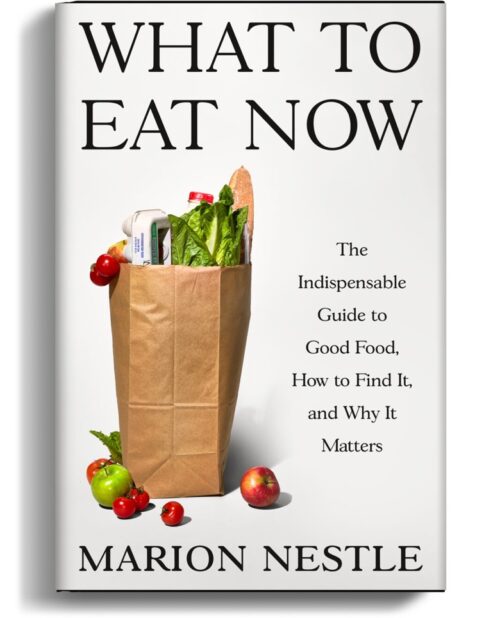
Alert to readers: Amazon.com displays listings for several more workbooks, study guides, and cookbooks purportedly based on my book, What to Eat Now (see previous post on this).  I did not write any of them.  Caveat emptor!

___________________________

From FoodDive: How MAHA transformed the food industry in 2025:  Lawmakers capitalized on anxieties around ultraprocessed ingredients to introduce new regulations, with companies choosing to reformulate or fight back.

To summarize:

  • Artificial food dyes: food companies voluntarily said they would get rid of them by the end of 2026 or 2027.  Will they?  We shall see.
  • Ultra-processed foods: The first MAHA report mentioned them 40 times.  By the second, the only issue was to define them, and RFK Jr said they might not even do that.
  • GRAS loophole: The FDA says it will require better evidence of safety before allowing new additives in food.
  • Seed oils: some food companies are replacing them with beef tallow or avocado oil.  How will this affect health?  It depends on the quality of the replacement.
  • High fructose corn syrup: Coca-Cola said it would replace it with cane sugar, no doubt at higher cost.  Since both sweeteners have the same sugars and calories, this switch is unlikely to make any difference to health.
  • School food: Whole milk is back.  Will this help children maintain healthy weight?  We shall see.
  • SNAP: 18 states are restricting sodas (some also restrict candy or desserts) from purchases using SNAP benefits.  Will this encourage SNAP recipients to buy less soda?  I hope states will collect data on this and other points.
  • Dietary guidelines: They are expected next week.  We shall see.

The food industry’s response?

So far, most of what is happening in the food arena is either still in the promise stage, voluntary, and unlikely to have much health benefit (See: A MAHA Check-Up: Is The United States Getting Healthier?)

All of what is happening with food must be understood in the context of the devastating destruction of America’s public health and scientific research systems.

MAHA’s work is focused on the dietary choices of individuals.

Any individual who tries to make healthful dietary choices is up against a food system designed for profit, not public health.

Diet matters to health, but healthy diets are not enough to prevent measles.

We need functioning public health systems: CDC, FDA, NIH.  We no longer have them.

Happy new year everyone.  Let’s hope the new year brings us peace, kindness, and public health.