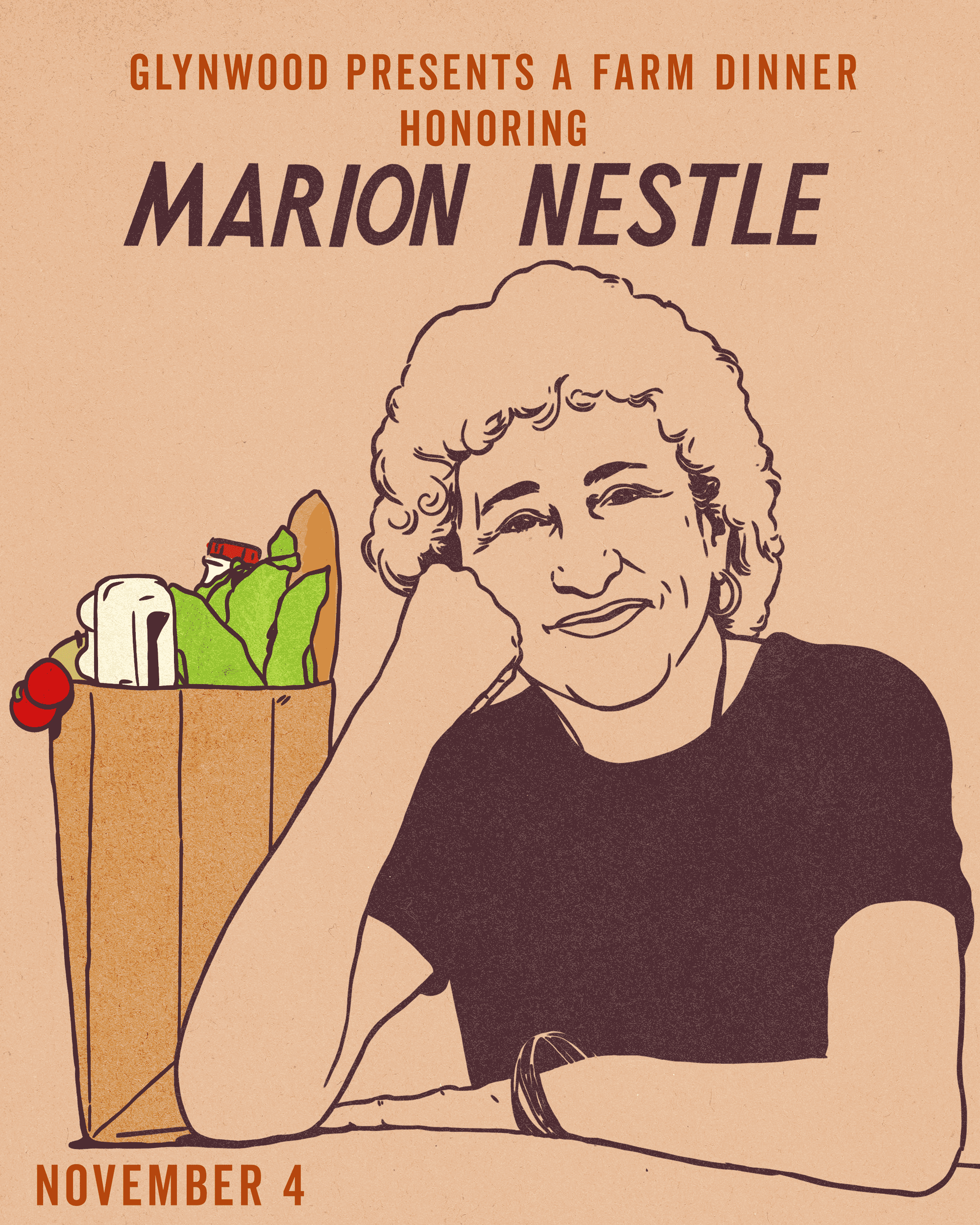
by Marion Nestle

Search results: tobacco

Apr 14 2022

Keeping up with plant-based: a challenge

As far as I can tell, the plan-based trend is all about marketing.  Whether it has anything to do with health and the environment remains to be seen.

When I hear about doom and gloom for this sector, I know that it has to do with investment issues.  To wit:

  • RIP Plant-based Meat Mania:  “Plant-based meat, egg, and dairy companies received $2.1 billion in investments in 2020 — the most capital raised in any single year in the industry’s history and more than three times the $667 million raised in 2019. Plant-based meat, egg, and dairy companies have raised $4.4 billion in investments in the past decade (2010–2020). Almost half, or $2.1 billion, was raised in 2020 alone. This included Impossible Foods’ record $700 million funding haul.”  Like with any emerging trend, what matters is not the absolute size of the plant-based category relative to plant-fed meat….what matters is the growth rate.  But if the growth rate is slowing, and more emerging brands are popping up then suddenly the category is crowded and competing on price and suddenly the whole category is much less interesting to investors.
  • McPlant not setting the world on fire at McDonald’s, claims analyst: ‘A wide-scale launch seems a ways off at this point…’  Despite promising test results in small-scale trials last year, the pea-protein-fueled McPlant burger – developed with Beyond Meat – is not setting the world on fire in tests at a broader selection of McDonald’s locations, according to analyst Peter Saleh at BTIG…. Read more
  • Plant-based foods sales: Plant-based meat sales stall while eggs, yogurt, and cheese gain ground, GFI, SPINS, PBFA :  The overall plant-based foods sector reported a significant slowdown (but still positive) growth for 2021 vs. 2020 with plant-based meat sales seeing flat growth while other categories grew by single-digits for the year, according to new data released by The Plant Based Foods Association, The Good Food Institute, and SPINS…. Read more

Not everyone agrees:

And none of this is stopping start-up innovations.

As for the public:

Jun 4 2021

Weekend reading: How palm oil ended up in everything we eat

Jocelyn C. Zuckerman.  Planet Palm: How Palm Oil Ended Up in Everything—and Endangered the World.  The New Press, 2021.  

Here’s my blurb for this book:

I’ve always thought of palm oil as just another best-to-avoid food ingredient for its high level of saturated fat, but can never look at it the same way again after reading Planet Fat.  I now understand that oil palms represent the darkest underside of late-stage capitalism, responsible as they are for land grabs, forest devastation, peat burning, greenhouse gases, loss of biodiversity and orangutan habitat, junk food, chronic illness, and food insecurity, all accompanied by unthinkable levels of corruption, criminality, and violence: accidents, thievery, arson, and murders.  This is an ugly story, compellingly told.  It needs to be read. 

And here are a few short excerpts.

The first:

In 2019, the World Health Organization compared the tactics used by the palm oil industry to tose employed by the tobacco and alcohol lobbies, no slouches when it comes to playing dirty…Across the globe, those who’ve dared to speak out against the industry, whether laborers, peasant farmers environmental activists, or investigative journalists, often ave been met with violence [p. 17]

With reference to a “technically safeguarded” national park in Indonesia:

The past decade and a half have seen roughly five thousand acres of its park converted to oil-palm plantations.  Today, only 4.5 million acres of the ecosystem remain forested.  Here as elsewhere in Indonesia, palm oil companies have secured permits through backroom deals with local officials or have simply pad others to clear the land illegally [p. 116]

One reason for concern:

While it’s true that many of the world’s people could use more calories…the global glut of palm oil is in fact diminishing food security, in a fairly drastic way.  It’s common to blame sugar for the world’s weight problems, but in the last half-century, refined vegetable oils have added far more calories to the global diet than has any other food group.  Between 1961 and 2009, for example, the availability of palm oil worldwide went up a staggering 206 percent [p. 162]

Dec 9 2020

Food in the Coronavirus era: cookie addiction ?

Tobacco, alcohol, and opioids are not enough; now we have cookie addiction to contend with?

For this I am indebted to Rija, whom I do not know, but who emailed me this message:

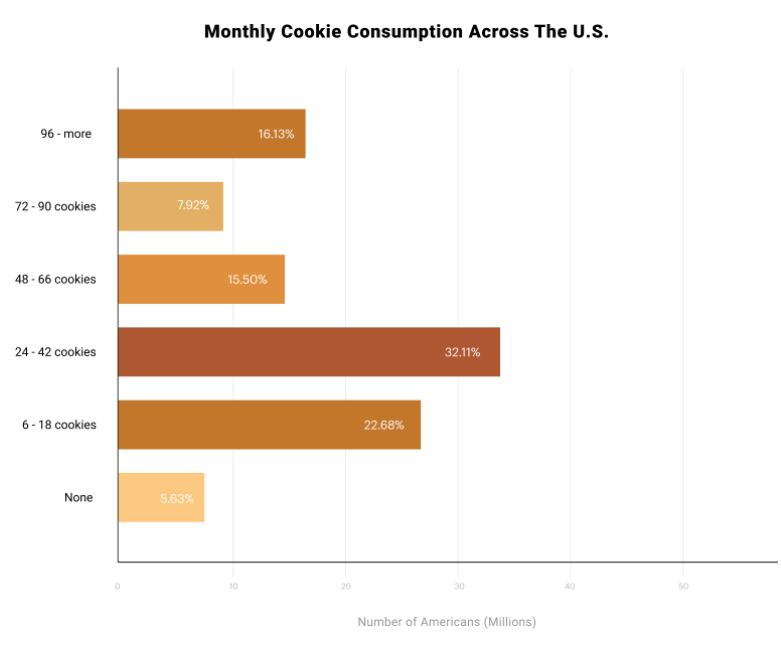
To celebrate National Cookie Day, TOP Data conducted a study and found that American cookie consumption has increased by over 25% during COIVD.  So much so that now 1 in 5 Americans are considered cookie addicts, consuming over 3 cookies per day.

Cookie Day Insights:

  1.  Cookie Consumption across the country has risen 20% during COVID
  2.  1 in 5 Americans consume 3+ cookies on an average day
  3.  Utah leads the nation in cookie consumption
  4.  The 7 states that love cookies the least are all in the south

To see where your state ranks check out the full report and infographic.

Who knew that someone was keeping these kinds of statistics.

More than 16 percent of Americans consume 96 or more cookies a month?

One third of Americans has a cookie a day?

How big are those cookies?

Recall: big ones have more sugar and more calories.

I’m all for cookies, but small ones please.

No wonder some people are at high risk for bad outcomes from Covid-19.

Jun 26 2020

Weekend reading: marketing of sugary drinks to minorities

The COVID-19 pandemic has pointed out how the higher risk of complications and death among members of minority groups.  The reasons are fairly well established.  Members of minority groups are more likely to:

  • Be overweight
  • Have diet-related risk factors: hypertension, type-2 diabetes, multiple metabolic problens
  • Live in high-pollution areas
  • Have asthma
  • Suffer from the daily stress of discrimination
  • Lack sick leave benefits
  • Have poor health care

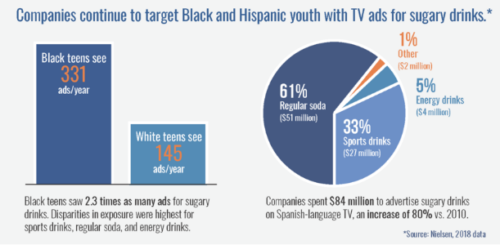
The .latest report from Rudd Center on Food and Obesity Policy, Sugary Drinks FACTS 2020, highlights how sellers of sugary drinks target their products to minority populations.  The press release says that the report found:

  • In 2018, companies spent $84 million to advertise regular soda, sports drinks, and energy drinks on Spanish-language TV, an increase of 8% versus 2013 and 80% versus 2010.
  • Sports drink brands disproportionately advertised on Spanish-language TV, dedicating 21% of their TV advertising budgets to Spanish-language TV, compared to 10% on average for all sugary drinks.
  • Compared to White children and teens, Black children saw 2.1 times as many sugary drink ads and Black teens saw 2.3 times as many. Black youth exposure was particularly high for sports drinks, regular soda, and energy drinks.

Click here for the full report. 

The report’s main finding:

CNN has an excellent account of this, in which I am quoted.

Experts say soda companies have also taken a page out of the tobacco industry’s marketing playbook, by providing funding for many Black communities and endeavors “in ways that don’t look like advertising, like funding playgrounds in minority neighborhoods, minority community groups, and sponsorship of Black and Hispanic sports figures,” said Marion Nestle, who also authored “Eat, Drink, Vote: An Illustrated Guide to Food Politics.”  “These work,” Nestle said. “Minority kids identify soda brands with sports figures, and minority community groups find it hard to oppose soda company marketing when the companies have been so generous.”
The account refers to the CEO of Pepsi’s statement on the company’s efforts to address race.  I am quoted again:
“The great irony of Ramon Laguarta’s promises to counter PepsiCo’s conscious or unconscious racist practices in the company, its business, and communities is that none of them addresses targeted marketing,” said Nestle.
“The best thing Pepsi could do to improve the health of its customers would be to stop advertising and marketing to children and teenagers, especially those of color,” Nestle added.
Addition, June 29
US Right to Know also has an excellent article on this topic.
Mar 24 2020

Coronavirus and food: this week’s update

From the New York Times

Does food transmit Coronavirus?  

Keeping up Coronoavirus  

How to survive working at home (watch out for junk food) 

How to take action

Advice for the food industry

  • US lays out new COVID-19 guidelines for food industry  The Trump Administration released a set of coronavirus guidelines for all Americans, with special provisions for critical infrastructure industries like food and beverage. Brands have been adapting this week to the new reality, while keeping employee safety a top priority…. Read more

What’s happening with supermarkets and supply chains?

What to avoid: dubious schemes for immune boosting

Who profits from this?

What else?

Feb 21 2020

Weekend reading: Industry schemes to deny harm

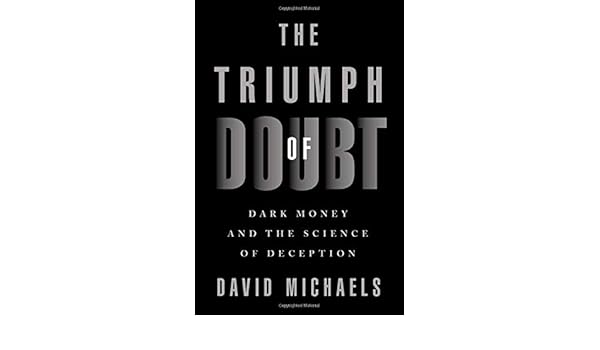
David Michaels.  The Triumph of Doubt: Dark Money and the Science of Deception.  Oxford University Press, 2019.  

Image result for The Triumph of Doubt: Dark Money and the Science of Deception

Even though this book is not strictly about food politics, it has enough about the sugar and alcohol industries to qualify.  I did a blurb for it.

Triumph of Doubt is an industry-by-industry account of how corporations manipulate science and scientists to promote profits, not public health.  Nothing less than democracy is at stake here, and we all should be responding right away to David Michaels’ call for action.

Michaels, a former OSHA official, has written an insider’s look at a wide range of industries that follow the tobacco industry’s playbook for casting doubt on inconvenient science.  The range is impressive: football, diesel fuel, opioids, silica dust, Volkswagen cars, climate denial, food packaging chemicals, alcohol, sugar, and Republican ideology

He’s got some ideas about what to do—keep conflicted scientists out of policy making, for example—but in this political environment?

That leaves it up to us folks to take to the streets.  If only.

Jan 20 2020

Conflicted research argument of the week: meat versus plants

I could not keep up with the number of e-mails I got last week with the subject line “Have you seen this?”

“This” referred to an opinion piece in JAMA entitled Backlash Over Meat Dietary Recommendations Raises Questions About Corporate Ties to Nutrition Scientists.

Definitely up my alley.

The article describes the outraged reaction to a series of papers in the Annals of Internal Medicine last year arguing that recommendations to eat less meat are unfounded (I posted about this at the time).  Some of the investigators involved in the meat papers turned out to have undisclosed ties to meat industry interests.

The JAMA article points out that the most outraged objections to the Annals papers came from investigators who have plenty of industry ties (plant-based) of their own.

My book, Unsavory Truth: How Food Companies Skew the Science of What We Eat, provides loads of evidence for a basic observation: research funded by food companies, regardless of the particular food studied, tends to produce results favorable to the sponsor’s interests.

It also describes how industry influence occurs at an unconscious level; recipients are unaware that they are being influenced.

How the influence gets expressed is also the subject of research.  Bias most frequently turns up in the framing of the research question.  It also turns up frequently in the interpretation of results.

Here is an example from a study of a healthy plant food—walnuts.

The study: Effect of a 2-year diet intervention with walnuts on cognitive decline. The Walnuts And Healthy Aging (WAHA) study: a randomized controlled trial.  Aleix Sala-Vila, Cinta Valls-Pedret, Sujatha Rajaram, Nina Coll-Padrós, Montserrat Cofán, Mercè Serra-Mir,  Ana M Pérez-Heras, Irene Roth, Tania M Freitas-Simoes, Mónica Doménech, Carlos Calvo, Anna López-Illamola, Edward Bitok, Natalie K Buxton, Lynnley Huey, Adam Arechiga, Keiji Oda, Grace J Lee, Dolores Corella, Lídia Vaqué-Alcázar, Roser Sala-Llonch, David Bartrés-Faz, Joan Sabaté, and Emilio Ros1.  Am J Clin Nutr 2020;00:1–11.

Conclusions: Walnut supplementation for 2 y had no effect on cognition in healthy elders. However, brain fMRI and post hoc analyses by site suggest that walnuts might delay cognitive decline in subgroups at higher risk. These encouraging but inconclusive results warrant further investigation.

Conflicts of Interest: AS-V, SR, JS, and ER have received research funding through their institutions from the California Walnut Commission, Folsom, CA, USA. JS and ER were nonpaid members of the California Walnut Commission Scientific Advisory Council. ER was a paid member of the California Walnut Commission Health Research Advisory Group. JS has received honoraria from the California Walnut Commission for presentations.  AS-V has received support from the CaliforniaWalnut Commission to attend professional meetings. All other authors report no conflicts of interest.

Comment: This looks to me like a classic example of interpretation bias.  Although the study showed no effect of walnut supplementation, the authors interpret its overall results as encouraging.  This is putting a positive spin on null results.

Walnuts—and other kinds of nuts—are plant foods with healthy fats.  Why does the California Walnut Commission need to do this?  So you will buy walnuts rather than hazelnuts, pecans, or macadamia nuts (all of which are sponsoring their own positive-result studies).  Studies like these are mostly about marketing.

Questions of whether meat is healthy or unhealthy—and, if unhealthy, at what level of intake—are about much more than marketing.   They need to be studied as objectively as possible.  It’s best to keep industry influence far away from such studies.

Even if the science is done well from start to finish, researchers’ ties to food company sponsors give the appearance of conflicted interests.  Such ties are best avoided from the get-go.

Follow-up

Oct 8 2019

NutraIngredients.com: An Exchange with its editor

I am an avid follower of industry newsletters such as NutraIngredients.com, and was intrigued to see one titled “Does bias against company-funded research really serve consumers?When I read it, I was even more amused.  One of my Monday “industry-funded study of the week” posts had triggered it.I found an email address for the editor, Hank Schultz, and wrote him a note that I hoped would open up a conversation.

I’m glad you wrote this and hope it will open up an opportunity for an ongoing conversation about industry-funded research and the conflicts it generates…..I am a constant and grateful reader of your and other Reed newsletters, and greatly admire the consistently outstanding and objective reporting.  I have only one ask: if a study is funded by a company with a vested interest in its outcome, ask your reporters to be sure to state who the funder is.

Mr. Schultz wrote back and after some cordial back-and-forth asked if he could do an interview for the newsletter.  Of course he could.  Here is the result.

Bias inherent in company funded research calls value of evidence into question, critic maintains

By Hank Schultz, 

The results of company funded research are so predictable that the value of the studies is greatly reduced, a prominent critic of the practice says.

In a recent NutraIngredients-USA commentary it was argued that dietary supplement companies that build up a suite of research do so carefully, and plan for success​​. With a careful design of the research program, positive results at the bench can naturally translate into successful randomized, placebo controlled trials.

Longtime critic of industry funded research

Marion Nestle, PhD, nutrition professor at New York University and author of the influential book Food Politics​ as well her most recent work Unsavory Truth: How Food Companies Skew the Science of What We Eat, ​ isn’t buying. Nestle responded to NutraIngredients-USA on the subject of the commentary to say that she has reviewed hundreds of company-funded studies and in her view the inherent biases built into that system are next to impossible to overcome.

Indeed, on her blog (also titled Food Politics​) Nestle has a frequent feature called “Industry funded research of the week.” The feature is used to document instances of bias, which to Nestle’s eye are thick on the ground.

“The overriding issue is that industry-funded research almost invariably comes out with results favorable to the sponsor’s interests. This is so predictable that I can often recognize the funder by the title of the paper,”​ Nestle told NutraIngredients-USA.

Nestle noted that the phenomenon is not by any means restricted to research on food and supplement ingredients. It has been noted in studies on tobacco, chemicals and pharmaceuticals.

“Studies of these industries show that the influence apparently occurs at an unconscious level; investigators did not intend to be influenced and do not recognize that they were influenced. But the evidence for funding effects is overwhelming,”​ she said.

Bias starts with study design

Nestle said a key issue is how the research question is framed. Companies investing in research naturally want to succeed and get some return on their investment. But the best science doesn’t come when the question is framed in such a way that a positive result is overwhelmingly likely, she said.

“I get letters all the time from trade associations asking for proposals for research that will demonstrate the benefits of their products. That is not the same as asking open-ended questions about effects. Companies want data on benefits for marketing purposes. That’s why I view industry-funded studies as about marketing, not science,”​ Nestle said.

Nestle said she has noted that some of the larger funders, such as the larger food companies or industry associations supporting categories of products like walnuts, almonds, strawberries or what have you, churn out research supporting their products of interest. While some might argue this adds to the totality of evidence and thus could be a good thing, Nestle said she doubts the value of these investments when taking the inherent biases into account. This can result in studies that seek to demonstrate things like substituting junk food calories with a serving of something like almonds or strawberries is a good thing to do. Yes, but so what? In Nestle’s view, this kind of bias is all but inevitable in research funded in this way.

“That’s what decades of research on the effects of drug-industry funding says, and the few studies looking at funding effects in nutrition find similar results,” ​she said.

Independent funding mechanism

What Nestle said she’d like to see is a mechanism for funding research into food and supplement ingredients that was divorced from a marketing plan.

“I want to see a firewall between the funder and the scientist. In ​Unsavory Truth, I talk a lot about various attempts over decades to create such firewalls and develop a pool of industry research funds managed by independent third parties. They have never worked well,”​ she said.

Nestle said she believes that only by making contributions to research compulsory, with the resulting fund to be managed by a credible third party, can research of undeniable quality be done. Something like the Beef Checkoff Program but for independent research funding, even if the results of those studies might not immediately support the marketing of the products.

“My idea of an ethically funded study is to ask for investigator-initiated proposals, appoint third party reviewers who decide who gets funded, and stay completely out of the process from then on. I worry when I see disclosure statements that the funder had no role in the study because that statement has been demonstrated to be false so many times. Food companies are funding research because they want specific results. That’s not how science is supposed to work,”​ Nestle said.