by Marion Nestle

Search results: tobacco

Apr 17 2014

Is Big Food the new Tobacco?

Thanks to Maggie Hennessy at FoodNavigator-USA for her report on a meeting I wish I’d been able to attend—the Perrin Conference on “Challenges Facing the Food and Beverage Industries in Complex Consumer Litigations.”

Hennessey quotes from a speech by Steven Parrish, of the Steve Parrish Consulting Group describing parallels between tobacco and food litigation.

From the first lawsuit filed against [tobacco] industry member in 1953 to mid-1990s, the industry never lost or settled a smoking and health product liability suit. In the mid ‘90s the eggs hit the fan because the industry for all those decades had smugly thought it had a legal problem. But over time, it came to realize it had a society problem. Litigation was a symptom of the disease, not the disease itself.

…When it came time to resolve the litigation, we couldn’t just sit in a room and say, ‘how much money do you want?…A lot had nothing to do with money. It had to do with reining the industry in…We spent so much time early on talking to ourselves about greedy trial lawyers, out-of-touch regulators, media-addicted elected officials and public health people who didn’t know how to run a business. At the end of the day, it didn’t matter. We would have been much better off recognizing these people had legitimate agendas.”

… Maybe there are some parallels, but I urge people not to succumb to the temptation to say, ‘cigarettes kill you, cigarettes are addictive. But mac and cheese, coffee, and Oscar Meyers wieners don’t. That may be true, but there are still risks for the industry.

The article also quotes Michael Reese, plaintiff’s attorney for Reese Richman LLP, talking about the increasingly accusatory tone of media coverage of Big Food: 

There’s this idea, which has picked up steam in the media, that large food companies are manipulating ingredients to hook people on food. It hasn’t been manifest in litigation yet, but we’re seeing it with legislative initiatives, like Mayor Bloomberg in New York City saying sugar hooks people and causes diabetes. We’ve seen some with GMOs, though most of that legislation is about consumers’ right to know. But there’s this overarching concept that Big Food is somehow manipulating our food supply and as a result, giving us non-food.

Sounds like the message is getting across loud and clear.

Thoughts?

Tags:
Jul 28 2010

Obesity vs. Tobacco: a zero-sum game?

Anti-tobacco advocates have been worried for years that concerns about obesity would draw funding away from anti-smoking initiatives (see previous posts).  Their fears are justified, as described in today’s New York Times and in a recent editorial in the New England Journal of Medicine.

Years of experience have taught anti-smoking advocates that countering the marketing efforts of cigarette companies required constant vigilance.  It also taught them that cigarette companies take immediate advantage of any weakening of resistance to their efforts.

Cigarettes remain the leading cause of preventable deaths among Americans.  Cigarette marketing aimed at children remains a national—and international—public health scandal.

Health should not be a zero-sum game.  Anti-obesity advocates have much to learn from anti-smoking advocates.  How about joining forces to improve the health of Americans?

Jul 1 2010

Food is not tobacco, but some analogies are worth attention

I’ve just read an enlightening paper in the July issue of the American Journal of Public Health (see Note below) about the tobacco industry’s role in and funding of “We Card,” a program ostensibly aimed at discouraging smoking among young people by encouraging retail cigarette sellers to “card” underage buyers.

The paper is an analysis of internal food company discussions about this program in cigarette company documents released as part of the 1998 Master Settlement Agreement.  These documents are now publicly available on the University of  California San Francisco (UCSF) website.

This analysis demonstrates that the actual purpose of tobacco industry support for the program was to make the industry look good (public relations) and to convince legislators and health officials that regulation would be unnecessary.

The industry effectively recruited astonishing numbers of private business, retail, and trade groups (expected) and state health, legal, and police agencies (which should have known better) as partners in this program.  The paper lists these groups in tables that take up nearly five pages.

As the paper explains:

Economic theory predicts that industry self-regulation will achieve social benefits far smaller than those gained from government regulation, although governments increasingly view self-regulation as a means to achieve public goals without public spending. However, industries and governments may have competing agendas, suggesting that public health advocates should be wary of self-regulation strategies…. This program’s success in reaching tobacco retailers and attracting independent allies has made We Card one of the tobacco industry’s major public relations achievements. However, despite industry claims that the program is effective, internal industry evidence suggests that We Card has not reduced tobacco sales to minors and that it was not designed to do so. Instead, We Card was explicitly structured to improve the industry’s public image and to thwart regulation and law enforcement activity.

The authors’ conclusion: “Policymakers should be cautious about accepting industry self-regulation at face value, both because it redounds to the industry’s benefit and because it is ineffective.”

Proponents of food industry self-regulation and of partnerships and alliances with food companies should read this study carefully.

Note: Only the Abstract is available to non-subscribers.  The reference is Apollonio DE, Malone RE, The “We Card” Program: Tobacco Industry “Youth Smoking Prevention” as Industry Self Preservation.. Am J Public Health 2010;100:1188-1201.

Mar 21 2009

Is food the new tobacco?

The Rudd Center at Yale is devoted to establishing a firm research basis for obesity interventions.  Its latest contribution is a paper in the Milbank Quarterly from its director, Kelly Brownell, and co-author Kenneth Warner, an equally distinguished anti-smoking researcher from the University of Michigan.  Its provocative title: The perils of ignoring history: Big Tobacco played dirty and millions died.  How similar is Big Food?

The paper is getting much attention.  A spokesman for the American Dietetic Association, a group well known for its close ties to food companies, emphasizes that food is not tobacco.  Of course it’s not.  But food companies often behave like tobacco companies, and not always in the public interest.  The Milbank paper provides plenty of documentation to back up the similarity.  Worth a look, no?

April 3 update: Evidently, FoodNavigator.com thinks so.  It is asking readers to file 100 word comments on issues raised by the paper by April 8.   And here are the comments.

Jul 23 2026

Big Food vs. The People: lawsuits against public health measures

A Lighthouse-led international cooperative investigation has produced Big Food vs. The Peoplea detailed account of how food and beverage companies are filing lawsuits to block public health measures that might induce people to stop buying their products.

In public, the world’s biggest and richest food companies such as Coca Cola, PepsiCola, and Mondelez say they want to be part of the solution. But behind closed doors, they have taken governments to court to delay, dilute, and derail public health laws, which the companies say violate their rights.

These investigations found:

– 239 lawsuits were filed between 2010 and 2025 across Mexico, Colombia, Brazil, the US, the UK, and India against public health policies targeting food and beverages such as front of pack labelling, regulating advertising of junk food to children, soda taxes, and taxes on ultra processed foods.

– The cases add up to 595 years of litigation, representing a significant burden on the governments defending their health policies.

– Of the cases brought by private companies where the plaintiff was identifiable, more than 1 in 3 came from just nine parent groups, led by Coca-Cola, PepsiCo, and Mondelez.

The Guardian covered this story: ‘If all else fails, sue’: how ultra-processed food firms are using the courts to obstruct health rules.

That’s my quote in the title.

The world’s biggest UPF firms would “not fight so hard” if policies to curb intake of their products were ineffective, said Marion Nestle, a professor of nutrition, food studies and public health at New York University. “The lawsuits tell us that public health measures reduce sales of unhealthful products”….The tactics mirrored those used by the tobacco industry for decades, Nestle said, adding: “Food companies are well trained. They follow the tobacco industry playbook to the letter. When all else fails, sue.”

Jul 22 2026

A special thank you to readers for comments on “Setting the Record Straight: Calley Means

My post last week, Setting the record straight: Calley Means, generated many comments and correspondence, for which I am most grateful.

I especially want to thank writers who produced their own pieces on this incident.

Additions

Tags:
Jul 14 2026

Setting the record straight: Calley Means

Washington Post reporter, Tim Carman, contacted me for comment about a speech he heard made by RFK Jr’s top food advisor, Calley Means, in which Means made patently false charges about my work.  From Carman’s report, MAHA Mondays at the Great American State Fair miss one obvious problem:

Means suggested her research had been bankrolled by sugar and tobacco industries, the latter of which once owned major food companies. The industries “funded her to say that basically the base of our diet should be carbs,” Means said. He added that the report made Americans afraid of foods other than grains.

These charges surprised me for two reasons: (1) Anyone even remotely familiar with my work would know these statements could not possibly be true, and (2) I am not MAHA’s enemy. I support parts of its agenda, and am on record as calling for coalition-building around common objectives.

Means began making the false claims on June 30, when we were on a panel at the Aspen Ideas Festival, moderated by Corby Kummer.  You can watch the session here and make your own decision about how it went.

I would have let the whole thing go, except that Calley Means followed it up with his speech at the Great American State Fair on July 6.  Tim Carman sent me a transcript of Means’ remarks:

In the 1980s, a group called the Sugar Research Council paid her to do a lot of research. And they really funded her to say that basically the base of our diet should be carbs, and the base our diet to be grains, and we should fear fat. And really, we should fear a lot of natural foods in favor of grains. And her research, she claims credit for being the architect of the 1992 food pyramid. And I told her, when we talked last week, I think it’s actually demonstrable that the dietary guidance from the 1990s has been the most destructive public health document in modern history, because they put grains and carbs at the base of the pyramid. And they didn’t differentiate whole grains or refined grains. Why did they do that? That was directly prompted by the food industry, which at the time was the cigarette industry.

Carman asked: “Any of this true?”

Good grief no. Not only are these statements false; they are spectacularly false.

Let’s take them line by line.

Means: In the 1980s, a group called the Sugar Research Council paid her to do a lot of research.

False. In the 1980s, I was teaching nutrition to medical students at the University of California San Francisco (UCSF) school of medicine and running a nutrition education program funded by NIH and, later, by the John Tung Foundation.  To avoid conflicts of interest, I have a long-standing policy of not taking payments from food companies.  The policy is posted on this site here.

Means: And they really funded her to say that basically the base of our diet should be carbs, and the base our diet to be grains, and we should fear fat.

False.  Here, I think he must be referring to the Sugar Research Foundation (SRF) which funded researchers at Harvard who wrote a skewed review of diet and heart disease in the New England Journal of Medicine in 1967; the review downplayed sugar, and emphasized fat. The SRF’s role in this research was exposed in 2016 in JAMA Internal Medicine by Cristin Kearns, Laura Schmidt and Stanton Glantz: Sugar Industry and Coronary Heart Disease Research: A Historical Analysis of Internal Industry Documents.  I wrote the commentary on this study: “Food industry funding of nutrition research: The relevance of history for current debates.”  I also wrote about both pieces on this site.

Means: And really, we should fear a lot of natural foods in favor of grains.

False Here, I think, he must be talking about my role as managing editor of the 1988 Surgeon General’s Report on Nutrition and Health. The report summarized the research consensus of that time.

“Fats and cholesterol. Reduce consumption of fat (especially saturated fat) and cholesterol.  Choose foods relatively low in these substances, such as vegetables, fruits, whole grain foods, fish, poultry, lean meats, and low-fat dairy products.”

“Complex carbohydrates and fiber: Increase consumption of whole grain foods and cereal products, vegetables (including dried beans and peas), and fruits.”

The National Academies’ even more comprehensive report, Diet and Health: Implications for Reducing Chronic Disease Risk, made similar recommendations in 1989.

Means: And her research, she claims credit for being the architect of the 1992 food pyramid.

False. I have never claimed such responsibility; I had none. My only role in the 1992 pyramid was to work closely with a reporter for the New York Times, Marian Burros, to expose how the meat industry induced the USDA to suppress the pyramid when it was about to be released in 1991.  I devoted an entire chapter of my book, Food Politics, to providing the evidence for this.

Means: And I told her, when we talked last week, I think it’s actually demonstrable that the dietary guidance from the 1990s has been the most destructive public health document in modern history,

True.  This is what he said and, I assume, is what he thinks.

Means:  because they put grains and carbs at the base of the pyramid. And they didn’t differentiate whole grains or refined grains.

False. The USDA’s pyramid brochure said: “Choose a diet with plenty of grain products, vegetables, and fruits which provide needed vitamins, minerals, fiber, and complex carbohydrates, and can help you lower your intake of fat.”

It also says, “Here are some selection tips: ☛ To get the fiber you need, choose several servings a day of foods made from whole grains, such as whole-wheat bread and whole-grain cereals. ☛ Choose most often foods that are made with little fat or sugars. These include bread, english muffins, rice, and pasta… ☛ Baked goods made from flour, such as cakes, cookies, croissants, and pastries, count as part of this food group, but they are high in fat and sugars.”

Means: Why did they do that? That was directly prompted by the food industry, which at the time was the cigarette industry.

Misleading. Yes, the cigarette industry owned Kraft Foods and other food companies at that time, and taught those companies how to use the tobacco playbook to promote unhealthy products (as we only recently learned).  But the major food industry influences on dietary guidelines and food guides in the 1980s and 1990s were the meat and dairy industries, as I describe in Food Politics. As far as I can tell, they still are, as witnessed by the 2025-2030 guidelines and inverted pyramid.

But that’s not all.  Calley Means said on Instagram: “At @aspenideas, I spoke with @marionnestle – an architect of the 1990s U.S. Dietary Guidelines that led to an explosion of refined carbohydrates and ultraprocessed food in the American diet.”

Misleading again.  I was indeed a member (although hardly the architect) of the 1995 Dietary Guidelines Scientific Advisory Committee.  Here is what the 1995 guidelines said about grains.

“Most of the calories in your diet should come from grain products, vegetables, and fruits These include grain products high in complex carbohydrates—breads, cereals, pasta, rice—found at the base of the Food Guide Pyramid, as well as vegetables such as potatoes and corn. Dry beans (like pinto, navy, kidney, and black beans) are included in the meat and beans group of the Pyramid, but they can count as servings of vegetables instead of meat alternatives.”

Doesn’t this look a lot like what the 2025-2030 guidelines say about grains?  I think it does.

Yes, the 1995 guidelines did not say anything about reducing intake of ultra-processed foods.  How could they? The term was not coined until 2009.

So: Why on earth is Calley Means attacking my work?

I can only speculate.  I see the underlying issue in our current food problems as the food industry having profits to stockholders as its primary fiduciary responsibility, as I have described for decades in my daily newsletter foodpolitics.com, and in my books, most notably,

In making false charges, could Calley Means possibly be attempting to deflect attention from the difficulties MAHA is confronting in implementing its agenda? (I will say more about that tomorrow).  Means seems to view me as an appropriate target for deflection.  Obviously, I disagree.

MAHA’s agenda appears to be running up against the pushback that inevitably happens when you do something that might threaten food industry profits. See, for example:

A final comment

Reasonable people can disagree about elements of nutrition policy. But reasonable people cannot invent a history that did not exist.

If Calley Means or anyone else believes that I have misrepresented the science or the historical record in my lengthy body of work, show me the evidence. I will be happy to consider it.

That’s how Gold Standard Science works.  Otherwise, it’s just name-calling.

Addition

I was just sent this link to Vanity Fair’s article about Calley Means.

_____________________
Pub date is September 8. Pre-orders through UC Press get a 30% discount. Use promo code UCPSAVE30.

Jun 17 2026

SNAP waivers: bad for business?

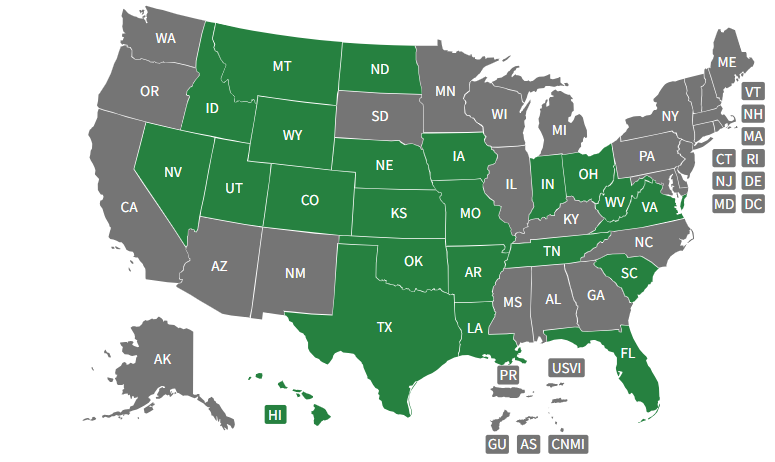
Here’s what got me started on this one: SNAP waivers could lead to $830M sales loss for soda, candy, energy drinks: By the end of 2026, state-specific restrictions are expected to impact one-third of participants in the government food assistance program, Numerator found.

Redirected or reduced spending by SNAP households could lead to sales losses of $430 million for soda, $300 million for candy, and $100 million for energy drinks across the 19 states that will have waivers in place by the end of the year, according to the firm’s research.

SNAP waivers refer to rules about what SNAP recipients can buy with their electronic benefit cards.  Without waivers, they cannot buy alcoholic beverages, tobacco products, cannabis edibles and drinks, supplements, hot food, and non-food items.

Waivers add sugar-sweetened beverages and some junk foods to this list.

Up until this administration, the USDA turned down requests by cities (New York) and states (Maine, Nevada) for such waivers.

Now, the USDA has granted waivers to 23 states so far, and is encouraging others to request them.


Food retailers are the beneficiaries of SNAP EBT cards.  SNAP recipients buy a lot of soda (as do lots of other people).   In waiver states, they will have to use their own money to buy soda.

Will waivers reduce overall sales?  Retailers think so.

Will waivers reduce consumption of sugary drinks, and improve the health of SNAP recipients?

Let’s hope these states are sponsoring research to find out.