Nick Freudenberg and I wrote this op-ed for Civil Eats to start a discussion of what we think is a topic that needs it.
Can the Food Justice Movement and MAHA Find Common Ground? A cross-cutting food justice movement could improve our diets, food systems, and health.
By Marion Nestle and Nicholas Freudenberg
February 23, 2026
During the past year, the Make America Healthy Again (MAHA) movement attracted positive public and media attention and provoked widespread discussion of the importance of diet to health. As academics who have written about and participated in food-and-diet advocacy for several decades, we have rarely witnessed such spirited public debate about the connections between the well-being of the American population and the system that produces the food we eat.
The food justice movement, which emerged from the social movements of the 1960s, has long focused on reforming the food system and improving diets. Organizations such as HEAL Food Alliance, Community Food Advocates, Food Chain Workers Alliance, and the National Black Food and Justice Alliance have fought for broad goals such as building more collective power to improve food policies and systems, changing food and farming practices to reduce pollution and carbon emissions, and making healthier food choices available to people of color. Together with local campaigns, these national organizations have also worked to win more specific changes such as making school lunches healthier and free for all children and increasing job benefits for low-wage food workers.
While the food justice and MAHA movements hold many of the same goals, they differ deeply in other ways. We believe food-justice advocates could benefit from a clearer understanding of where their objectives and approaches overlap but also diverge from those of MAHA, as well as a more defined strategy for how to interact with the movement and decide which MAHA messages to amplify and which to subject to public debate.
“Successful movements build power by winning over new constituencies in working toward common goals; the potential for forging a shared action plan is worth pursuing.”
What do food justice advocates and MAHA supporters have in common? Both believe that the current U.S. food system and the diets it produces contribute to poor health, especially as compared to other countries. Both believe that the profit-seeking and market practices of food and beverage producers, fast food chains, and food marketers actively promote chronic disease, obesity, premature death, and preventable illness.
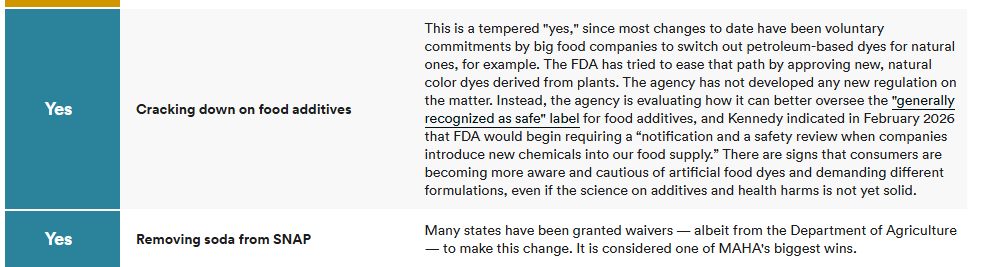
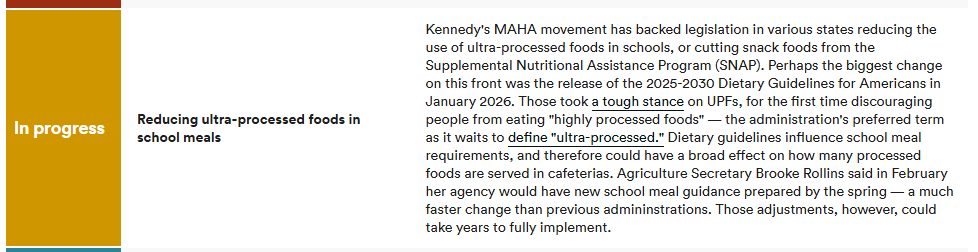
Both agree that food companies must change their marketing practices, especially to children, and limit chemicals, dyes, and additives in food products. Both also agree that improvements in the rules for school food and federal food assistance programs can lead to improvements in diets and health.
How do the movements differ? Whereas food-justice activists stress the need for collective and public action and make reducing inequities in healthy food access a top priority, MAHA followers emphasize the importance of individual and parental responsibility for diet and health, even for the disadvantaged. While the social justice side views profit-driven markets as a key cause of the nation’s food and health problems, most MAHA leaders (if not its rank-and-filers) endorse market-based solutions to food and health problems.
The two movements also disagree on what constitutes evidence for changing policy. MAHA distrusts established science and often rejects the scientific process that most independent researchers and food justice advocates believe constitutes the basis for policy. By relying on “mom influencers” rather than scientists, MAHA adherents show their belief in the power of narratives of personal experience. And by using evidence gathered by non-mainstream investigators, they tap into public distrust of established science.
Fifteen years ago, the food writer Michael Pollan wrote that food movements of the day were a “big lumpy tent” in which the various factions beneath it sometimes worked at cross-purposes. We recognize that this remains true for the food justice movement. It is also true for the MAHA movement.
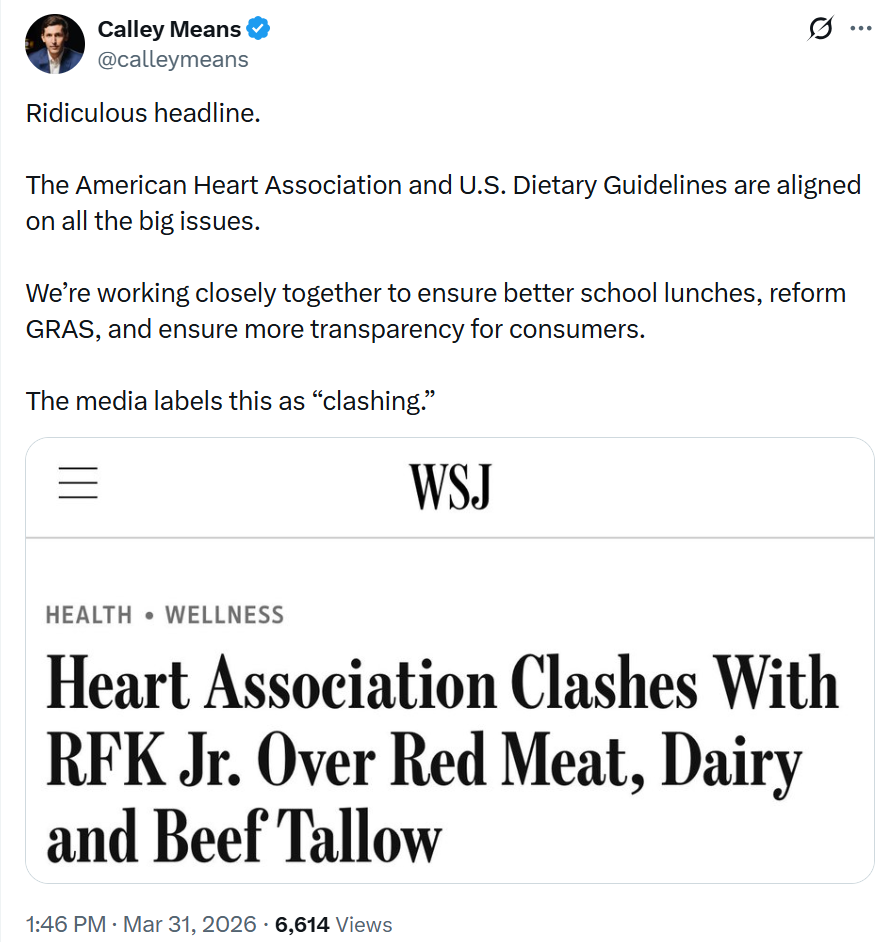
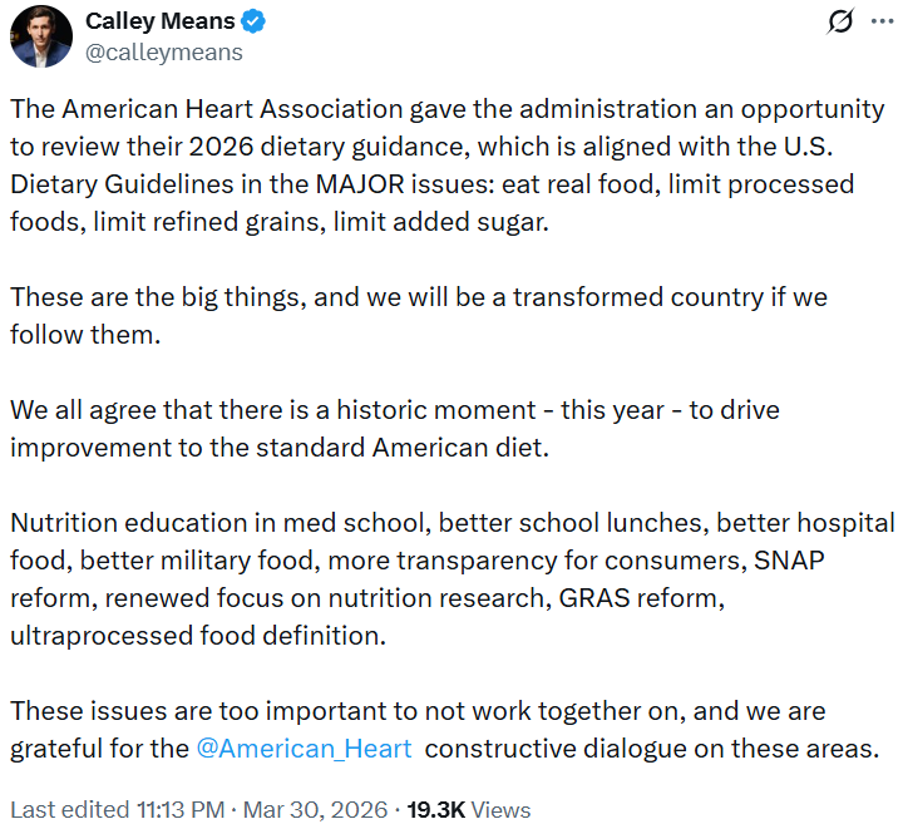
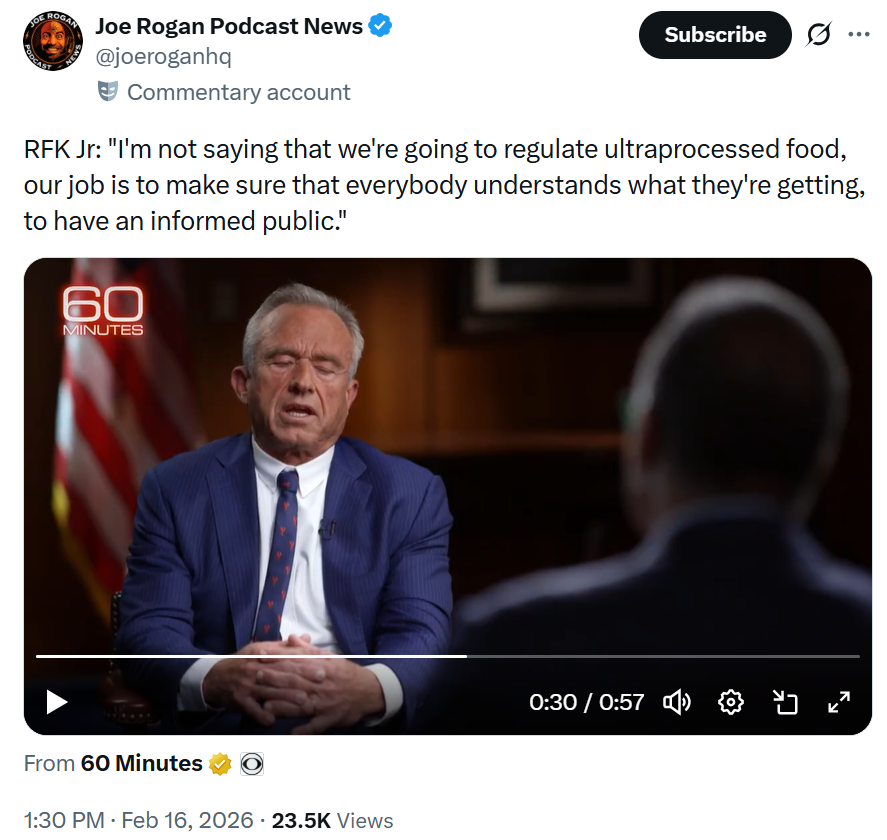
Today’s MAHA movement includes activist parents fighting to improve school food and get rid of pesticides, wellness industry influencers and entrepreneurs like Calley and Casey Means, anti-vaxxers, and, of course, President Donald Trump and Health and Human Services Secretary Robert F. Kennedy Jr. Its contributors include major corporations and right-wing leaders.
In 2024, the largest contributor to the group’s super-PAC, the MAHA Alliance, was Elon Musk and his SpaceX, together contributing $6 million—and this year the MAHA Center, headed by Tony Lyons, a major financial supporter of RFK Jr.’s presidential campaign, funded the controversial Mike Tyson “Eat Real Food” Super Bowl ad for a reported $8 million. Whether the private interests of wellness entrepreneurs like the Means, and billionaires like Musk, will take precedence over the MAHA mom influencers remains to be seen.
This heterogeneity poses both an opportunity and a challenge to those seeking alliances, raising the question: Is it possible to build on commonalities given the deep differences and this era’s sectarianism and polarization? We believe the food justice movement should pursue this chance for new partnerships, despite the risks in this path. Successful movements build power by winning over new constituencies in working toward common goals; the potential for forging a shared action plan is worth pursuing. To do so, we suggest six actions for food-justice advocates.
- Talk to MAHA activists.The groups should create forums and spaces where they can discuss commonalities and differences openly without insulting or disrespecting those who differ. Open discussion is a prerequisite for exploring the possibility of shared goals.
- Argue with respect.We acknowledge the risks of attempting to work with and win over MAHA supporters. In some cases, we will have to agree to disagree. In others, we will forcefully debate in public settings. In all situations, we must not lose sight of common goals or conflicting values. By listening carefully to MAHA arguments, food justice proponents can better understand its supporters’ worldviews and engage them in finding opportunities for joint action.
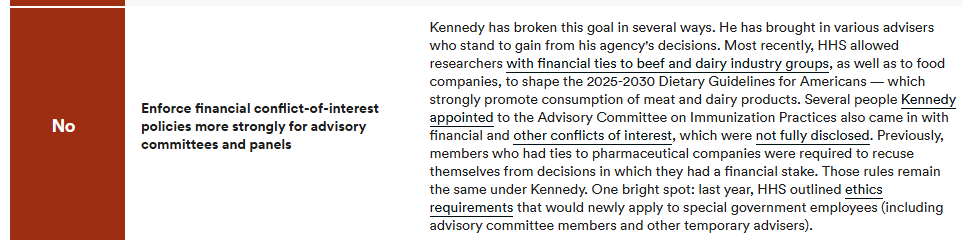
- Develop a common agenda of legal and regulatory reforms. The two movements’ shared distrust of corporations—and the legal and political systems in which Big Business exerts undue influence—present important opportunities for winning public support. Can the two groups establish clear goals for legal and regulatory reforms in food, agriculture, pesticides, and other industries? These could include strategies to reduce theconflicts of interestthat enable corporations to profit from public harm and promote new evidence-based and public-serving transparency rules for businesses, universities, and government. One example—agreeing that government has the right to set policies to keep toxic substances out of our food supply and the duty to enforce these policies—would be a big step forward.
- Provide a clear rationale for a focus on food equity. A food system that offers healthy food to the well-off but not others can never make America healthier. To enlist MAHA followers in making the entire food system more equitable will require winning their support for reducing current socioeconomic, racial/ethnic, and gender inequities in access to healthy food and other basic human needs. It will require proposing they consider the “sum of us” argumentthat, for example, stronger food regulations and healthier supermarket food benefits all of us, not just the most disadvantaged.
- Encourage MAHA followers to question the moral commitments and policies of MAGA and its leaders. The cruelty, corruption, disregard for science, and disdain for democracy that characterize MAGA leaders (but not necessarily MAHA followers) dismay Americans of varied political beliefs.
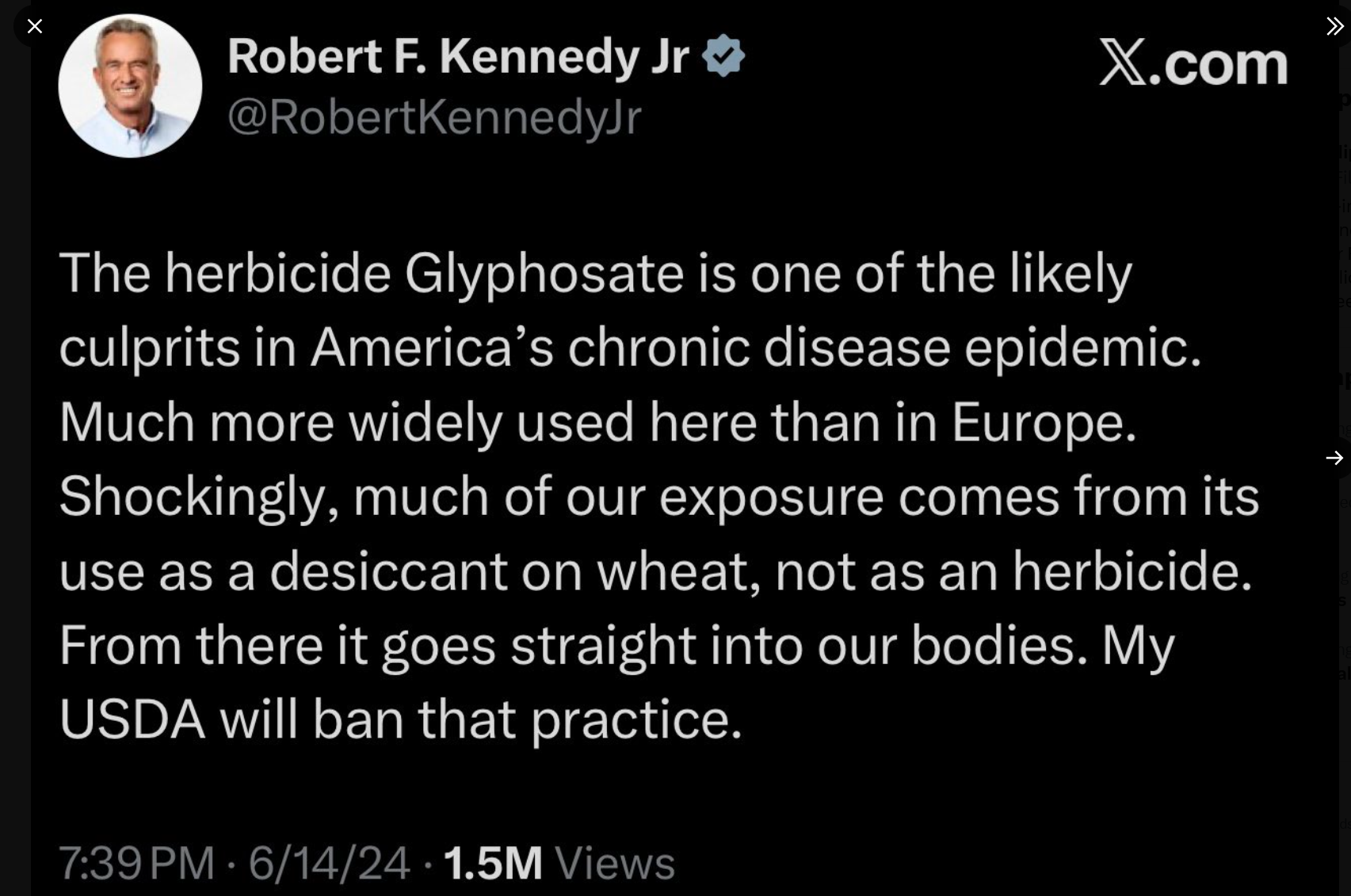
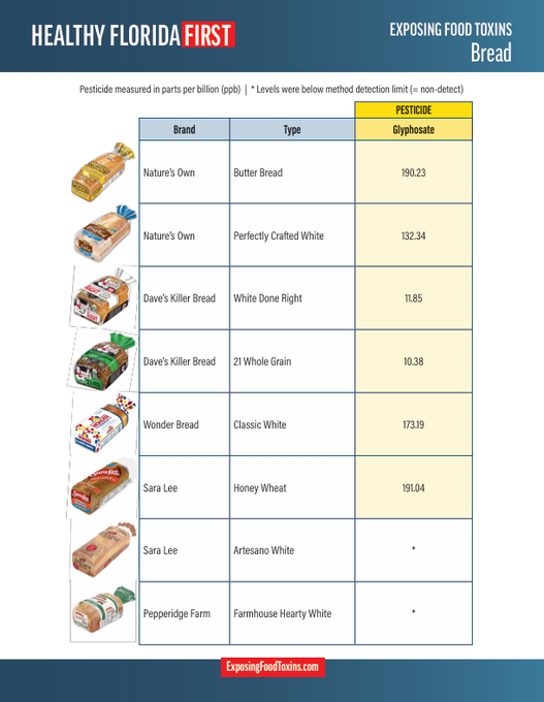
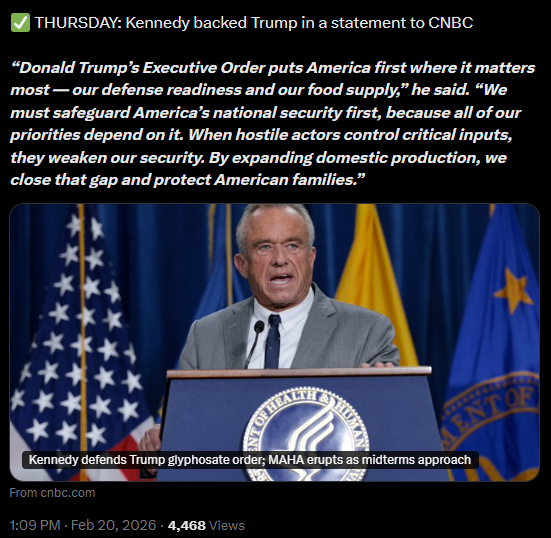
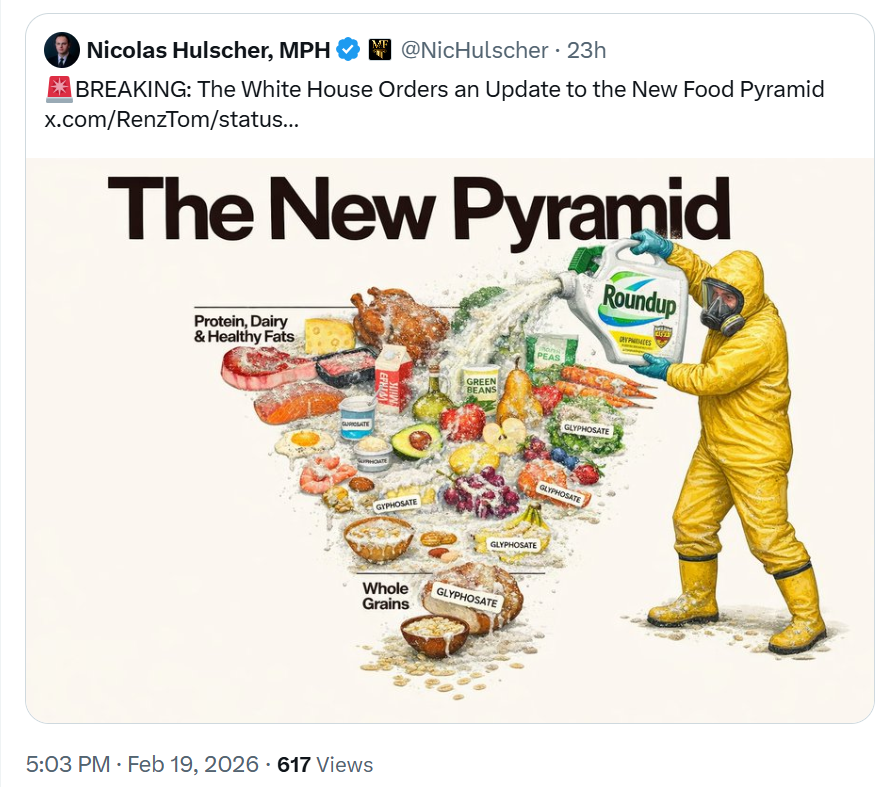
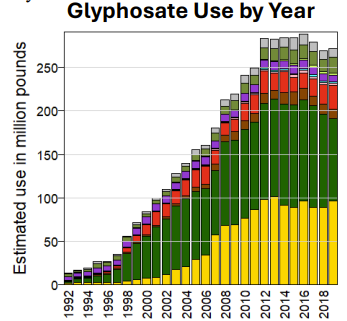
Last week, President Trump issued an executive order promoting production of glyphosate (Roundup), the widely used herbicide, claiming the weedkiller was needed to protect national economic and food security. Signaling the fragility of the MAHA/MAGA alliance, Vani Hari, an influential MAHA grassroots leader, told The Guardian, “This executive order reads like it was drafted in a chemical company boardroom. Calling it ‘national defense’ while expanding protections for toxic products is a dangerous misdirection. Real national security is protecting American families, farmers, and children.”
MAHA followers could also examine the conflicts of interests of their own wellness-industry aligned leaders. A MAHA/MAGA alliance is not inevitable. By finding specific and appealing ways to win over MAHA followers who genuinely want a healthier nation and food system, the food justice movement may help to build the political power needed for transformative changes.
- Study successful MAHA initiatives. MAHA’s use of personal stories and narratives, its capture of public attention, its acceptance of internal differences in opinion, and its successes in rural communities are accomplishments worth emulating. MAHA has been strikingly effective in bringing public attention to our nation’s food system and food policies. Finding ways to capture the bully pulpit of public attention without ceding to the pulpits of bullies could provide lessons for other current political struggles. The food justice movement can extract relevant lessons from these experiences.
In our view, the prospect of a cross-cutting food justice movement that brings in new supporters and builds political power to win new measures to improve diets, food systems, and health is a risk worth exploring. At best, the food justice movement might open new doors for alliances between MAHA followers and activists in movements for environmental justice, women’s health, or universal health care.
Given the different worldviews of MAHA and food justice advocates, we are under no illusion that this process will inevitably or easily lead to meaningful changes in diet, food policy, or health. But we do believe that silence due to fear of criticism or conflict wins nothing. With eyes wide open, we invite others to join in the exploration of new principled alliances.