by Marion Nestle

Search results: meat drugs

Jan 9 2024

The FDA’s somewhat good news on antibiotic use in farm animals (if we believe it)

The FDA issued its most recent report on antibiotics late last year: 2022 Summary Report On Antimicrobials Sold or Distributed for Use in Food-Producing Animals, along with Antimicrobial Sales and Distribution Data 2013-2022.

It did this in response to public concerns about antibiotic use in food animals: if antibiotics are used at subtherapeutic doses, they might induce microbial resistance to drugs used to treat diseases in humans.

This is not a theoretical concern.  It’s a real problem.

It’s also a problem because the vast majority of antibiotics were used as growth promoters or to prevent infections in animals crowded together—not to treat disease.

In 2014 or so, the FDA ruled that medically important antibiotics could no longer be used as growth promoters in farm animals.  That rule went into effect in 2017.

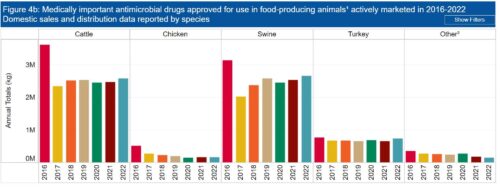
The FDA’s good news: the amounts of antibiotics used in farm animals has declined since then.
Are medically important antibiotics still used for non-therapeutic purposes?

The report says that since 2017, zero antibiotics are administered for growth promotion.

If you wonder whether this is really true (as I do), consider that $11.2 million kilograms of antibiotics were used in food animals in 2022.  This is a decrease from the 15.6 million kg used in 2015, but still a lot.

Of these drugs, 63% are administered in feed, and 31% in water.

All antibiotics still used as growth promoters are supposed to be drugs not used in human medicine.

I’m not the only skeptic on this one.  See:

I.  The Bureau of Investigative Journalism’s Antibiotics in agriculture: The blurred line between growth promotion and disease prevention.

In an investigation published today, the Bureau revealed how US farm animals are still being dosed with antibiotics vital to human health, despite efforts to curtail such usage and combat the spread of deadly superbugs. We also found that a regulatory loophole means that using antibiotics to make animals fatter – a process known as growth promotion – is technically still possible, despite this practice being banned in January 2017.

II.  Nature: Antibiotic use in farming set to soar despite drug-resistance fears. Analysis finds antimicrobial drug use in agriculture is much higher than reported.

III.  Vox: Big Meat just can’t quit antibiotics: Meat production is making lifesaving drugs less effective. Where’s the FDA?

According to an analysis published in September by the Natural Resources Defense Council and One Health Trust, medically important antibiotics are increasingly going to livestock instead of humans. In 2017, the meat industry purchased 62 percent of the US supply. By 2020, it rose to 69 percent.
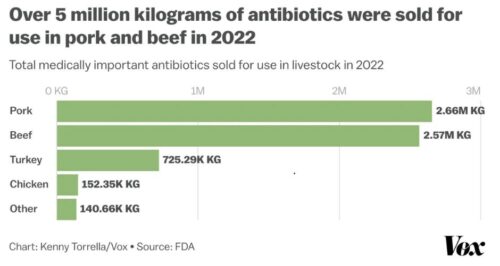
Does the FDA check?  It has guidance for industry on The Judicious Use of Medically Important Antimicrobial Drugs in Food-Producing Animals, but this guidance is non-binding.

Obviously, the FDA needs to do more.  Its officials told Vox:

Veterinarians are on the front lines and as prescribers, they’re in the best position to ensure that both medically important and non-medically important antimicrobials are being used appropriately…We cannot effectively monitor antimicrobial use without first putting a system in place for determining [a] baseline and assessing trends over time.

Vox reports: “The agency right now only collects sales data, and it’s been exploring a voluntary public-private approach to collect and report real-world use data.”

This is not reassuring.  The use of antibiotics in animal agriculture is a long-standing issue.  It requires political will, big time.
May 30 2023

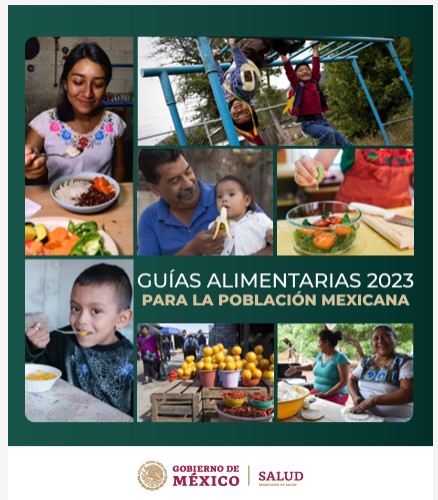
Mexico’s terrific new dietary guidelines. Yes!

Mexico has issued new dietary guidelines.

https://www.gob.mx/cms/uploads/attachment/file/826673/Gui_as_Alimentarias_2023_para_la_poblacio_n_mexicana.pdf

  1. Breastfeed babies for the first 6 months and then continue until age 2 along with other nutritious foods.
  2.  Eat more vegetables and fruits.
  3. Eat beans.
  4. Choose whole grains.
  5. Eat less beef and processed meats.
  6. Avoid ultra-processed foods.
  7. Drink water.
  8. Avoid alcohol.
  9. Be physically active.
  10. Enjoy meals with family and friends.

I’m looking forward to reading a case study on how the public health institute got these through the political process.

If people follow these guidelines, these industries will be in trouble:

  • Infant formula
  • Beef
  • Processed meats
  • Ultra-processed foods
  • Sugar-sweetened beverages
  • Alcohol

People will be healthier!  These industries will also be in trouble.

  • Pharmaceutical drugs
  • Private medicine
  • Insurance companies? (you might think they would benefit, but they make so much money on illness—this one is complicated)

I hope the new U.S. Dietary Guidelines will find these inspiring.

Jan 25 2022

Maybe a hint of good news about animal antibiotics?

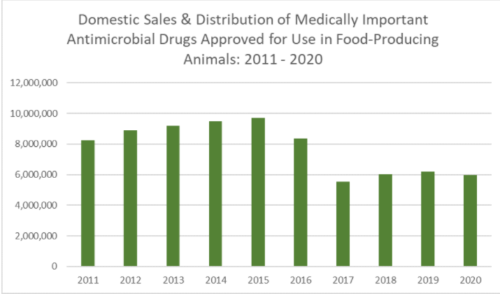
The FDA says use of medically important antimicrobial drugs in food animals decreased by 3% between 2019 and 2020  (For details, see the full report).

Is this good news or not.  Use is down from 2015-2016, but up from 2017.  As Wired puts it, “Antibiotic Use in US Farm Animals Was Falling. Now It’s Not.”

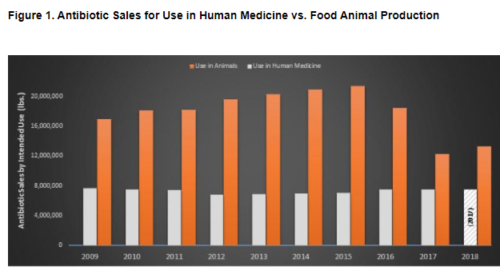
According to the Natural Resource Defense Council, use of antibiotics as growth promoters in food animals is still a big problem, with lots more going for use in animals than in humans.

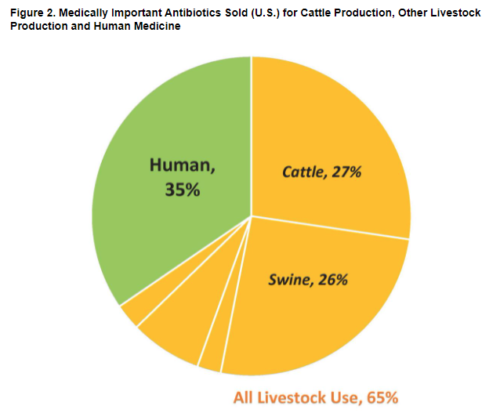
Or, to be a bit more precise:

The Pew Foundation thinks much more needs to be done to limit use of antibiotics in food animals.

FDA: get on this please.

Nov 13 2020

Weekend reading (well, browsing): Harold McGee’s Nose Dive

Harold McGee.  Nose Dive: A Field Guide to the World’s Smells.  Penguin Press, 2020.Hardcover Nose Dive : A Field Guide to the World's Smells Book

Harold McGee, author of the astonishing On Food and Cooking, sent me a copy of his equally astonishing new book, this one an encyclopedia of the smells of everything—the “osmocosm.”

I am happy to have it.  He’s produced a life-changing book.  I will never think of smells in the same way again.

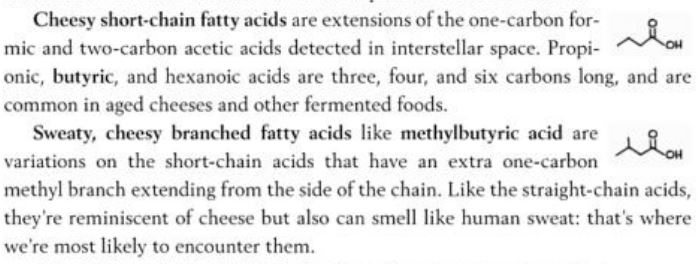
For starters, the book is brilliantly designed with elegant charts, key terms in bold, and chemical structures (yes!) right next to the terms in miniature on a light grey background, set off from the text but right there where they are needed.  Here’s an example from the pages that Amazon.com makes available.  This excerpt comes from a section on the smells of chemical compounds found in interstellar space (p. 19—and see my comment on the page number at the end of this post).

Interstellar space?  Well, yes.  Also animals, pets, and human armpits, along with flowers, spices, weeds, fungi, stones (they have bacteria and fungi on them), asphalt, perfumes, and everything else that smells or stinks—as well as foods, of course.

McGee must have had fun writing this.

It’s exactly becasue CAFOs [Concentrated Animal Feeding Operations] are offensive and harmful that the volatiles of animal excrement have been so well studied.  Crazily but appropriately, chemists borrow the terminology of top, middle, and base notes from the perfume worls (see page 477) to describe the smells of CAFOs.  The top notes, very volatile and quickly dispersed, are ammonia and hydrogen sulfide.  The more persistent middle notes include amines, thiols and sulfides, aldehydes and alcohols and ketones.  The constantly present base notes are the short-chain straight and branched acids, cfresol and other pehnolics, and skatole.  In a 2006 study of swine and beef cattle operations, barnyard cresol was identified as the primary offensive odor, and could be detected as far as ten miles (sixteen kilometers) downwind.  It’s probably the first long-distance hint I get of that I-5 Eau de Coalinga (p. 71).

But let me be clear: this is an encyclopedia, demanding close attention to the chemistry.  Sentences like this one come frequently: “The branched four-carbon chain (3-sulfanyl-2-methyl butanol) has its branch just one carbon atom over from the otherwise identical molecule in cat pee” (p.121).

But this blog is about food.  McGee’s discussion of food smells are riveting.  For example:

  • The standard basil varieties in the West today mainly produce varying proportions of a coupld of terpenoids, flowery linalook and fresh eucalyptol, and the clove- and anise-smelling benzenoids eugenol and estragole.  But when it comes to a dish in which basil stars—peto alla genovese, the Ligurian pasta sauce of pounded basil, garlic, nuts, and cheese—Italians are more particular (p. 255).
  • In 2014, I made a pilgrimage to a celebrated durian stall in the outskirts of Singapore and found that most of the half-dozen varieties I tried tasted of strawberries and a mix of fried onions and garlic.  I enjoyed them enough to smuggl one into my hotel room…After just an hour or two its royal presence filled the room and became unbearable.  I had no choice but regicide, and disposed of the body like coCanned sntraband drugs, flushing it in pieces down the toilet (p. 333).
  • The dominant note [in beef stews], described as “gravy-like,” came not from the meats, but from the onions and leeks!  The volatile responsible turned out to be a five-carbon, one-sulfur chain with a methyl decoration, a mercaptomethyl pentanol, MMP for short.  It is formed by a sequene of reactions, the first causaed by heat-sensitive onion enzymes, then ordinary chemical reactions that are accelerated by heat.  So its production is encouraged by chopping or pureeing these alliums (but not garlic) well before cooking them to let the enzymes do their work, the cooking slowly for several hours  (p. 513).
  • Canned sweet corn is dominated by seaside-vegetal dimethyl sulfide, acetyl pyrroline, and a corny thiazole (p. 519).
  • Swiss Appenzeller is notably strong in sweaty-foot branched acids (p. 567).

It should be clear from these excerpts that this is a reference work—a field guide—just as advertised.  If you read it, you will learn more than you ever dreamed possible about the volatile molecules that we can and do smell.

Nose Dive will go right next to On Food and Cooking on my reference shelf.

But uh oh.  How I wish it had a better index. 

For a book like this, the index needs to be meticulously complete—list every bold face term every time it appears—so readers can find what we are looking for.  This one is surprisingly unhelpful.

I found this out because I forgot to write down the page number for the fatty acid excerpt shown above.  I searched the index for most of the key words that appear in the clip: fatty acids, short and branched; butyric; methylbutyric; hexanoic; cheesy; intersteller space. No luck.  I had to check through all of the fatty acid listings and finally found it under “fatty acids, and molecules in asteroids, 19.”   Oh.  Asteroids.  Silly me.

I also forgot to note the page for the CAFO quote.  CAFO is not indexed at all, even though it appears in bold on the previous page, and neither does its definition, Concentrated Animal Feeding Operation.

McGee refers frequently to “Hero Carbon,” the atom basic to odiferous molecules.  I couldn’t remember where he first used “Hero” and tried to look it up.  Not a chance.

This book deserves better, alas.

Penguin Press:  this needs a fix, big time.

Tags:
Nov 15 2018

Pet food: a roundup of recent stories

I maintain an active interest in pet food, even though my books on the topic came out a few years ago

Here are some recent items:

  1. Pet food is big business ($63 billion last year).  It brings people into supermarkets and boosts sales.  [OK.  You already knew this, no?]
  2. Evangers, a pet food maker occasionally in trouble over ingredient and food safety problems has been caught with horse meat in its products. It says it doesn’t use horse meat, even though it has a license to use it.  It blames its beef supplier.Private label pet food brands are selling well.   They are cheaper.  For the record: all complete-and-balanced pet foods are required to meet the same nutritional standards and to support dog and cat reproduction, growth, and development (they are like infant formula in that regard).
  3. Food safety issues for humans also mean food safety issues for pets. The CDC is warning people not to consume certain turkey products because of illnesses caused by Salmonella. “Evidence collected by federal officials investigating the illnesses has revealed the outbreak strain in samples from live turkeys and many kinds of raw turkey products, including pet food.”
  4. Raw pet food  continues to raise food safety risks: Rad Cat Raw Diet has been recalled due to Listeria contamination.   A case of human Salmonella illness has been linked to a Darwin’s raw pet food.
  5. And the FDA announces the recall of Nutrisca dry dog food with levels of vitamin D so excessive that they made dogs sick.
  6. Mars Veterinary, the biggest manufacturer of pet foods, is working on some new products made from—get this—lab-grown mouse meat.  No, I did not make this up; I got it from Business Insider.
  7. Wild Earth, Inc., a biotech pet food startup, sells treats made with lab-cultured protein from the koji fungus, Aspergillus oryzae.
  8. The humanification of pet food, says The Atlantic, is nearly complete.
  9. Whole Dog Journal asks this burning question: Should you feed ice cream to your dog? (The short answer is no, but this gives me a chance to praise Nancy Kerns’ admirably sensible advice about dog feeding, care, and training).

You can see why I love writing about pet food.

Sep 30 2016

Weekend reading: “Chickenizing”

Ellen K. Silbergeld. : How Industrial Meat Production Endangers Workers, Animals, and Consumers.  Johns Hopkins Press, 2016.

Ellen Silbergeld, a professor of environmental health sciences, epidemiology, and health policy at Hopkins, has long been a strong advocate for getting toxic substances out of our food supply.  Here, she takes on our system of industrial farm animal production in a plea for better treatment of everyone and everything involved in it.

Big issue #1: the use of antibiotics as growth promoters.  This not only induces bacteria to become resistant to those drugs, but also is unnecessary.

Big issue #2: the failure of HACCP (Hazard Analysis and Critical Control Point—the method for preventing food safety problems) to prevent harmful, antibiotic-resistant bacteria from reaching the public.

Overall, she says:

The inextricable relationship between industrial food animal production and the environment challenges us in two ways.  First, we are all at risk–not just those of us who consume the products of industrially raised animals–and second, decontaminating food products will not contain the public health problems of this industry.  It is time to think about industrial food animal production as an industry in terms of environmental pollution, and it is long overdue to recognize that its pollution footprint, like its production, is industrial in scale (p. 127).

As for the remedy, “agriculture is an industry, and as such it carries certain obligations.”  These include, among others:

  • Industries must abide by laws that prevent monopolization, price fixing, and overconcentration.
  • Industries must bear full liability for unsafe products.
  • Industries must obey the labor laws of the country.

She has plenty more to say about government’s role in all this.

Our role is to insist that industry and government follow and apply laws.  We had best get busy.

Dec 17 2013

The FDA issues guidance on animal antibiotics–voluntary, alas, but still a major big deal

I was in Washington DC last week when the FDA announced  that it was taking significant steps to address antibiotic resistance, a problem caused by overuse in raising animals for food.

The FDA called on makers of animal antibiotics to:

  • Voluntarily stop labeling medical important antibiotics as usable for promoting animal growth or feed efficiency (in essence, banning antibiotics from these uses).
  • Voluntarily notify the FDA of their intent to sign on to these strategies within the next three months.
  • Voluntarily put the new guidance into effect within 3 years.
  • Agree to a proposed rule to require a veterinarian’s prescription to use antibiotics that are presently sold over the counter (the proposal is open for public comment for 90 days at www.regulations.gov.   Docket FDA-2010-N-0155).

Voluntary is, of course, a red flag and the Washington Post quoted critics saying that the new guidance falls far short of what really is needed—a flat-out ban on use of antibiotics as growth promoters.

  • Consumers Union is concerned about the long delay caused by the 3-year window.
  • CSPI is worried about all the loopholes.
  • NRDC thinks the FDA is pretending to do more than it’s really doing and “kicks the can significantly down the road.”
  • Mother Jones points out that the meat industry can still “claim it’s using antibiotics ‘preventively,’ continuing to reap the benefits of growth promotion and continue to generate resistant bacteria.”
  • Civil Eats reminds us that the Pew Commission on Industrial Farm Animal Production (on which I served) recommended a ban on nontherapeutic use of all antibiotics.

Yes, the loopholes are real, but I view the FDA’s guidance as a major big deal.  The agency is explicitly taking on the antibiotic problem.  It is sending a clear signal to industrial farm animal  producers that sooner or later they will have to:

  • Stop using antibiotics as growth promoters.
  • Stop using antibiotics indiscriminately, even for disease treatment.

I think the FDA is dead serious about the antibiotic problem.  If the FDA seems to be doing this in some convoluted fashion, I’m guessing it’s because it has to.  The FDA must not have been able to find any other politically viable way to get at the antibiotics problem.

I see this as a first step on the road to banning antibiotics for any use in animals other than the occasional treatment of specific illnesses.

As the New York Times puts it,

This is the agency’s first serious attempt in decades to curb what experts have long regarded as the systematic overuse of antibiotics in healthy farm animals, with the drugs typically added directly into their feed and water. The waning effectiveness of antibiotics — wonder drugs of the 20th century — has become a looming threat to public health. At least two million Americans fall sick every year and about 23,000 die from antibiotic-resistant infections.

Still not convinced antibiotics are worth banning for promoting growth?

The best explanation is the Washington Post’s handy guide to the antibiotic-perplexed.  Here, for example, is its timeline of development of microbial resistance to antibiotics.  The bottom line: the more widespread the use of antibiotics, the greater the onset and prevalence of resistance.  And it takes practically no time for bacteria to develop resistance to antibiotic drugs.

nchembio.2007.24-F1

Resources from FDA

Apr 12 2012

The FDA takes action on animal antibiotics, at long last

Yesterday, the FDA proposed long-awaited action against use of antibiotics for non-therapeutic purposes in animal agriculture.

From the outside, this might look more like inaction.  The agency is asking drug companies to voluntarily cut back on producing antibiotics for non-therapeutic purposes and to require veterinary oversight of use of these drugs.

The announcement comes in the form of three documents in the Federal Register.

  • Final Guidance for Industry: The Judicious Use of Medically Important Antimicrobial Drugs in Food-Producing Animals.
  • Draft Guidance for Industry aimed at assisting drug companies in voluntarily removing from FDA-approved product labels uses of antibiotics for production rather than therapy, and voluntarily changing the marketing status to include veterinary oversight.  This is open for public comment.
  • A draft of a proposed Veterinary Feed Directive regulation,  also open for public comment, outlining how veterinarians can authorize the use of antibiotics in animal feed.

In an FAQ on the announcement, the FDA answers some obvious questions:

4. What is “judicious use” and what are FDA’s recommendations?

“Judicious use” is using an antimicrobial drug appropriately and only when necessary;

Based on a thorough review of the available scientific information, FDA recommends that use of medically important antimicrobial drugs in food-producing animals be limited to situations where the use of these drugs is necessary for ensuring animal health, and their use includes veterinary oversight or consultation.

FDA believes that using medically important antimicrobial drugs to increase production in food-producing animals is not a judicious use (my emphasis).

5. Why did FDA decide to do this now?

FDA has worked with many stakeholder groups and the U.S. Department of Agriculture (USDA) to develop a strategy that will be successful in reducing antimicrobial resistance while minimizing adverse impacts on animal health and disruption to the animal agricultural industry.

In June 2010, FDA released a draft guidance document explaining its recommendations for change and in the interim period sought and received input from various stakeholders, including the animal pharmaceutical industry, animal feed industry, veterinary and animal producer communities, consumer advocacy groups and USDA.

Translation: this has been in the works for a long time and is the result of extensive discussions with the relevant industries.

As Food Safety News explains, the reaction of just about everyone to this announcement has been tepid.

  • Food safety advocates object to voluntary, because it never works.
  •  The meat industry insists that non-therapeutic antibiotics are essential for producing cheap meat under crowded conditions.

For example, the National Pork Producers make the usual industry arguments:

Harm to small farmers: The guidance could eliminate antibiotics uses that are extremely important to the health of animals…And the requirement for VFDs [veterinary oversight] could be problematic, particularly for smaller producers or producers in remote areas who may not have regular access to veterinary services.

Voluntary equals regulation: The guidance, which does not have the force of law but may be treated as such by FDA, is a move to address an increase in antibiotic-resistant illnesses in humans, which opponents of modern animal agriculture blame on the use of antibiotics in livestock and poultry production.

The science is “junk”: But numerous peer-reviewed risk assessments, including at least one by FDA, show a “negligible” risk to human health of antibiotics use in food-animal production.

My interpretation:

The FDA’s position on non-therapeutic use of antibiotics in animal agriculture is quite clear.  The agency recognizes that based on the science, the use of antibiotics as growth promoters in animals poses a serious risk to human health.

I’m guessing this is the best the FDA can do in an election year.

This move looks to me like a direct challenge to drug companies and meat producers to clean up their acts and take some responsibility for the effects of their misuse of animal antibiotics on public health.

It’s also a challenge to food safety advocates to make sure that the FDA monitors the effects of its voluntary guidance and, if the industries don’t cooperate, that the FDA gets busy on real regulations.

Addition: The account in today’s New York Times explains why the FDA is starting with voluntary efforts:

The reason for the reliance on voluntary efforts is that the F.D.A.’s process for revoking approved drug uses is lengthy and cumbersome, officials said. The last time the F.D.A. banned an agricultural use of a medically important antibiotic against the wishes of its maker, legal appeals took five years. In this case, hundreds of drugs are involved, each with myriad approved uses in various animals.

“You and I and our children would be long dead before F.D.A. could restrict all of these uses on its own,” Ms. Rogers [of the Pew Foundation]said.