by Marion Nestle

Search results: the corporation not me

Jul 7 2026

Contaminated infant formula: Unsafe, unpunished, corrupted

My days of having small children are long past, but my heart breaks for families trying to decide what to feed infants who cannot be breastfed.

Powdered infant formula is the least expensive option.  Unfortunately—and tragically these days—it is not sterile.

Ordinary bacterial contaminants are not a problem.  Pathogens are.

In recent years, there have been all too many illnesses and deaths among infants unknowingly fed contaminated formula.

What got me started was an article in the Wall Street Journal: “The Baby Formula Probe Produced a Pile of Evidence. Then the DOJ Dropped the Case,”

The Justice Department spent years investigating Abbott Laboratories over how it managed a baby formula facility where potentially deadly bacteria was discovered and suspected of causing infant deaths, worsening a national shortage.

Some prosecutors believed they had evidence to criminally charge the company under a law they have used to pursue other businesses for allegedly selling contaminated foods, according to people familiar with the matter. Some supervisors also thought it was a good case, they said. Top decision makers instead closed the probe, the people said, opting for a lighter-touch option: clawing back money the company earned from selling formula through federally funded nutrition programs. The outcome, which hasn’t been previously reported, illustrates how the Justice Department under President Trump has moved away from strict approaches to corporate enforcement and raised the bar for punishing companies. Trump in an executive order last year called for minimizing the use of criminal sanctions, where civil penalties could be used instead.

And then, KFF Health News and USA Today co-published “A Mom Said Infant Formula Killed Her Baby. The Manufacturer Closed the File.”

When doctors, hospitals, parents, or others alert manufacturers that babies got sick or died while receiving infant formula, what happens next is left largely to manufacturers such as Abbott Laboratories and Mead Johnson Nutrition, giants of the industry…Under federal rules, if a complaint about an infant formula — such as a report of an adverse event — shows a possible health hazard, the company must investigate. But it doesn’t always have to inform the government agency that oversees the safety of infant formula. A company must complete an investigation and notify the Food and Drug Administration within 15 days only if it finds “a reasonable possibility of a causal relationship between the consumption of an infant formula and an infant’s death.” If that happened even once over more than a quarter century, the FDA could find no record of it, according to information obtained through public records requests.

I was curious to know what food safety lawyer Bill Marler, who represents victims of food poisonings, had to say about all this.  Plenty, starting with The Fox Has Been Guarding the Henhouse for Years: Infant Formula Makers Decide for Themselves Whether Baby Deaths Get Reported to the FDA.

The headline finding should stop every parent, pediatrician, and member of Congress in their tracks…Here is what KFF Health News found when it asked the FDA, through the Freedom of Information Act, for every such notification manufacturers had submitted since January 1, 2020: none. The reporters then asked the agency to search all the way back to January 1, 2000. Again: no responsive records.…This is not an academic problem for me. I currently represent families in two infant botulism outbreaks tied to powdered infant formula — the November 2025 ByHeart outbreak that sickened at least 48 infants across 17 states, and the spring 2026 Nara Organics outbreak that so far has sickened three. In those cases, we have dug deeply into the same regulatory framework KFF Health News just exposed…The adverse event reporting system for infant formula is not a system at all. It is an honor code — for an industry that litigation has shown may not deserve it.

On his Publisher’s Platform, Marler writes: Mr. Abbott, You Are Not Going to Jail After All

Four years ago, I wrote two posts with titles I meant: “Mr. Abbott, you are going to face criminal sanctions” and, a few weeks earlier, “Mr. Abbott, you are going to jail for manufacturing tainted infant formula.” I was wrong. Not about the facts — about the willingness of this Justice Department to do anything about them….A DOJ spokeswoman explained that this Justice Department “does not believe in regulation by prosecution”….There are two details in the Journal’s reporting that should make every parent’s stomach turn. First, even if DOJ had wanted to prosecute, the office that does this work — the Consumer Protection Branch — was being disbanded as a cost-cutting measure, the same branch that put away the executives behind the Peanut Corporation of America salmonella outbreak. Second, one of Abbott’s defense lawyers — a former deputy attorney general — reportedly urged the incoming administration to overhaul that very office and strip it of its ability to bring criminal cases at all. Read those two sentences together and ask yourself who is writing the rules now.

Why is this happening?  500,000 Reasons to Drop a Criminal Investigation

Here is why the families I represent — and every parent who lived through the 2022 [Abbott formula] shortage — should be furious.

Abbott gave $500,000 to President Trump’s inaugural fund. Public Citizen has documented that Abbott was one of 58 corporations facing federal investigations or enforcement that together poured some $50 million into the inauguration…And then there is the stock. As Common Dreams reported this week, the President’s own annual financial disclosure…shows that Trump began buying Abbott stock in late September of last year and picked up roughly $500,000 worth of Abbott shares over the course of 2025. The buying happened while his Justice Department was still sitting on a criminal case against the company.

$500,000 into the inauguration. $500,000 in stock in the President’s own portfolio.

As Marler is careful to say, “No court and no investigator has found that the donation or the stock purchases caused this case to be dropped. What is undisputed is the sequence: the money, and then the vanished prosecution. Whether one caused the other is a question no one in a position to answer has been willing to answer.”

I’d say it sures gives the appearance of conflicted interest if not bribery and corruption at the highest levels of government.

Excuse me, but we are talking about helpless newborn and very young infants here, utterly dependent on formula as their sole source of nourishment.

Cases of contaminated formula may be rare, but they have affected commercial, alternative, and organic brands, and their consequences are devastating (take a look at the case studies in Marler’s letter of support for the Infant Formula Safety Modernization Act of 2026).

Congress needs to pass this act, and right away.  And is needs vigorous enforcement.

Legal slaps on wrists will not stop food safety violations.

In the meantime, the safest formula is the liquid form, pasteurized to kill spores as well as living pathogens.   Otherwise, powdered formula is a risk, a small risk, but finite.  You do not want your infant to be one of the unlucky ones.
Mar 4 2026

How to explain glyphosate hypocrisy? Bayer’s lobbying and revolving door

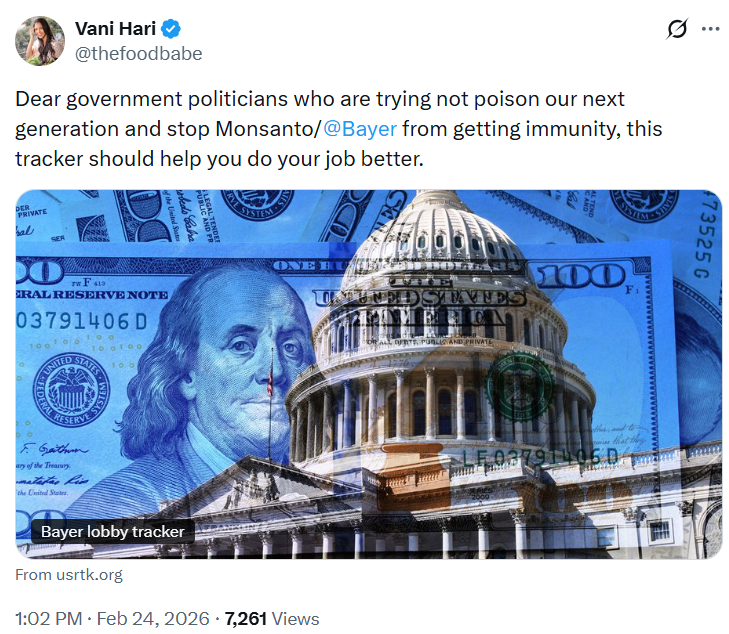
Here’s one place where the MAHA and Food Justice movements agree: on glyphosate.  Here is a post from thefoodbabe (@Vani Hari):

LOBBYING

This refers to U.S. Right to Know’s Bayer lobby tracker.

Federal disclosures show Bayer reported spending $9.19 million on lobbying Congress and the executive branch in 2025, which includes fees paid to at least 13 outside lobbying firms. As of the fourth quarter of 2025, 45 lobbyists were registered to lobby for Bayer under the Lobbying Disclosure Act.

The tracker comes from Stacy Malkan’s reporting: Tracing Bayer’s ties to power in Trump’s Washington; From lobby firms to top officials, a look at how Bayer built access and secured favors

The White House invokes the Defense Production Act to guarantee supplies of elemental phosphorus and glyphosate-based herbicides. Regulators reapprove dicamba, a Bayer herbicide twice blocked by federal courts, and clear the way for new pesticides containing toxic, persistent PFAS “forever” chemicals.

And the U.S. Justice Department urges the U.S. Supreme Court to erase billions of dollars of Bayer’s liability for its glyphosate-based Roundup weed killer – placing the weight of the executive branch on the side of a foreign company against thousands of Americans who say Bayer’s products caused their cancers.

Over the past year, the administration under President Donald J. Trump has delivered a string of victories to Bayer, the German agrichemical and pharmaceutical giant that merged with Monsanto in 2018 to become the world’s leading manufacturer of genetically modified seeds and pesticides.

REVOLVING DOOR

The term refers to government regulators taking jobs with corporations and vice versa.  US Right to Know reports:

The Trump administration yesterday handed Bayer another win, urging the Supreme Court in a new brief to side with the German pesticide company in a high-stakes legal case that could wipe out thousands of cancer lawsuits and potentially billions of dollars in liability tied to glyphosate-based Roundup weed killer.

Three out of nine U.S. officials who signed the brief previously worked for law firms that have represented Bayer, raising questions about whether the Trump administration is providing special favors and benefits to Bayer and siding with a foreign corporation against Americans with cancer.

COMMENT

It’s pretty amazing what Bayer gets away with.  Despite Robert F. Kennedy Jr’s insistence that glyphosate is carcinogenic and needs to get out of the food supply, he has now backtracked on that.  In his backtracking statement, he says:

Unfortunately, our agricultural system depends heavily on these chemicals. The U.S. represents 4% of the world’s population, yet we use roughly 25% of its pesticides. If these inputs disappeared overnight, crop yields would fall, food prices would surge, and America would experience a massive loss of farms even beyond what we are witnessing today. The consequences would be disastrous.

This sounds like he’s looking out for farmers.  But glyphosate is used in industrial agriculture, not small- and medium-sized family farms, and certainly not in organic and regenerative farms.  As an herbicide, it’s used on feed for animals and fuel for automobiles.  It’s also used for drying wheat and oats.  It should not be used for food for people at all.

Why is this still allowed?  The Bayer Lobby Tracker makes that clear.

Feb 27 2026

Weekend reading: My latest publication: Dietary guidelines: Brazil vs. U.S.

I was invited by Brazilian colleagues to collaborate on a brief paper comparing the new US guidelines to those in Brazil.

Neves FS, Nilson EAF, Mendes LL, Khandpur N, Nestle M.  The 2025-2030 US Dietary Guidelines: A retreat from scientific integrity and global health governance.  Lancet Regional Health—Americas.  2026; 56:101402

The United States (US) has recently released the Dietary Guidelines for Americans 2025–2030. While the policy introduces sound recommendations for vegetables, fruits, and whole grains, and limits added sugars and ultra-processed foods (UPFs) (termed “highly processed foods” within the text), it fails to reflect the contemporary scientific consensus by prioritising animal proteins, animal fats, and full-fat dairy products. Additionally, this political position follows a supplementary institutional report that dismisses previous efforts to include health equity and social determinants in the empirical evidence base, labelling such integration a “methodological deficiency”. Consequently, these guidelines depart from the international standards required for non-communicable diseases (NCDs) prevention., Given US normative influence, this regression legitimises corporate interests, threatening transnational health governance and food and nutrition security.
          The inherent contradiction within the 2025–2030 guidelines is profound. By promoting animal-source proteins and full-fat dairy, the document proposes a dietary pattern fundamentally inconsistent with its own goal of limiting saturated fat intake below 10% of total calories. This internal incoherence reflects decision-making that continues to prioritise the economic interests of specific industrial sectors over NCDs prevention. The paradoxical nature of the guidelines is evidenced by the reliance on an anachronistic visual communication tool. While the inclusion of processing-based terminology is a progressive step, the reintroduction of a hierarchical food pyramid model represents a semiotic retreat into a reductionist era of public health. This abstraction fails to capture the complexity of modern food systems or the distinction between food types and the extent of industrial processing. While the international community moves towards representations emphasising fresh foods and the social context of eating, the US return to a pyramid isolates nutrients from the food matrix.
           In sharp contrast, the Dietary Guidelines for the Brazilian Population remains the gold standard for food and nutrition frameworks. Published in 2014, the Brazilian approach introduced an epistemological shift away from the dominant reductionist paradigm by moving dietary advice towards the degree and purpose of industrial food processing. This strategy, facilitated by the Nova classification system, acknowledges that industrial alterations to food matrices have wide-reaching implications for biological integrity, metabolic health, social structures, and environmental sustainability.
            As Table 1 illustrates, the contrast between the US and the Brazilian standards is defined by their diverging methodological and conceptual foundations. By prioritising an adequate and healthy diet centred on fresh and minimally processed foods, Brazil provides a robust template for addressing the interactions between human biology, cultural identity, and planetary health, achieving maximum scores across metrics of public health and sustainability.,,
Feature Dietary Guidelines for Americans 2025–2030 Dietary Guidelines for the Brazilian population
Guiding paradigm Focus on nutrient density and individual responsibility; health is framed as a matter of personal choice and moral deficit. Multidimensional approach integrating biological, social, and environmental health; focus on food systems and collective well-being.
Scientific integrity Supplementary report authored by experts with documented conflicts of interest with the beef, dairy, and food industries. Independent process led by academic researchers, strictly free from commercial influence and industry sponsorship.
Classification system Traditional food groups with an absence of technical criteria for industrial processing; focus remains on isolated nutrients. Nova classification categorising foods by the degree and purpose of industrial processing (fresh and minimally processed foods, culinary ingredients, processed foods, and UPFs).
Visual communication Reintroduction of an anachronistic hierarchical food pyramid model, representing a semiotic retreat into reductionism. Rejection of the pyramid in favour of food-based representations that emphasise meals and the social context of eating.
Core recommendations Prioritisation of animal proteins and full-fat dairy; selective recommendations against processed products. Dietary foundation of fresh, plant-based foods and the categorical avoidance of UPFs.
Saturated fat management Mathematical paradox between a 10% intake limit and the promotion of animal fats; absence of guidance on unsaturated fat substitution. Achieved through patterns based on fresh foods; explicit emphasis on replacing animal fats and UPFs with plant-based oils and whole foods.
Environmental sustainability Omission of the climate crisis and planetary boundaries from the policy framework; silence on the environmental impact of livestock. Sustainability as a core principle; promotion of biodiverse, just, and resilient food systems that respect planetary limits.
Equity and determinants Rejection of the “health equity lens”; social and environmental determinants dismissed as a “methodological deficiency”. Structural pillars: integration of social justice, social determinants of health, and the promotion of food sovereignty.
Global influence and sovereignty Functions as a permissive framework that dilutes the narrative on food sovereignty and serves as a scientific alibi for industrial actors. A paradigm of regulatory sovereignty; provides the conceptual framework for pioneering policies like warning labels and fiscal measures.

Table 1

Conceptual and methodological comparison between the 2025–2030 US Dietary Guidelines and the Dietary Guidelines for the Brazilian Population.
UPFs = ultra-processed foods.
           The conceptual divergence between these frameworks reflects a broader tension between public health principles and the narrative of personal responsibility. By rejecting social and environmental determinants, the 2025–2030 US guidelines shift the entire burden of health onto individual choice, ignoring the structural barriers defining the food environment., The reintroduction of individual responsibility as the central axis of food policy is an ideological framework that converts systemic failures into individual moral deficits, thereby legitimising state regulatory inaction., In an era where NCDs prevention requires robust environmental and policy interventions, the US return to a personal responsibility framework represents a dangerous abdication of the state-led public health mandate.
            The erosion of scientific integrity within the US policy framework is a manifestation of the commercial determinants of health. The formulation of these guidelines suggests a clear case of corporate capture. While official political discourse promises to “Make America Healthy Again” by addressing corporate influence, the supplementary scientific report was authored by experts with documented conflicts of interest with the beef, dairy, and food industries., These commercial interests have effectively undermined the promotion of an adequate and healthy diet. Reversing this trend requires decisive state-led interventions beyond individual choice, necessitating robust policies to restrict UPF production and structural reforms to address the corporate actors dominating global supply.,
            The failure of the 2025–2030 US guidelines to address the environmental dimensions of diet is negligent in an era of ecological instability. While the international community aligns with the EAT-Lancet 2.0 consensus, which emphasises that food systems must operate within planetary boundaries, the US guidelines remain silent on the climate crisis. Transitioning towards plant-forward diets is a foundational requirement for mitigating the environmental degradation caused by intensive livestock systems. The omission of these factors ignores the reality of the Global Syndemic, in which obesity, undernutrition, and climate change are interconnected pandemics driven by the same food system failures. By failing to address environmental impacts, the US promotes a model of consumption linked to planetary health degradation, further endangering global food and nutrition security.
             The axis of scientific integrity has shifted to the Global South, where Latin American nations—including Brazil, Chile, Colombia, Mexico, Peru, and Uruguay—uphold food systems that are socially just and environmentally sustainable. These countries have pioneered transformative interventions, such as Brazil’s focus on food processing, Chile’s warning labels, and UPF taxation in Mexico and Colombia. The political and economic power of the US increases the likelihood that its guidelines will be leveraged by transnational corporations to dismantle these regulations. In international bodies like the Codex Alimentarius, the US framework provides a scientific alibi for industrial actors to dispute sovereign policies, framing evidence-based regulations as barriers to trade. This reflects documented precedents, such as the use of US policy to circumvent international protections for breastfeeding, illustrating how domestic guidelines can function as instruments to impede global health progress.
           Ultimately, the 2025–2030 US Dietary Guidelines do not represent a legitimate departure from scientific progress, but a case of corporate capture with direct implications for national and global morbidity. The World Health Organization, the Food and Agriculture Organization of the United Nations, and the global public health community must act decisively to protect the integrity of dietary guidelines against the corporate concessions represented in the US guidelines, which dismiss established evidence on the health impacts of food processing and social determinants. Transnational health governance must be insulated from the influence of corporations that seek to undermine public health for private gain., Resisting the global influence of this flawed framework is essential to ensure that future generations have access to an adequate and healthy diet that respects both cultural heritage and planetary limits.
           The leadership vacuum created by the US concessions offers a pivotal opportunity for the Global South to redefine public health governance. Latin American nations, supported by regional networks such as the Latin American Inter-institutional Network for Technical Cooperation on Food Environments and the Prevention of NCDs, are already demonstrating the efficacy of science-based, conflict-of-interest-free leadership. Safeguarding global health now requires fostering cross-regional collaborations, securing independent funding, and consolidating Brazil and the region as the pioneers of food system transformation. The era of corporate concessions has ended; the era of evidence-based leadership has begun.

Contributors

FSN conceptualised the study. FSN, EAFN, LLM, NK, and MN performed the formal analysis. FSN drafted the original manuscript. EAFN, LLM, NK, and MN provided critical revisions and edited the manuscript. All authors had full access to all the data in the study and had final responsibility for the decision to submit for publication.

Declaration of interests

The authors declare no competing interests.

Acknowledgements

None.
Funding: This manuscript did not receive any specific funding.

References

United States
Department of Health and Human Services; Department of Agriculture. Dietary Guidelines for Americans, 2025–2030
Department of Health and Human Services and U.S. Department of Agriculture, Washington (DC), 2026
[cited 2026 Jan 10]. Available from: https://cdn.realfood.gov/DGA.pdf
United States. Department of Health and Human Services; Department of Agriculture
The Scientific Foundation for the Dietary Guidelines for Americans, 2025–2030
Department of Health and Human Services and U.S. Department of Agriculture, Washington (DC), 2026
[cited 2026 Jan 10]. Available from: https://cdn.realfood.gov/Scientific%20Report.pdf
Monteiro, C.A. ∙ Louzada, M.L. ∙ Steele-Martinez, E. ∙ et al.
Ultra-processed foods and human health: the main thesis and the evidence
Lancet. 2025; 406(10520):2667-2684
Scrinis, G. ∙ Popkin, B.M. ∙ Corvalan, C. ∙ et al.
Policies to halt and reverse the rise in ultra-processed food production, marketing, and consumption
Lancet. 2025; 406(10520):2685-2702
Gilmore, A.B. ∙ Fabbri, A. ∙ Baum, F. ∙ et al.
Defining and conceptualising the commercial determinants of health
Lancet. 2023; 401(10383):1194-1213
Brazil. Ministry of Health
Dietary Guidelines for the Brazilian Population
Ministry of Health of Brazil, Brasília, 2015
Ahmed, S. ∙ Downs, S. ∙ Fanzo, J.
Advancing an integrative framework to evaluate sustainability in national dietary guidelines
Front Sustain Food Syst. 2019; 3:76
Rockström, J. ∙ Thilsted, S.H. ∙ Willett, W.C. ∙ et al.
The EAT-Lancet Commission on healthy, sustainable, and just food systems
Lancet. 2025; 406(10512):1625-1700
Swinburn, B.A. ∙ Kraak, V.I. ∙ Allender, S. ∙ et al.
The global syndemic of obesity, undernutrition, and climate change: the Lancet Commission report
Lancet. 2019; 393(10173):791-846
Baker, P. ∙ Slater, S. ∙ White, M. ∙ et al.
Towards unified global action on ultra-processed foods: understanding commercial determinants, countering corporate power, and mobilising a public health response
Lancet. 2025; 406(10520):2703-2726
Dec 9 2025

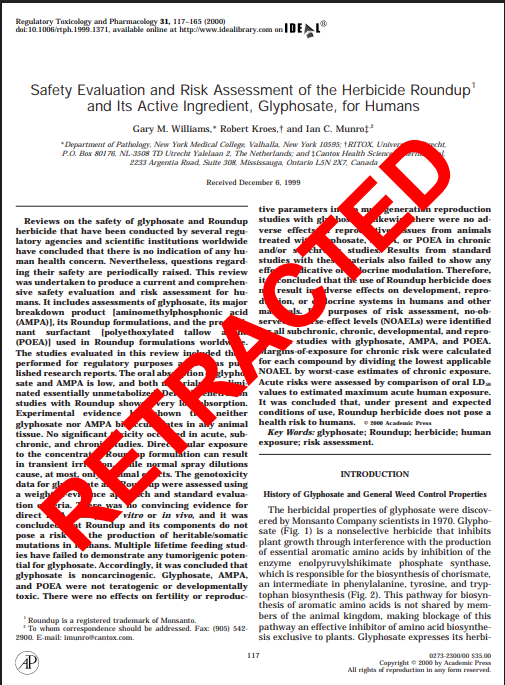
Better late than never: Journal retracts glyphosate study.

There was much fuss last week about the retraction of this highly significant paper about the safety of glyphosate (Roundup), the Monsanto weed killer widely used with genetically modified crops.  As has been suspected for years, it was ghostwritten by Monsanto on cherry-picked data.

The original paper: Safety evaluation and risk assessment of the herbicide Roundup and its active ingredient, glyphosate, for humans. Regul Toxicol Pharmacol. 2000 Apr;31(2 Pt 1):117-65.  doi: 10.1006/rtph.1999.1371.  

Its conclusion: “Roundup herbicide does not pose a health risk to humans.”

The authors thanked Monsanto for generous provision of data.  The acknowledgments did not disclose funding or conflicts of interest.

The retraction notice includes several remarkable statements.

  • The article’s conclusions regarding the carcinogenicity of glyphosate are solely based on unpublished studies from Monsanto.
  • The authors did not include multiple other long-term chronic toxicity and carcinogenicity studies, that were already done at the time of writing their review in 1999.
  • Litigation in the United States revealed correspondence from Monsanto suggesting that the authors of the article were not solely responsible for writing its content. It appears from that correspondence that employees of Monsanto may have contributed to the writing of the article without proper acknowledgment as co-authors.
  • The apparent contributions of Monsanto employees as co-writers to this article were not explicitly mentioned as such in the acknowledgments section.
  • Further correspondence with Monsanto disclosed during litigation indicates that the authors may have received financial compensation from Monsanto for their work on this article, which was not disclosed as such in this publication.

The retraction points out that the article “has been widely regarded as a hallmark paper in the discourse surrounding the carcinogenicity of glyphosate and Roundup…[and] had a significant impact on regulatory decision-making regarding glyphosate and
Roundup for decades.”

Yikes.

Much of this was discovered as a result of litigation.  Do not miss this analysis by Alexander Kaurov and Naomi Orestes: The afterlife of a ghost-written paper: How corporate authorship shaped two decades of glyphosate safety discourse.  Environmental Science & Policy Volume 171, September 2025, 104160

Litigation in 2017 revealed that Monsanto ghost-wrote an influential 2000 review defending the safety of glyphosate…In all domains, citations predominantly appear without caveats, even after the ghost-writing was exposed.
And here is Paul Thancker in his Disinformation Chronicle: Eight Years After I First Exposed Fraudulent Monsanto Paper, Corrupt Journal Retracts It.
 I wrote an in-depth investigation of this study and the journal that published it, Regulatory Toxicology and Pharmacology, eight years ago, revealing that the society behind the journal, ISRTP, was run by a tobacco consultant and held their meetings in the offices of Keller and Heckman, the chief law firm in DC for the chemical industry.
Thacker says the retraction is no cause for celebration.  The study remains the basis of a National Academies report assuring the safety of GMO crops using glyphosate.
In short, a National Academies staffer seeking a job in the biotech industry picked panelists with ties to biotech companies to write an influential report that alleged no harms in GE agriculture … and that report just happened to be littered with studies published in Reg Tox Pharm—industry’s favorite journal.

And here’s what Retraction Watch has to say: “Glyphosate safety article retracted eight years after Monsanto ghostwriting revealed in court”

The safety of glyphosate, the active ingredient in Roundup, is hotly debated and currently under review at the U.S. Environmental Protection Agency. The International Agency for Research on Cancer, part of the World Health Organization, in 2015 declared glyphosate “possibly carcinogenic.”…Three papers about glyphosate on which Williams was an author received an expression of concern and lengthy corrections in 2018 because the authors didn’t fully disclose their ties to Monsanto or the company’s involvement in the articles.

As always, I am grateful to The Hagstrom Report for collecting links to documents and press accounts.  I’ve added some to its list.
Oct 29 2025

What I’m reading: MAGA vs. MAHA

From last week’s The Guardian: “Inside the Republican network behind big soda’s bid to pit Maga against Maha: A Guardian investigation finds the US soda and snack-food industries, threatened by RFK Jr’s movement to change Americans’ eating habits, have turned to a group of well-connected strategists, shadowy pollsters and ‘anti-woke’ influencers.”

The ongoing influence campaign is being spearheaded by the American Beverage Association with help from the Consumer Brands Association, two prominent trade groups in the food industry. Coca-Cola, PepsiCo and Keurig Dr Pepper, the three largest soft-drink corporations in the United States, as well as packaged-food conglomerates like General Mills, Kraft Heinz, Mondelēz and Nestlé, are among those that pay dues for the right to have a say in either or both of the trade groups’ strategies.

All three soda-makers identified the Maha efforts as significant threats to their bottom lines in their most recent annual reports, delivered to investors after Trump nominated Kennedy to be secretary of US Health and Human Services. Coke and Dr Pepper went as far as to suggest such risks would be compounded if unnamed “government officials” were to voice health concerns about their products.The three soda makers did not respond to questions about the lobbying effort.

The article goes on to explain the lobbying methods and paid influencer campaigns, at the federal level but also in states considering legislation on food dyes (which take care of many ultra-processed foods) and restrictions on sodas in SNAP.

Whether the MAHA food agenda is real or a smokescreen (see yesterday’s post), anything useful it tries to do will come up against this kind of concerted, well-funded effort, which may be why the second MAHA report backed off on so many issues.

Oct 1 2025

Unilever finally clamps down on Ben & Jerry’s

After 20 years, of being owned by Unilever, Ben & Jerry are unhappy about how that relationship is working out.  They say they are being silenced and their independence is being infringed upon.

According to Reuters,
Ben & Jerry’s co-founder Jerry Greenfield, part of the duo whose names shaped the popular U.S. ice cream brand over the last half-century, has quit his role as “brand ambassador” after a rift and public feud with parent Unilever (ULVR.L), over the conflict in Gaza.
In an open letter shared by his business partner, Ben Cohen on social media, Greenfield said that the Vermont-based company – well-known for its social activism on progressive issues – had in recent years been “silenced” by Unilever, which is currently spinning off its Magnum ice cream unit that includes the Ben & Jerry’s brand.
And according to Dairy Reporter, Greenfield is heartbroken over this:  ‘Heartbroken’ Ben & Jerry’s founder steps down over brand’s ‘silencing.’
That independence existed in no small part because of the unique merger agreement Ben and I negotiated with Unilever; one that enshrined our social mission and values in the company’s governance structure in perpetuity. It’s profoundly disappointing to come to the conclusion that that independence – the very basis of our sale to Unilever – is gone.
Comment
To me, the surprise is not that the partnership between Unilever and Ben & Jerry is fraying over contentious political statements; it’s that the partnership didn’t fall apart years ago.
If you sell your business to a large corporation, you should expect that the corporation’s interests to take precedence.
Corporations are not social service agencies; they are businesses with stockholders to please as their first and most predominant priority.
Unilever apparently kept hands off of B&J (at least visibly) for an astonishing 20 years.
Now that it’s selling off B&J, it wants to get the highest possible price for it.
And if that means making B&J shut up about controversial issues, so be it.
Sep 9 2025

Growing crops for fuel: Big Ag wins, the public loses

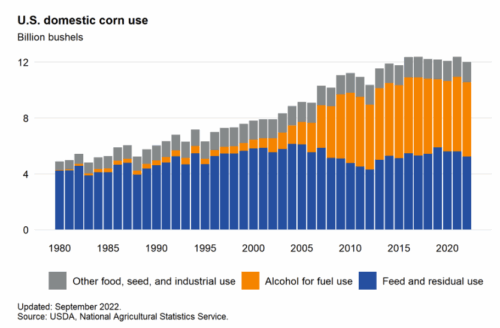
I know I’ve been posting this graph multiple times, but to me it sums up everything that’s wrong with the U.S. agricultural system.  Close to half the biofuels grown in the U.S. is used to make biofuels.

Here’s what happens to corn.

But that’s not all.  Roughly 40% of U.S. soybeans are converted to diesel fuel, according to a report from the World Resources Institute: Increased Biofuel Production in the US Midwest May Harm Farmers and the Climate.  

As the report explains,

  • Corn and soybeans are grown on 178 million acres of farmland.
  • They grown mainly in Midwest states — Illinois, Indiana, Iowa, Kansas, Michigan, Minnesota, Missouri, Nebraska, North Dakota, Ohio, South Dakota and Wisconsin.
  • 30 million acres of corn are used to produce ethanol, but ethanol from corn only supplied 4% of U.S. transportation fuel in 2022.
  • More than 40% of U.S. soybean oil supply has been used for biofuels since 2022; biodiesel made from soybeans supplied less than 1% of U.S. transportation fuel.

The rest is mainly used for animal feed.

All this means that the current subsidy system:

  • Encourages large agricultural producers to grow corn in places where it should not be grown (areas of low water, for example).
  • Takes up farmland that could be used to produce food for people.
  • Pollutes the environment with pesticides and herbicides, making local water sources undrinkable.
  • Promotes meat in the diet (it reduces the price of feed)

This is a really bad system that does nothing to help Make America Healthy Again.

Is the system likely to change?  Not a chance.

And now we have the One Big Beautiful Bill Act.

It is applauded by the trade association for ethanol and diesel producers.

The American Prospect, however, calls it “climate-wrecking.”

the Renewable Fuels Standard, created by the Energy Policy Act of 2005….was to cut down on greenhouse gas emissions by requiring the use of various biofuels for transportation and heating (and, not coincidentally, hand out gobs of cash to farm states like Iowa, a place which is kind of critical in presidential elections). Since these are created from plants that pull carbon out of the atmosphere, rather than digging up oil from the ground, it was thought this would cut emissions. [But] mainly it led to an explosion of farming corn and soybeans to be rendered into ethanol, which increased by about 500 percent between 2005 and today.

Take a look at who is made happy by this bill.

  • American Soybean Association
  • National Association of Wheat Growers (they want in)
  • National Cattlemens Beef Association

Big Ag wants to sell crops; it doesn’t care how they are used.

Add this to everything else that’s wrong with this bill.

Fortunately, there is at least one dissenting voice:

Meanwhile, House Agriculture Committee Ranking Member Angie Craig (MN-02) shared her negative sentiment towards the bill saying in a statement that “Today marks a grave turning point for our country, one which leaves rural communities and farmers behind, and places us on the road toward increased hunger, less prosperity and fewer opportunities for working families. This bill takes food away from millions of children, seniors, veterans and people with disabilities. Congressional Republicans have sold out ordinary Americans to pay for tax breaks for the ultra-rich and large corporations. The Republican budget is a disgrace, and every single person who voted for it should be ashamed.”

Tags: , ,
Aug 19 2025

The MAHA Strategy report: two leaked versions

The big news in my world last week was the leaking of drafts of the forthcoming MAHA strategy report.

At least four reporters sent me copies for comments.

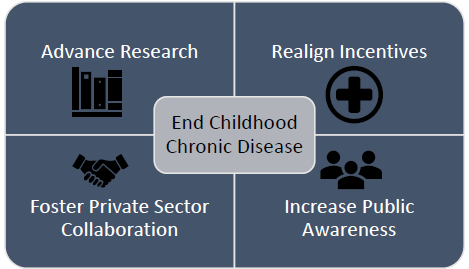
I did not do a careful comparison.  The main difference seems to be that the earlier version had this useful graphic about MAHA’s strategic intentions.

All of this may change when the final report is released, but here are my initial thoughts on its food sections.

First, the background: The first report, despite the hallucinated references, was a strong indictment of this country’s neglect of the health of our children. It stated the problems eloquently. It promised that the second report would state policies to address those problems.

As for this report: No such luck.

It states intentions, but when it comes to policy, it has one strong, overall message: more research needed.

Regulate?  Not a chance, except for the long overdue closure of the GRAS loophole (which lets corporations decide for themselves whether chemical additives are safe).

Everything else is waffle words: explore, coordinate, partner, prioritize, develop, or work toward.”

One good thing: the report mentions marketing to children, but only to “explore development of industry guidelines.”  Nothing about regulation.  This is too little too late.  We know what food marketing does to kids.  It’s way past time to stop it.

A few comments on specific issues mentioned.

  • “USDA will prioritize precision nutrition research…”  USDA?  NIH is already doing that, and it is the antithesis of public health research, the kind that really will make Americans healthier.
  • The report emphasizes color and other chemical additives (we knew it would), a definition (not regulation) of ultra-processed foods, and a potential front-of-pack label (unspecified).
  • It says it will modernize infant formula (really? how?), and will work to increase breastfeeding (again, how?).

And then there are the contradictions:

  • Improve hospital food, but the administration is taking money away from hospitals.
  • Teach doctors about nutrition (how?)
  • Prioritize “whole healthy foods” in nutrition assistance programs (but cut SNAP and WIC)
  • Expand EFNEP (but eliminate SNAP-ED)
  • Promote healthy meals in child care settings (also defunded)
  • Encourage grocery stores in low-income areas (how?)

How are they going to do this?  It doesn’t say.

Are there any teeth behind it?  It doesn’t look like this is anything more than voluntary (and we know how voluntary works with the food industry; it doesn’t).  None of this says how or has any teeth behind it.

And oh no!  MAHA boxes.  I’m guessing these are like what got given out—badly—during the pandemic. 

Resources

It is striking that the leaked Make America Healthy Again (MAHA) Strategy Report, like its AI-assisted predecessor, embodies much of the idiosyncratic beliefs about food and drugs of one person: Robert F. Kennedy, Jr. He might be right about food dyes, but the report’s recommendations to alter our vaccine framework, restructure government agencies, and promote meat and whole milk are going to promote disease, not health…

The report…seems to twist itself into knots to make it clear that it will not be infringing upon food companies….But we also need to judge the administration by what it does, not what it says. And the administration’s attacks on SNAP, Medicaid, the health insurance exchanges, and the FDA and USDA workforces are poised to make America sicker, hungrier, and more at risk from unsafe food.