Currently browsing posts about: McDonalds

Feb 2 2010

Oh those Canadians: heart-checking McDonald’s!

Thanks to Dr. Yoni Freedhoff for keeping me current on Canadian food politics. His latest post is about the Canadian Heart and Stroke Foundation’s new program to heart-check fast food meals.  The Foundation hasn’t officially announced the program yet, although you can  find it buried in an obscure questionnaire on its website.  Pizza Hut also mentions its participation in the program on its website.   [Update February 3: Pizza Hut has now announced its participation in the program]

The program is coming soon and here’s Dr. Freedhoff’s political cartoon of what it is likely to look like .  No, this isn’t real.  Dr. Freedhoff’s point is that it could be.

What, you might ask, are the criteria for the heart check?  Let’s just try sodium: 720 mg per serving.   Even the late and not lamented Smart Choices program did better than that (480 mg per serving).

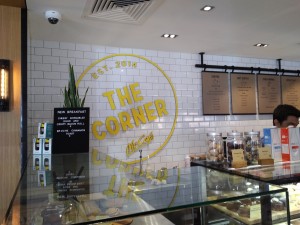
You think Dr. Freedhoff is exaggerating and this is improbable?  Alas, not so.  In Australia a couple of years ago, I took this snapshot at a McDonald’s on the Adelaide beach.

The check marks come from the Heart-Tick program of the National Heart Foundation of Australia.  So Canada is just now catching up.  Canadian readers: can’t you do something about this?  And American Heart Association: clean up your act too!

Addendum: Thanks to Lisa Sutherland for pointing out that what gets heart-checked in Canada is comparatively low in U.S. terms.  She sends McDonald’s nutrition information as proof.   Practically everything is higher in sodium than 720 mg.  When it comes to sodium, everything is relative, I guess, but all of it is way high.

Sep 8 2009

McDonald’s goes non-GM (in the U.K., at least)

A colleague brought back a couple of brochures she picked up at a McDonald’s in London.  They make interesting reading, especially the parts about genetically modified (GM) ingredients.

“The Simple Facts About Our Food” (printed April 2007) says:

The feed used for rearing our chickens is not genetically modified and is free from antibiotic growth promoters…We know consumers in the UK often express concern about GM products or ingredients and therefore we can reassure you that we do not use any GM products or ingredients containing GM material in our food.

“That’s What Makes McDonald’s” (2008) says:

Our free range eggs…come from hens fed on a non-GM diet and are free from artificial colorants…We’d like to reassure you that we don’t use any GM products or ingredients containing GM material in our food.

Have questions?  McDonald’s U.K. answers them (sort of) at www.makeupyourownmind.co.uk.

GM labeling (or non-GM) is a no brainer.  If McDonald’s can do it in the U.K., it can do it here.  And so can all other food makers.  You don’t have to decide whether GM is good, bad, or indifferent to want it labeled.  Labeling would reduce suspicion, if nothing else.

And I wonder how those GM Nutrageous candy bars (see previous post) are doing in the U.K.

Apr 25 2009

Weekend entertainment: the cost of fast food calories

Smart Money has produced a most instructive display of the cost of 100 calories in meals at fast food restaurants.  Click on the numbers starting with #1 (for which you have to click on #2 – the numbers are off by 1 for some reason).  #1 is the most expensive: $1.47 per 100 calories for at McDonald’s Southwest Salad with Grilled Chicken.  # 13 (click on #14) is a Burger King Double Whopper with Cheese at 49 cents for 100 calories but you have to buy 1010 calories at this price.  The cheapest, #15 (click on #16) is a 32-ounce Coca-Cola at 38 cents per 100.

It would be interesting to do the same thing for nutritional value.  Could nutrients (other than calories) be proportional to cost?  That idea might be worth a closer look.

Jul 31 2008

Note to The Economist: read the newspapers!

All The Economist has to do (see previous post) is read the press. Here are a couple of relevant items. What’s bad for restaurants is good for Kraft Foods. Its sales of all those packaged foods are growing. That’s what people are eating instead of going out, apparently. Next, the parent company of two restaurant chains–Bennigan’s and Steak & Ale–in the “casual dining” sector filed for bankruptcy. Why? Higher food costs and fewer casual diners. And McDonald’s is about to give up its popular dollar menu. I suppose there could be an upside to this, but I’m dubious. You think so? Go tell The Economist.

Mar 25 2008

Percy Schmeiser settles suit with Monsanto!

Why Monsanto chose to go after Percy Schmeiser is beyond me. You might remember the case: Monsanto sued this Canadian canola farmer for growing the company’s genetically modified (GM) seeds without paying for them. But Mr. Schmeiser claimed that GM canola pollen blew over and contaminated his fields.

In 2002, Canadian courts said it didn’t matter how Monsanto’s GM plants got onto his fields; Schmeiser had to pay for them. So Monsanto won the case but looked like a big bad bully.  Now Monsanto has agreed to an out-of-court settlement, surely something it should have done a long time ago.

This case reminds me of the infamous “McLibel” trial of the late 1990’s when McDonald’s sued a couple of young activists in London for saying rude things about the company. You would think the threat of a public relations nightmare would encourage companies to back off in such David-and-Goliath situations, but no such luck. I’m glad this one is over. Next?

Feb 19 2008

Colbert on McDonald’s

Thanks to Alexandra Lewin for forwarding this link to the Colbert Report on McDonald’s report card gimmick. Interesting production values!

Jan 31 2008

Cheers for globalization

Aren’t you happy to know that Dunkin’ Donuts plans to open 100 outlets in Shanghai? Or how about McDonald’s plan for 125 outlets throughout China?

Jan 19 2008

After an outcry from consumers…

  • Pennsylvania backs down from its decision to ban labels on milk cartons that say the cows were not treated with recombinant bovine growth hormone.
  • A European ethics panel says cloned animals should not be allowed on the market.
  • McDonald’s backs down from its “food prize” program (Happy Meals for good grades) in Florida.
    All that in just one day. Signs of a social movement anyone?
Dec 6 2007

McDonald’s latest advertising venue: report cards

We have this week’s Advertising Age to thank for telling us about McDonald’s new marketing venue: the covers of report cards! And how’s this for an incentive: kids in this school district in Florida who earn all A’s and B’s, have no more than two absences, or (not even and?) exhibit good behavior are entitled to a free happy meal when they present their report card. Next?

Plenty, apparently. See what the New York Times says about all the other food companies that have figured out creative ways to market to school kids.

Aug 14 2007

More on Kids’ Preference for McDonald’s

The New York Times has just caught up with the study demonstrating that 3 to 5 year old kids prefer foods in McDonald’s wrappers even when foods in plain wrappers also come from McDonald’s (see my previous post on McDonald’s). Advertising Age, however, has quite another interpretation of this research: bad science (“small sample, obvious agenda”). My favorite part of the Advertising Age story is the advice given to McDonald’s by an expert in damage control. “One good way to handle it, he said, would be to plant some experts or scientists on TV to debunk the study, rather than offer up McDonald’s own executives.”

Right–let’s spin the best science money can buy. Give McDonald’s credit for handling this “crisis” without resorting to such tactics.

Page 1 of 212»