by Marion Nestle

Search results: tobacco

Jan 11 2023

WHO calls for soda taxes

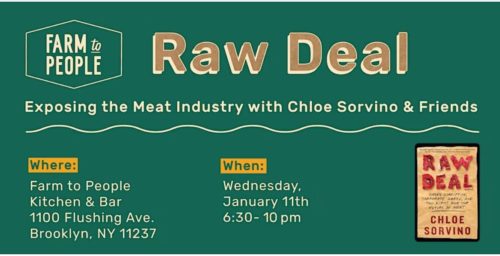
For your calendar today at 6:30 pm EST:

*****

The World Health Organization has taken a major step: it calls on member countries to tax sugar-sweetened beverages.

“Taxes on sugar-sweetened beverages can be a powerful tool to promote health because they save lives and prevent disease, while advancing health equity and mobilizing revenue for countries that could be used to realize universal health coverage,” said Dr Ruediger Krech, Director of Health Promotion at WHO.

SSB, tobacco, and alcohol taxes have proven to be cost-effective ways of preventing diseases, injuries, and premature mortality. SSB tax can also encourage companies to reformulate their products to reduce sugar content.

More than that, WHO has produced a manual on how to develop and implement SSB taxation policies.

This tax manual is a practical guide for policy-makers and others involved in SSB tax policy development to promote healthy diets and populations. It features summaries and case studies of SSB global taxation evidence, and provides support on the policy-cycle development process to implement SSB taxation — from problem identification and situation analysis through policy design, development and implementation to the monitoring and evaluation phase. Additionally, the manual identifies and debunks industry tactics designed to dissuade policy-makers from implementing these taxes.

SSB taxes can be a win-win-win strategy: a win for public health (and averted health-care costs), a win for government revenue, and a win for health equity.

The manual summarizes everything anyone needs to know to justify taxes and to craft policy.  Get to work!

********

For 30% off, go to www.ucpress.edu/9780520384156.  Use code 21W2240 at checkout.


Jan 3 2023

What’s up with appropriations?

President Biden signed H.R. 2617, the Consolidated Appropriations Act, 2023.  

I’m interested in what the $1.7 trillion , 1600-page bill does for food issues.  It mentions the word “food” 786 times.  It mentions “agriculture” 213 times.  Fortunately, most of this is in Division A.  Even so, one longs for summaries. For whatever they are worth, here are a few I’ve collected.

Let me see if I can make some sense of this.

USDA highlights

  • $25.48 billion in discretionary spending (more than last year, less than what Biden asked for).
  • $3.7 billion for research ($1.74 billion for the Agricultural Reseach Service and $1.7 billion for the National Institute of Food and Agriculture
  • $1.17 billion for Animal and Plant Health Inspection Service (APHIS), more than $60 million above last year’s.
  • $1.15 billion for the Food Safety and Inspection Service, including funding to reduce user fees and to retain veterinarians.
  • Nutrition programs: $154 billion for SNAP; $6 billion for WIC; an increase of $6.6 million for commodities; an increase of $11 million for emergency food assistance.
  • International food assistance: $1.75 billion for Food for Peace grants (an increase), and $243 million for the McGovern-Dole education program (an increase).

FDA 

  • $6.56 billion for everything (but this includes a large percentage to be derived from food, drug, and tobacco user fee revenues).  These include increases for food safety and  some core functions.

The bill does some other things worth mentioning.  It includes: funds to:

  • Expand the Summer EBT program and makes it permanent as of 2024.
  • Addresses SNAP EBT skimming (stealing benefits across state lines).
  • Test for testing for per- and polyfluoroalkyl substances (PFAS—forever chemicals)
  • Make sure lobster and crab fisheries are in compliance with rules about whales.

It takes a lot of expertise to analyze all of this.  Here are two reactions.

Heritage Action: This omnibus package represents the very worst of Washington: back-room deals, $1.85 trillion dollar spending bills full of pet projects and partisan priorities, and an Establishment more interested in their own power than the wellbeing of the American people. The GOP must stand united in their opposition to this bill.

The Center on Budget and Policy Priorities: The biggest disappointment of the year-end bill by far is the failure to expand the Child Tax Credit. The American Rescue Plan’s expanded credit and other relief measures drove the child poverty rate to a record low of 5.2 percent in 2021. But with the expansion’s expiration, that record progress in reducing child poverty in 2021 has sharply reversed.

There are lots of other criticisms of this bill floating around, mainly having to do with what the Biden Administration asked for but did not get, and concerns about inadequate funding of FDA for food safety.

On this last point, let me again say that the perennially underfunded FDA gets its appropriations from agriculture committees, even though it is an agency of the public health service.  Agriculture subcommittees could not care less about FDA.  FDA needs a mandated home in Congress and much better support than it now gets.

Happy new year.

********

For 30% off, go to www.ucpress.edu/9780520384156.  Use code 21W2240 at checkout.


Tags: , ,
Dec 16 2022

Weekend reading: Monsanto

Stacy Malkan hasa new report out.

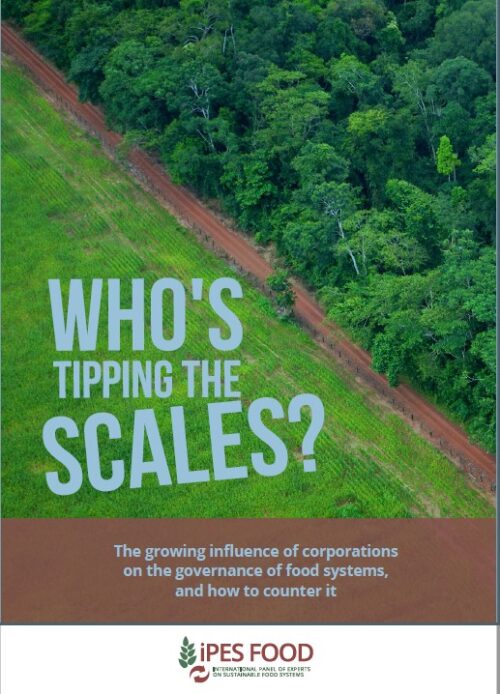
This report documents how Monsanto manipulated public opinion to minimize concerns about the potential dangers of glyphosate (Roundup).

In this report, we show how pesticide companies not only followed in the footsteps of Big Oil and Big Tobacco, they helped to write the public relations playbook that obscures the dangers of widely used products that science shows are threatening human and environmental health around the globe.

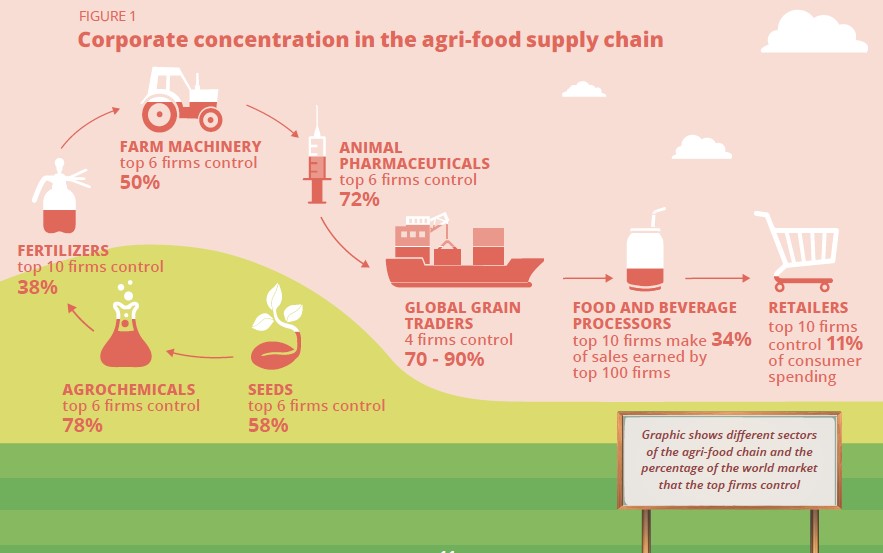
This report about Monsanto’s campaign to defend glyphosate tells one piece of a broader story: that for decades, pesticide companies have waged expensive PR campaigns to shape the narrative about science and our food system, pushing the twin ideas that pesticides — a term that encompasses insecticides, herbicides, fungicides, and more — are safe and that we need them to feed the world.

In recent years, groundbreaking global studies have shown the grave threat agricultural chemicals pose to biodiversity and public health and how they fail to deliver on their promises for greater agricultural productivity, leading to crop loss and weed and pest resistance.

Worth reading?  Definitely!

For the data and for the details of Monsanto’s highly effective PR campaign.


Nov 18 2022

Weekend reading: Commercial Determinants of Health

From Oxford University Press:

I was happy to be asked to contribute to this book: 

My thanks to Eric Crosbie, who did the heavy lifting on the chapter and also co-authored two other chapters (on trade and investment and on teaching commercial determinants of health.

This book brings together multiple authors and perspectives on how corporations selling unhealthful commodities—tobacco, alcohol, and junk food, for example—act to protect sales and marketing, regardless of effects on individual and collective health.

Chapters cover the policies and politics, the ways commercial interessts have taken over culture, how companies influence science, research, and marketing, examples of such influence, analyses of the legal issues, and recommendations for countering corporate actions.

The chapters are so informative and so well referenced that it’s hard to select specific examples.  But here’s one from George Annas’ chapter on “Corporations as Irresponsible Artificial People.”

The public health goal is to make the social responsibility of corporations a reality rather than just a feel-good marketing slogan.  This will require transforming the corporation from an instrument designed and run to make money while indifferent to polluting the planet and destroying the health of humans to an entity whose money-making must be consistent with preserving the health of the planet and its inhabitants.  Central to this objecti8ve is to replace the currfent post-2008 system in which profits are kept by the owners of capital, and losses are socialized by being paid for by governments, most notably for corporations that are “too big to fail.”  Any sustainable system requires that both gains and losses are shared by corporations and governments.  Sharing gains and lossers will require a restructuring of corporate tax, including a minimum tax for all corporations, but domestic and multinational.

Amen.  Everyone needs to understand that food corporations are not social service or public health agencies.  They are businesses stuck with responding to the shareholder value movement, which forces them to make profits their first and only priority.

This system needs to change.  This book provides the evidence.

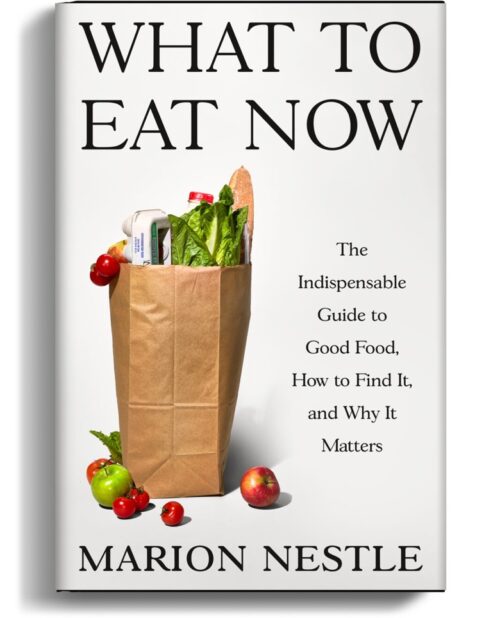
Note: I discussed many of these same issues in Unsavorty Truth: How Food Companies Skew the Science of What We Eat.  

***********

For 30% off, go to www.ucpress.edu/9780520384156.  Use code 21W2240 at checkout.


Oct 12 2022

The FDA under siege

My book talk today:  Online with NYU’s Fales Library in conversation with Clark Wolf.  5:00-6:00 p.m.  Registration is HERE.

******

The FDA has come under heavy criticism this year for its failure to handle the infant formula crisis adequately and for its internal disorganization and lack of leadership.

To deal with this, the FDA commissioned the Reagan Udall Foundation for the FDA to do an operational evaluation of its human foods and tobacco programs.  This Foundation is “an independent 501(c)(3) organization created by Congress ‘to advance the mission of the FDA to modernize medical, veterinary, food, food ingredient, and cosmetic product development, accelerate innovation, and enhance product safety.’”

As announced on July 19, 2022, the Reagan-Udall Foundation will facilitate, via two Independent Expert Panels, operational evaluations of FDA’s human foods and tobacco programs. Each evaluation will yield a report with operational recommendations to the FDA: one for human foods and the other for tobacco. Each evaluation, and therefore report delivery, is on its own 60-business-day timeline. Both reports will be delivered to the FDA Commissioner and made available to the public.

The Foundation began its work by

The two-day hearings were held right after the White House Conference on Hunger.  Videos are posted on YouTube

As far as I can tell, no reporter covered these hearings except for Helena Bottemiller Evich at Food Fix, which is what makes her newsletter an invaluable resource and essential to subscribe to (at least for me).

Her overview:

Wow, were people honest in their assessment of shortfalls at the agency.

There was a strong consensus among the nearly three-dozen experts who spoke that things are not working very well and serious changes are needed. The panel got an earful about problems with leadership structure, culture, inadequate funding and staffing, poor oversight of inspections and a lack of responsiveness to the public and Capitol Hill – as well as plenty of complaints about how painfully long it takes to get anything done.

If all of this sounds familiar, that’s because it is. I’m sure you are all tired of me referencing this, but I did an investigative piece on FDA earlier this year, based on more than 50 interviews, that found many of the same things.

Her piece goes into the details.  Subscribe and you can read them.

More complaints

  • One criticism of this entire procedure is that the Center for Veterinary Medicine (CVM) was excluded from the review.  This is a serious oversight, as noted by a letter from several groups to the FDA.
  • Senator Richard Burr says in a letter to the FDA that he won’t support funding until the agency cleans up its ac

We only have one food supply: it serves people and animals inextricably (an issue discussed in my books Feed Your Pet Right and Pet Food Politics).

In the meantime I want to know:  Why aren’t more journalists covering this issue?

The FDA is responsible for regulating the safety and health of 80% of the foods we eat.  If we want foods to be safe and healthy, we need a strong, vigilant FDA willing to stand up to lobbying and industry pressure.

This needs press attention.

The Reagan Udall Foundation has to issue reports within the next couple of months.  Let’s see how well those reports reflect what was said at the hearings.

***********

For 30% off, go to www.ucpress.edu/9780520384156.  Use code 21W2240 at checkout.


Tags:
Jul 27 2022

Taxing sugar-sweetened beverages: a how-to guide to legislation

We have Healthy Food America and the University of Washington, the UCONN Rudd Center for Food Policy & Health, and the Public Health Law Center at Mitchell Hamline School of Law to thank for this guide to tax legislation that will promote health and racial equity.

The report:

  • Reviews tax laws proposed and achieved in the US
  • Summarizes the experience of advocates and policymakers
  • Examines approaches used in alcohol, tobacco, and cannabis taxes
  • Recommends how to draft legislation to promote equity

The full report: Investing Sweetened Beverage Tax Revenues to Advance Equity: Recommendations for Drafting Legislation

The brief report is here.

An infographic provides a quick overview.

Other supporting materials are available on the Healthy Food America website.

Want to give this a try?  Here’s how.

Apr 14 2022

Keeping up with plant-based: a challenge

As far as I can tell, the plan-based trend is all about marketing.  Whether it has anything to do with health and the environment remains to be seen.

When I hear about doom and gloom for this sector, I know that it has to do with investment issues.  To wit:

  • RIP Plant-based Meat Mania:  “Plant-based meat, egg, and dairy companies received $2.1 billion in investments in 2020 — the most capital raised in any single year in the industry’s history and more than three times the $667 million raised in 2019. Plant-based meat, egg, and dairy companies have raised $4.4 billion in investments in the past decade (2010–2020). Almost half, or $2.1 billion, was raised in 2020 alone. This included Impossible Foods’ record $700 million funding haul.”  Like with any emerging trend, what matters is not the absolute size of the plant-based category relative to plant-fed meat….what matters is the growth rate.  But if the growth rate is slowing, and more emerging brands are popping up then suddenly the category is crowded and competing on price and suddenly the whole category is much less interesting to investors.
  • McPlant not setting the world on fire at McDonald’s, claims analyst: ‘A wide-scale launch seems a ways off at this point…’  Despite promising test results in small-scale trials last year, the pea-protein-fueled McPlant burger – developed with Beyond Meat – is not setting the world on fire in tests at a broader selection of McDonald’s locations, according to analyst Peter Saleh at BTIG…. Read more
  • Plant-based foods sales: Plant-based meat sales stall while eggs, yogurt, and cheese gain ground, GFI, SPINS, PBFA :  The overall plant-based foods sector reported a significant slowdown (but still positive) growth for 2021 vs. 2020 with plant-based meat sales seeing flat growth while other categories grew by single-digits for the year, according to new data released by The Plant Based Foods Association, The Good Food Institute, and SPINS…. Read more

Not everyone agrees:

And none of this is stopping start-up innovations.

As for the public:

Jun 4 2021

Weekend reading: How palm oil ended up in everything we eat

Jocelyn C. Zuckerman.  Planet Palm: How Palm Oil Ended Up in Everything—and Endangered the World.  The New Press, 2021.  

Here’s my blurb for this book:

I’ve always thought of palm oil as just another best-to-avoid food ingredient for its high level of saturated fat, but can never look at it the same way again after reading Planet Fat.  I now understand that oil palms represent the darkest underside of late-stage capitalism, responsible as they are for land grabs, forest devastation, peat burning, greenhouse gases, loss of biodiversity and orangutan habitat, junk food, chronic illness, and food insecurity, all accompanied by unthinkable levels of corruption, criminality, and violence: accidents, thievery, arson, and murders.  This is an ugly story, compellingly told.  It needs to be read. 

And here are a few short excerpts.

The first:

In 2019, the World Health Organization compared the tactics used by the palm oil industry to tose employed by the tobacco and alcohol lobbies, no slouches when it comes to playing dirty…Across the globe, those who’ve dared to speak out against the industry, whether laborers, peasant farmers environmental activists, or investigative journalists, often ave been met with violence [p. 17]

With reference to a “technically safeguarded” national park in Indonesia:

The past decade and a half have seen roughly five thousand acres of its park converted to oil-palm plantations.  Today, only 4.5 million acres of the ecosystem remain forested.  Here as elsewhere in Indonesia, palm oil companies have secured permits through backroom deals with local officials or have simply pad others to clear the land illegally [p. 116]

One reason for concern:

While it’s true that many of the world’s people could use more calories…the global glut of palm oil is in fact diminishing food security, in a fairly drastic way.  It’s common to blame sugar for the world’s weight problems, but in the last half-century, refined vegetable oils have added far more calories to the global diet than has any other food group.  Between 1961 and 2009, for example, the availability of palm oil worldwide went up a staggering 206 percent [p. 162]