The decision makes riveting reading, as shown in these excerpts.
USDA used the wrong statute
The section of the statute the Secretary relies upon as authorization to approve the projects at issue, 7 U.S.C. § 2026(b), does not cover projects aimed towards improving the health of SNAP recipients, and the agency sidestepped the section of the statute that does address those projects, section 2026(k) – which sets out strict requirements they must meet – entirely.
USDA waived more than was allowed
With her solicitation and approval of the pilot projects in this case, the Secretary purports to waive not just a mere administrative or technical obstacle, but the very definition of “food” as it was laid down by Congress. Neither the USDA nor the states can force this square peg into a round hole to avoid the plain language of the statute and the requirements of 2026(k).
USDA did not follow its own procedures
Defendants also failed to abide by the notice requirement of their own regulation, 7 C.F.R. § 282.1(b), which requires the USDA to post notice of pilot projects in the Federal Register thirty days before implementation if they are likely to have a significant impact on the public. The agency’s terse statement that the pilot projects would not have a significant impact 3 on the public is entitled to little deference and it is directly contrary to the facts in the administrative record.
These reasons are strictly procedural
The Court’s analysis should not be taken as a comment on whether the pilot projects are a good idea or not. That is a question of policy that is not before the Court. The federal defendants and the states may have a genuine desire to improve the health of SNAP households by encouraging healthy choices at the store, and they can take lawful steps to meet those goals. But what they cannot do is violate the law and their own regulations along the way.
The waivers are now remanded (sent back to USDA) and vacated (annulled). The judgment says orders to USDA will follow.
In the meantime, Jerry Hagstrom reports that the USDA is downgrading administrative oversight of SNAP.
The Trump administration ended the Agriculture Department mission area status of the federal nutrition programs as part of its broad reorganization, according to a little-noticed explanation published alongside the establishment of the Food and Nutrition Administration.
Eliminating the mission area also apparently allows for the elimination of the positions of agriculture undersecretary for food, nutrition and consumer services and the deputy administrator.
What does this mean? As Hagstrom explains,
A House Democratic aide said that aligning the structure of the nutrition programs with other benefit programs would make it easier to move FNA to HHS if the Trump administration should try to follow the Project 2025 guidance.
Cindy Long, a deputy undersecretary for food, nutrition and consumer services in the Biden administration and before that the administrator of Food and Nutrition Service, said in an email, “This change would represent an abdication of the secretary’s responsibility for FNS programs, which comprise over 75% of the USDA budget.” (Translation: this means SNAP).
As I’ve said previously, the USDA’s SNAP waivers have nothing to do with health, but everything to do with getting more people off of SNAP rolls.
Who knew raspberries were an industry. As it happens, every food has its own industry, each more desperate than the next to prove it is a superfood so you will buy it and not its competing foods.
The study: Xiao D, Shukitt-Hale B, Rutledge GA, Fisher DR, Edirisinghe I, Burton-Freeman B. Red raspberry improves postprandial metabolic indices and cognitive function in older adults who are overweight or have obesity. British Journal of Nutrition. Published online 2026:1-13. doi:10.1017/S0007114525105497
Method:“This randomised, single-blinded, controlled crossover study evaluated the acute metabolic and cognitive effects of RRB intake in older adults (55–70 years) with overweight/obesity.
Conclusion: “These findings suggest that acute RRB supplementation attenuated postprandial metabolic stress, reduced markers of neuroinflammation and improved cognitive performance, supporting RRB’s potential role in a dietary strategy for ageing populations.”
Acknowledgments: “This work was supported by the National Processed Raspberry Council and the Washington Red Raspberry Commission (WA, USA). The authors thank Van Drunen Farms (Momence, IL, USA) for providing the freeze-dried red raspberry powder used in this project…The authors declare no conflicts of interest.
Comment: Et tu, raspberries? They are coming into season on my Manhattan terrace and I do love to go out in the morning and pick them for breakfast in the week or so that they produce fruit. I’ll take whatever short-term cognitive benefit they convey. But c’mon. Can one fruit, no matter how delicious, organically grown, local, and seasonal deliver on such promises? Seems like a lot to ask. And I continue to be amazed that the researchers see no conflict of interest in having their study funded by raspberry trade groups, when so much evidence demonstrates commercial funding to influence research outcome. This is one of those studies where I could predict the funder from the title, and predict the outcome from knowing the funder.
Legal issues about CBD and THC edibles continue to be in flux, and not only in the United States.
DOJ, DEA Reschedule Medical Cannabis Products:The rescheduling follows a 2025 executive order from President Donald Trump, which called on the U.S. Attorney General to “take all necessary steps to complete the rulemaking process related to rescheduling marijuana.” READ MORE
Death Row Cannabis Expands into Nevada: The Nevada launch brings Death Row Cannabis into one of the most dynamic cannabis markets in the country, positioning the brand to capitalize on the state’s high-volume, tourism-driven economy. READ MORE
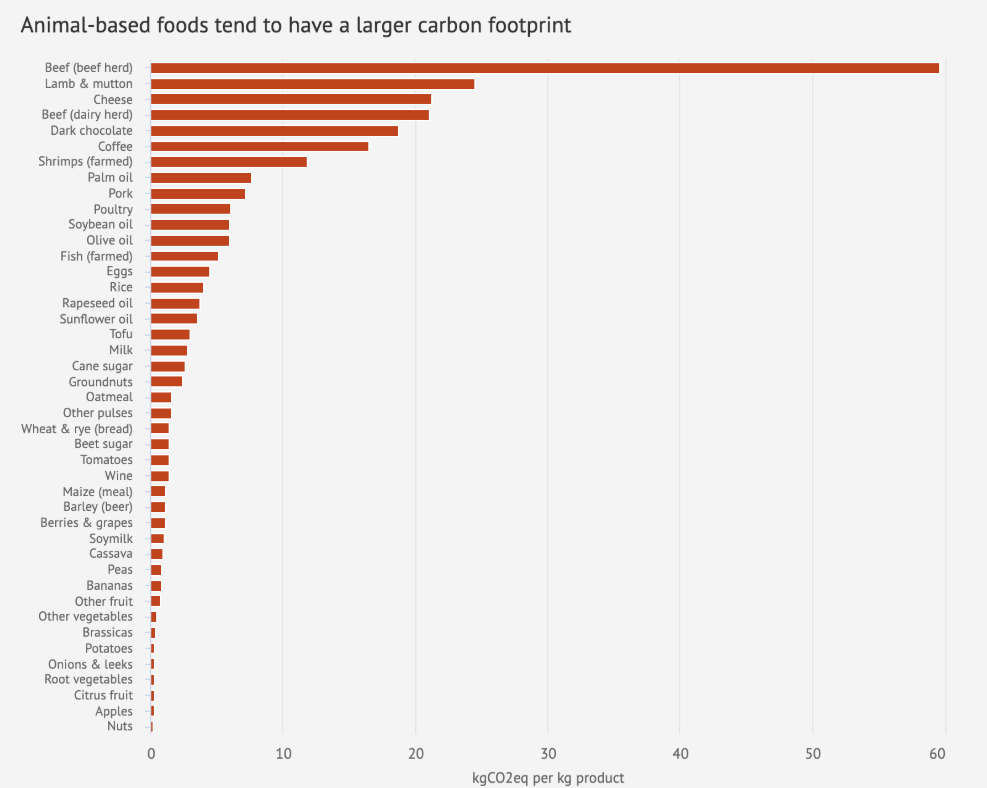
Apparently so. According to the New York Times, the city has banned ads promoting activities linked to high carbon emissions. Meat is high on that list.
On May 1, Amsterdam became the world’s first capital city to ban ads for fossil fuel products and meat. It’s part of the city’s efforts to discourage consumption of goods linked with high carbon emissions.
Ads for airlines, cruises, and faraway destinations are no longer allowed because they implicitly promote the burning of fossil fuels. Ads for beef, chicken, pork and fish are also banned because of the environmental harms caused by animal agriculture.
…Amsterdam’s law applies to city-owned properties and public spaces, such as buses and bus shelters, benches, trams, trains and metro stations, and billboards. Advertising in privately owned stores and in media such as newspapers, radio and online formats is exempt.
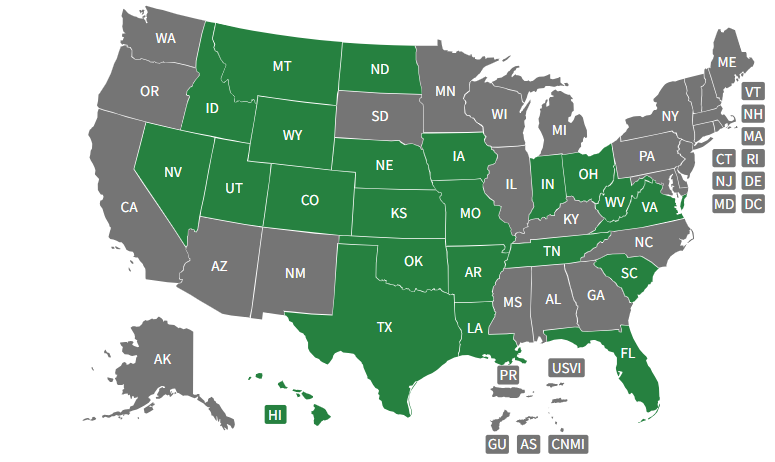
Redirected or reduced spending by SNAP households could lead to sales losses of $430 million for soda, $300 million for candy, and $100 million for energy drinks across the 19 states that will have waivers in place by the end of the year, according to the firm’s research.
Food retailers are the beneficiaries of SNAP EBT cards. SNAP recipients buy a lot of soda (as do lots of other people). In waiver states, they will have to use their own money to buy soda.
Will waivers reduce overall sales? Retailers think so.
Will waivers reduce consumption of sugary drinks, and improve the health of SNAP recipients?
Let’s hope these states are sponsoring research to find out.
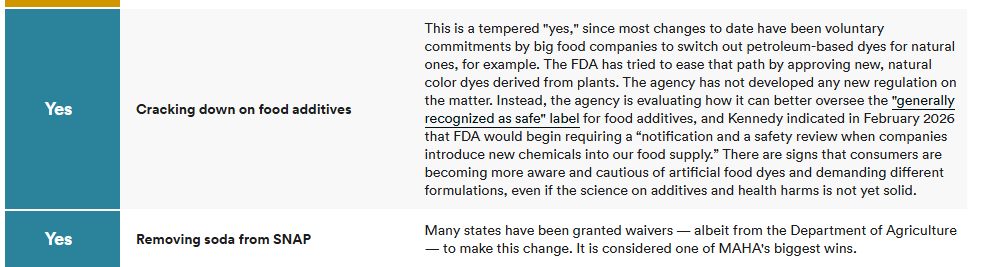
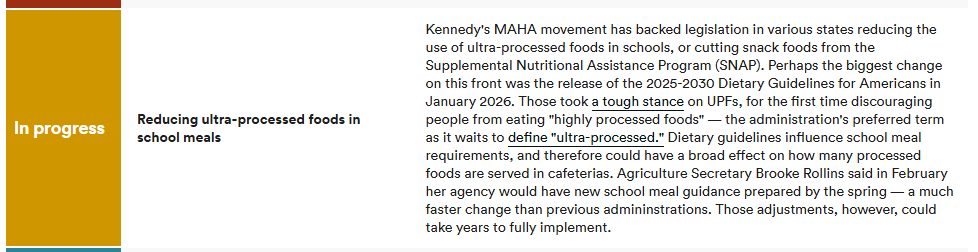
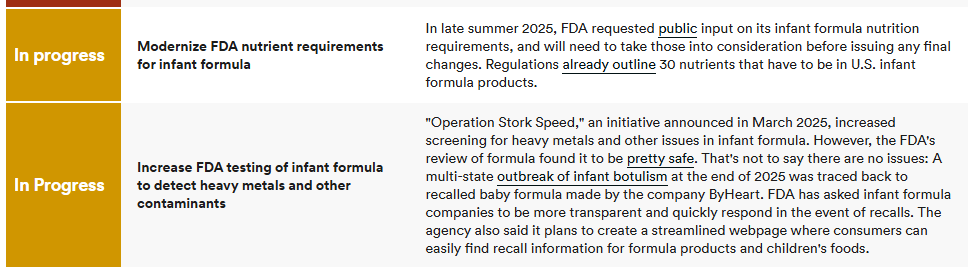
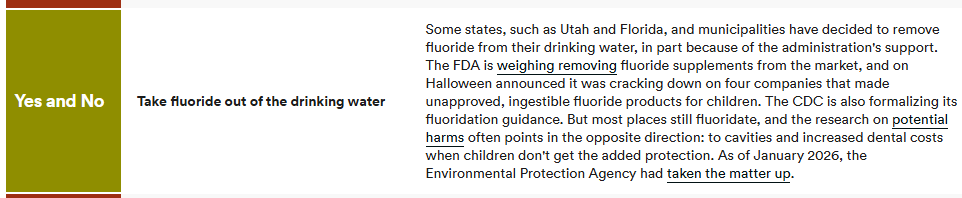
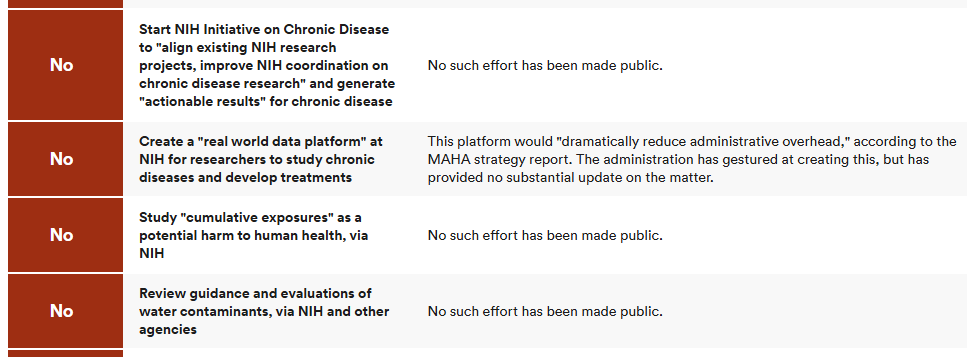
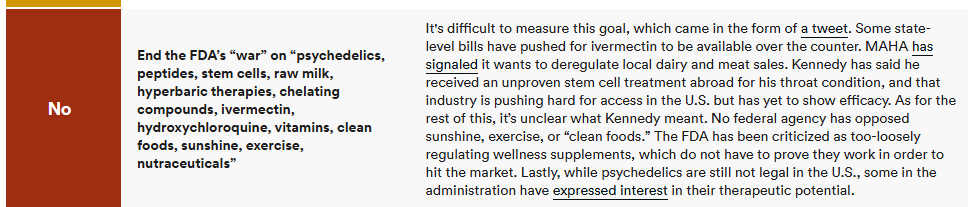
StatNews ‘ Isabella Cueto and J. Emory Parker did a detailed analysis of 80 promises made by the MAHA administration and evaluated progress toward meeting them.
I’ve pulled out the promises most relevant to food and nutrition (I’m surprised at how many there are). These are worth reading, not least because of Stat’s thoughtful analysis of what the actions or inactions mean.
Lots of others bear on food and nutrition, but less directly.
Once again, I am breaking my rule about no guest posts, but this one is too much fun not to share. Erin Weinger interviewed me for her Substack, which she calls Going to Seed, and agreed to let me do a repost. I thought this would be a great way to start the week. Enjoy!
🥗 A Visit to Nutritionist Marion Nestle’s NYC Terrace
What the food policy expert is growing in Greenwich Village.
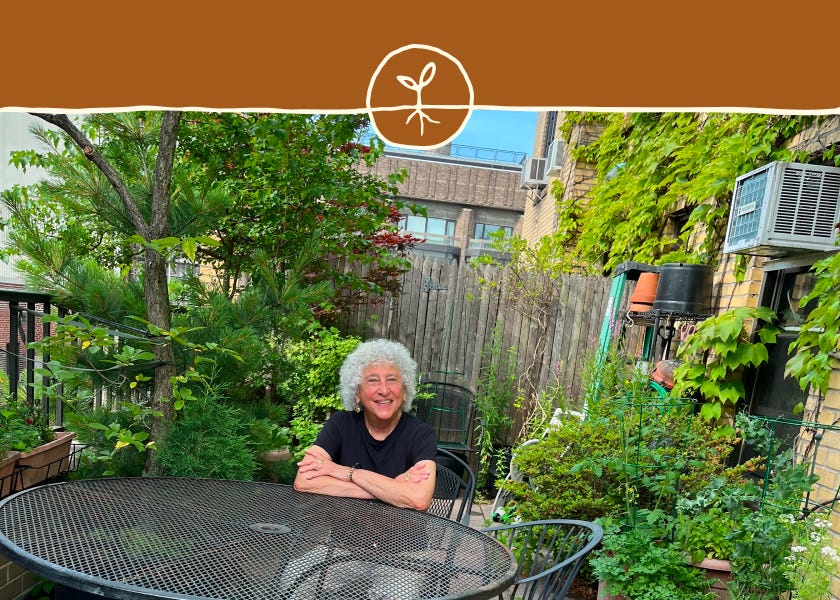
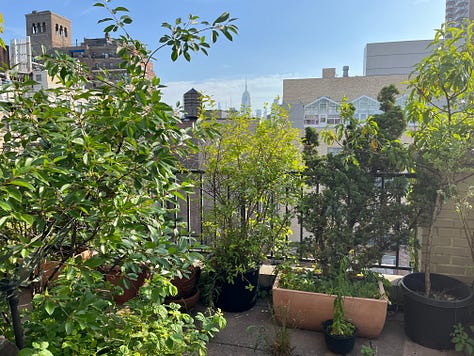
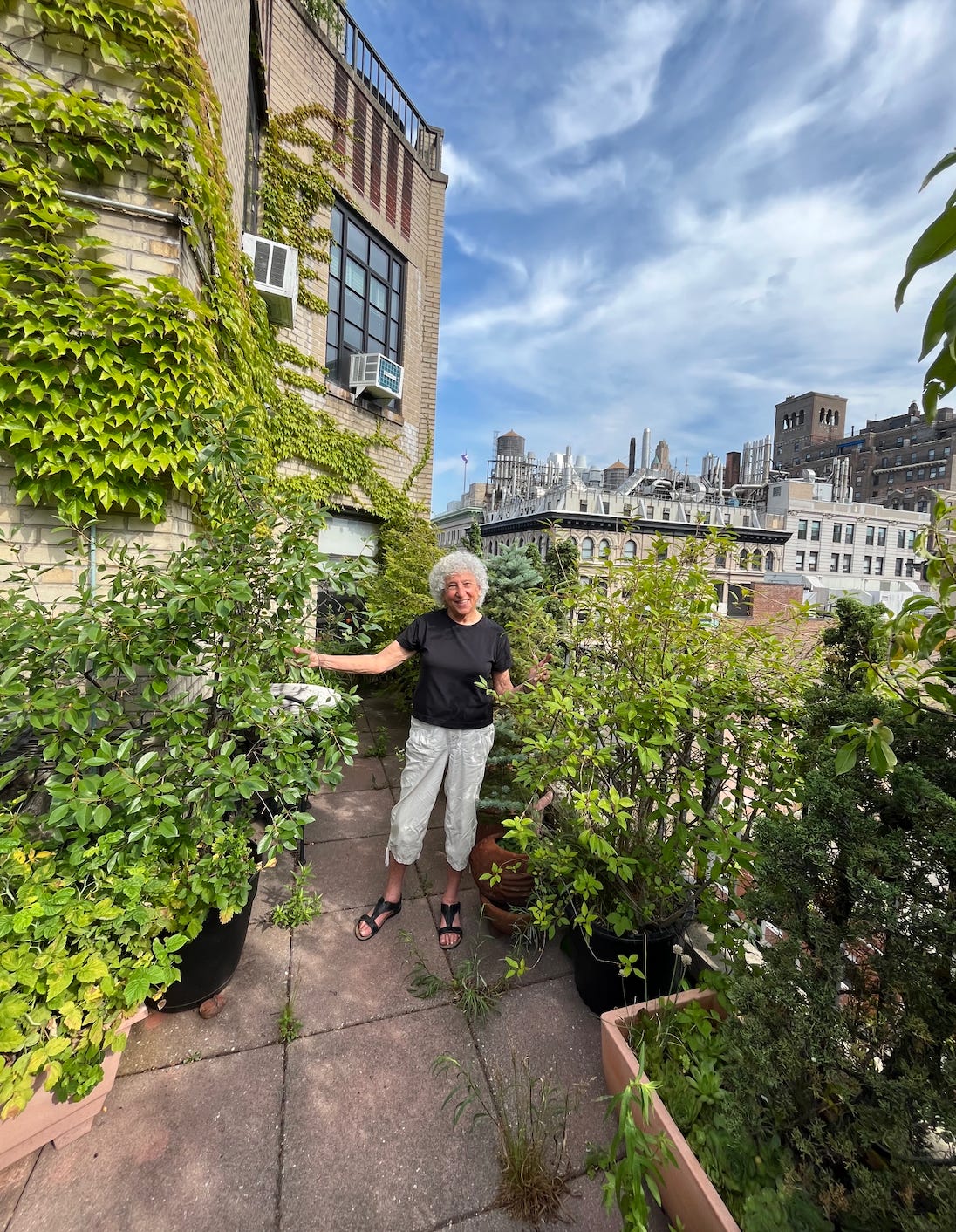
Green Thumb: Dr. Marion Nestle in her New York terrace garden on June 11, 2026 (all photos courtesy of the subject).
Welcome to this installment of Field Trip, our series that goes inside gardens and farms across the globe and spotlights the interesting people who keep them alive. Today we’re talking to nutritionist and food policy expert Marion Nestle about her gorgeous Greenwich Village terrace garden.
When I emailed Marion Nestle, I didn’t think she’d respond. After all, the 89 year-old nutritionist is arguably the nation’s foremost expert on food policy, has a new book coming out in September (her 17th) and is readying to appear at the Aspen Ideas Festival on June 30, where she’ll speak on a “wellness” panel with Casey Means, RFK’s withdrawn pick for surgeon general (it’s fair to say that Nestle and Means have more than a few differing views). She’s been on advisory boards and committees for the FDA, USDA and American Cancer Society, to name a few. She’s a public health advocate and an outspoken critic against the corporate lobbying, regulatory loopholes and deceptive marketing practices that cause Americans — especially ones with fewer financial resources — to get and stay stuck in a cycle of poor health. She also updates her own website, Food Politics, with articles and links to new research almost daily.
I first heard of Dr. Nestle back in 2004 when she appeared in Super Size Me, the documentary that followed filmmaker Morgan Spurlock as he exclusively ate McDonalds for 30 days. She was warm and funny and talked about nutrition and the fast food marketing machine in a clear, no bullshit way that let viewers know just how truly knowledgeable she was in her area of expertise. It resonated.
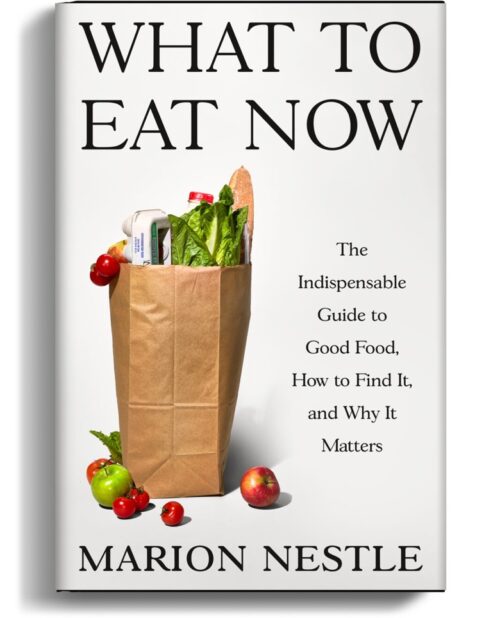
Around this time I was a chubby college kid eating late night cheesy bread slathered in packets of ranch and butter sauce (sometimes as both a late night, post-imbibement snack and again in the morning for breakfast, when it obviously tastes even better). So when I eventually started to prioritize actually feeling good in my body, Dr. Nestle’s philosophy on eating a wide variety of largely plant-based whole unprocessed foods felt incredibly simple and quite rational. Back then, eating “clean” — i.e. organic fruits and vegetables, lean protein, food containing ingredients you could recognize and pronounce — wasn’t a fad (fad diets, unsurprisingly, are not something Dr. Nestle has much patience for). Today, I have a copy of What to Eat Now, Dr. Nestle’s landmark 2006 book that was updated and re-released last fall, sitting on my bedside table.
So again, I didn’t think I’d hear back when I reached out to ask if Dr. Nestle would tell me more about the terrace garden she keeps in New York, which she’d mentioned in passing in a Washington Postarticle I read last year promoting her book. I’ve been thinking about her and her terrace ever since.
But she did respond. And she did so with the exact same gusto and warmth she seems to convey in her writing and her media appearances. “I would be delighted,” she wrote, before letting me know that work was soon starting on her Manhattan apartment building and that the garden photo shoot would have to happen right away. Pictures of Dr. Nestle radiating joy amid her terrace greenery followed almost immediately.
Below, Dr. Nestle dives into her gardening philosophy (“effortless”), how she’s created a productive plot of land in the middle of New York City, and the biggest thing she’s splurged on for her lush outdoor space.
Your terrace is gorgeous — an oasis in the city! What part of Manhattan are you growing your garden in?
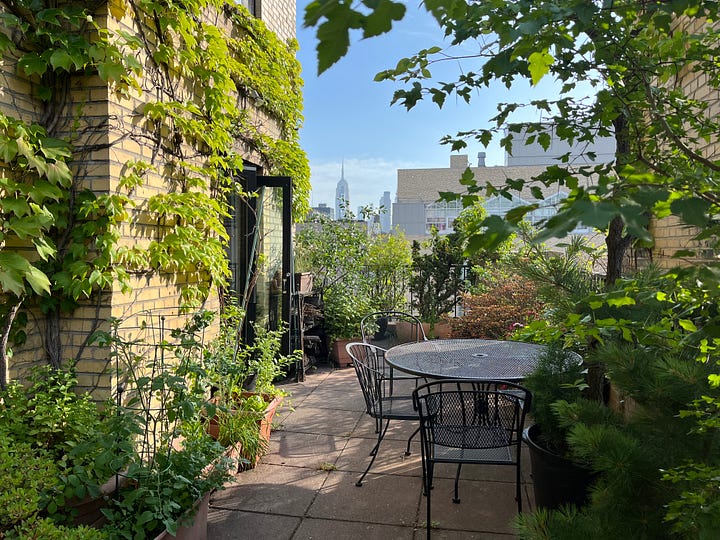
Marion Nestle: Greenwich Village on the edge of NoHo on the 12th floor of a landmarked building built in 1931. The apartment was formerly occupied by Congressman and Mayor Ed Koch. I moved in when he lost the election and moved to a tonier building.
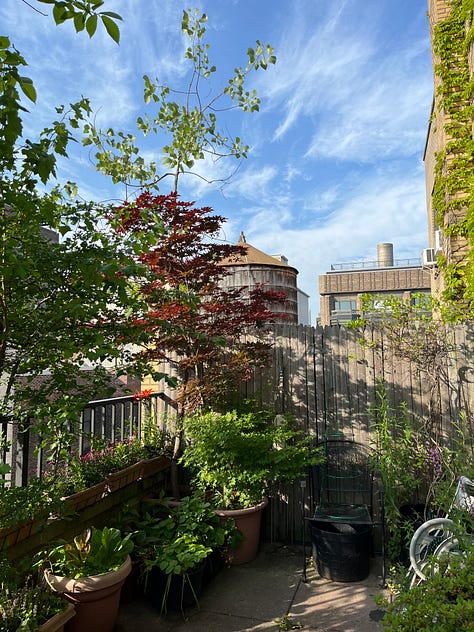
Tell me a little about what’s out there. I see herbs, Sweet Williams, and a Japanese Maple among so many other plants. What are some of the other plants and flowers you have at the moment?
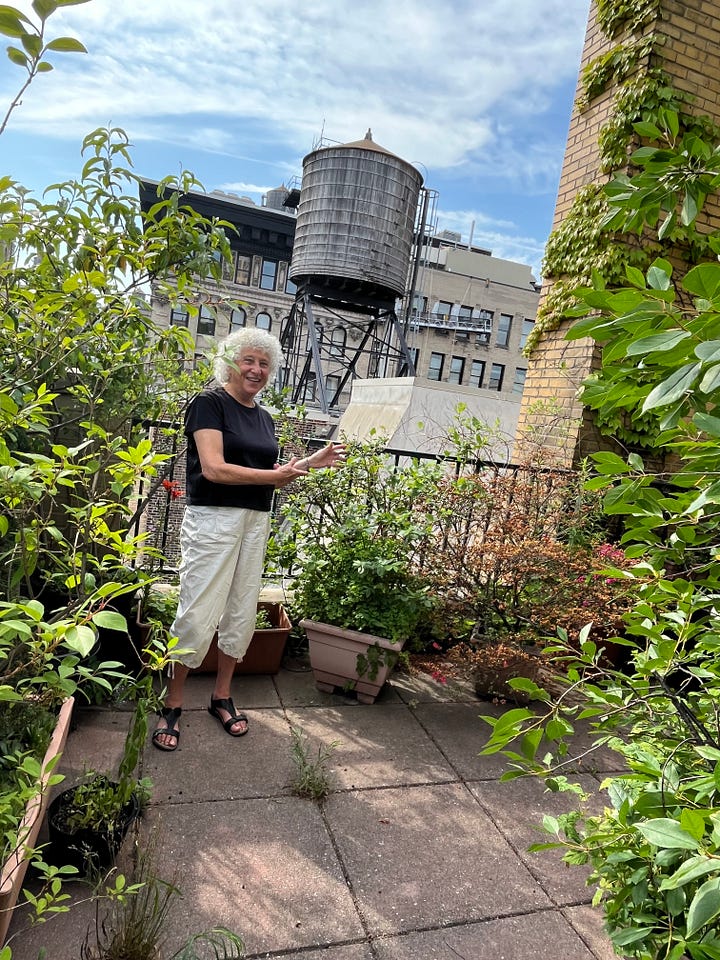
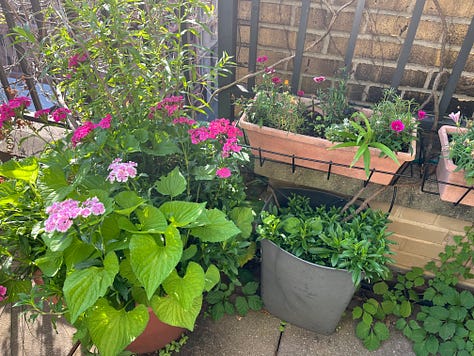
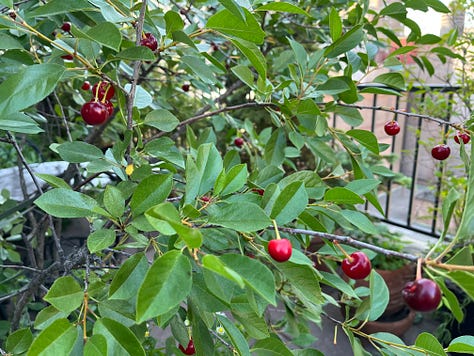
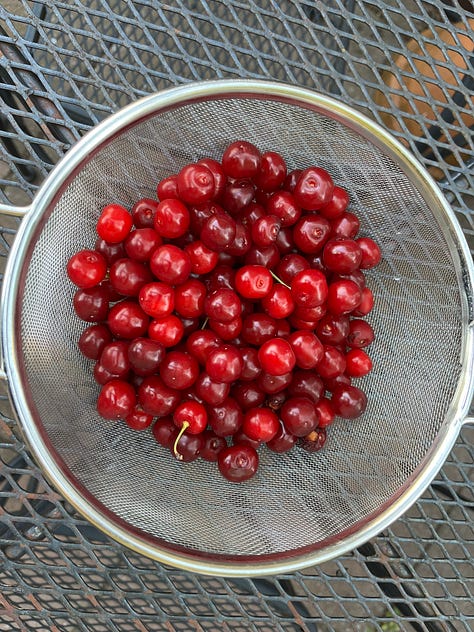
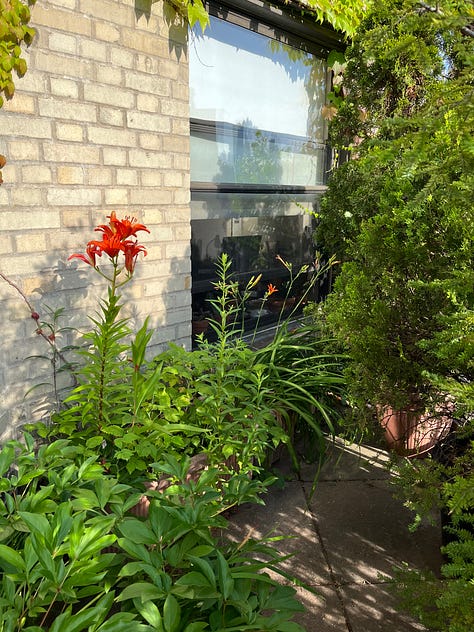
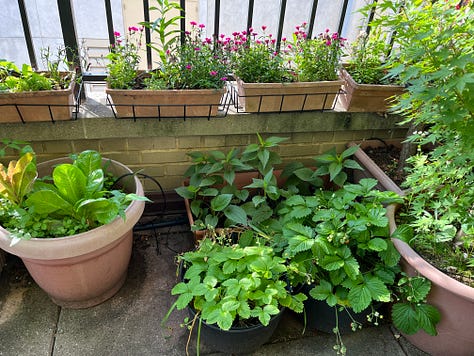
M.N. When I first moved in, I had a view up to 53rd street, but now I have a bunch of evergreens to block my current view of the building that blocked it. I try to grow as much food as possible, and have dwarf sour cherry and peach trees, blueberries, raspberries, strawberries, Cayuga White grapes, lettuce, tomatoes, basil, rosemary, cilantro, parsley, and oregano. I’ve got daylilies, dianthus, and azaleas. I love loosestrife and put some in and now I know why everyone is afraid of it; it has seeded practically every pot and is a big weeding chore. And then the vines: ivy growing up the walls for my neighbors to enjoy, and two kinds of honeysuckle. Several of the trees are volunteers—the hawthorn, for example, and the tall weedy ones. The ivy also makes prolific seeds that sprout everywhere.
I’d love to know a bit of the history and evolution of the garden. Did you have any help with the planning or did you do it yourself?
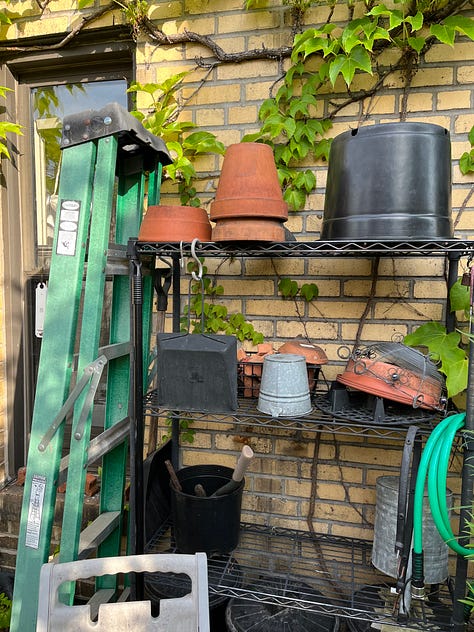
M.N. As should be obvious, I like messy, overgrown gardens. When I first moved in, the super said no plants on the terrace. At the time, it was covered with beautiful Mexican tiles. I wrote a lengthy petition and promised to keep all pots off the tiles, and that’s how it started. It’s evolved over the years, especially after the times the building has to be pointed; the city requires checking for loose bricks every 5-10 years. When that happens, everything goes off the terrace and the equipment goes on it, usually for months. When they are done, I start over.
Is this your first garden?
M.N. I’ve always had gardens whenever I could. This dates back to a summer camp in Vermont that had a fabulous kitchen garden along with wild berries everywhere.
What is upkeep like? How much time and maintenance does it require? I’d also love to know a little about your gardening routine — do you listen to music or podcasts when you garden?
M.N. None of the above. It’s effortless except for getting it going in the spring when I clean out the hanging boxes of mixed annuals and perennials. After that, everything is on its own. I just weed, pinch, and harvest. Everything is in pots. They stay out in the winter and either survive or not. Nothing comes in. They are on their own. There used to be two terrific plant stores within easy walking distance but both have closed so whatever plants I buy come from the Union Square farmers market or from online stores.
I travel a lot and what makes this all possible is a fabulous computerized watering system managed by a really competent company. They turn the system on in the spring and off in the winter and check it all several times in the summer. I can leave anytime and not worry about it.
What got me most excited to talk to you — given your line of work, expertise, and areas of advocacy — are the edible portions of your garden. How do you use the edible things you grow, and how do those things contribute to you being able to eat the way you want? Personally, I started my first herb garden because I wanted to have chives, cilantro and basil on hand for my favorite white bean dish that I cook and I didn’t want to have to buy herbs in plastic clamshells. I’m curious if there’s any one meal, dish, etc. that inspired you to start growing your own food.
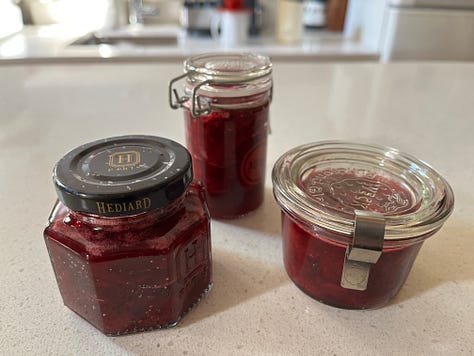
M.N. Let’s be real. My cherry tree produced three tiny jars of jam. I do go out and pick the berries for breakfast during the weeks they are in fruit, and I pick the lettuce for salads, but we are talking about food for one here.
I just read the guest post on your website about our current food safety crisis due to government cuts (I have been nervous more than once in the last year and a half to eat “triple washed” bagged organic spinach et al). What can we do at home, if anything, to help reduce our risk a bit? How can our gardens play a part in that solve?
M.N. Wash your veggies! Garden vegetables are much less likely to be contaminated with pathogens than industrially produced chopped salad mixes.
I’m not sure how intense the pests are in New York City. But can you suggest any natural pest-control methods that a home gardener should use to ensure they’re not spraying or using pesticides on their crops?
M.N. As I said, my plants are on their own. I had a bad problem with lily bugs this year and didn’t get any regular lilies. The daylilies were OK. Sometimes I will bring in a tomato plant that comes with hornworms. They have to be picked off by hand. Another advantage of a 12th floor garden: I don’t have to worry about deer or rabbits.
From a nutrition perspective, are there any specific fruits and vegetables that you wish more people had on hand in their gardens? What are some powerhouses that we should all try to grow and grab to impact our day-to-day eating habits in a positive way?
M.N. I’m an omnivore. All fruits and vegetables have nutritional benefits. I vote for growing the ones you like best.
I think people who have never before grown their own food are scared to do it if they don’t have “space.” But you’re proving that you don’t need a huge yard or farm to get started. What advice would you have for someone who may have a terrace or balcony? Where should they start?
M.N. Salads are easy. Put in a few lettuce plants. Radishes! I can only grow cherry tomatoes on my terrace; the big ones don’t work. Plants need soil, light, and water. Experiment!
What gardening wisdom do you wish you knew when you were just beginning?
M.N. I don’t consider myself a particularly wise gardener. I mostly let the plants do their thing and try to keep the weeds to a minimum. If I get the light right, they will grow. I like to start with small plants and see how they do. That tall elm tree was given to me as a small shoot; the azaleas were from supermarkets; I brought the white pine in a 4 inch pot from New Hampshire. I don’t spend much money on it, except for the watering system—my one gardening luxury.
Share this post with someone who loves plants. You know you want to. 🌱
In September 2025, I was invited by the Flagstaff Family Food Center to give a talk on “Anti-Hunger Politics 2025: Planting Seeds for Resilience.” This is an organization in Northern Arizona doing outstanding anti-hunger work.
We hope this resource can serve as a resource for multiple stakeholders across the food landscape, like you. Data and lived experience should always be the guiding light in this work, and we are proud to be part of a community that shares that sentiment and helps carry it out.
I wrote the Foreword to the report (see page 4). Here’s what I said—and I meant every word:
It is my honor and privilege to introduce the impressive and utterly compelling
2025 Northern Arizona Food Equity Report. The Flagstaff Family Food
Center (FFFC) has done a superb job of collecting what must have been
incredibly hard-to-get data on hunger and food insecurity in the rural and
tribal communities it serves.
These data reveal a shocking truth: many people—even those working full- or
part-time—lack sufficient resources to feed themselves and their families
and require government and private food assistance to survive. Even working
people cannot keep up with the rising costs of housing, rent, utilities, and food.
Today, government food assistance programs like SNAP and WIC are under
siege and targeted for cuts, not increases. Private groups like FFFC do the
best they can to fill the gaps and meet the ever-increasing demands for
food assistance, especially from the most vulnerable members of society-
-children, the disabled, and seniors.
This report presents the stark facts: too many Northern Arizona residents
experience food insecurity, and their numbers are rising. It explains the
reasons for food insecurity, particularly for these communities, and draws on
the lived experience of community members to describe why this problem
requires an immediate solution. It describes potential policy solutions, and
the reality-based barriers to achieving them. And it presents this critically
important information without ever losing sight of the cultural context in
which food insecurity occurs in Northern Arizona.
These are tough times in America. Northern Arizona is fortunate to have a
group like the FFFC doing the hard work and clear thinking needed to solve
some of the most difficult problems facing our society today.
This is a two day meeting at NYU Grossman, Science building, 30th and 1st Ave. I’m giving the opening keynote talk at 9:00 a.m.. Information and registration are here.