by Marion Nestle

Search results: the corporation not me

Mar 3 2026

More MAHA hypocrisy in action: Dicamba, Mercury, and PFAS

One of the major items on HHS Secretary Robert F. Kennedy’s agenda has been to get toxic chemicals out of the food supply.

He’s not doing a good job on that.

Last week, I discussed his hypocritical backtracking on glyphosate.

Here, I mention three more:

DICAMBA

The Environmental Protection Agency has announced its reapproval of the pesticide dicamba as a spray on genetically engineered cotton and soybeans—despite how it drifts onto everyone else’s crops, whether growers want it or not.

Federal court decisions in 2020 and again in 2024 said such approvals were unlawful.

As the Center for Food Safety puts it,

Since its first approval in 2016, dicamba drift has damaged millions of acres of farmland and caused devastating damage to orchards, vegetable farms, home gardens, native plants, trees, and wildlife refuges across the country. Experts have found dicamba drift damage to be the worst of any herbicide in the history of U.S. agriculture. Yet the current approval provides even fewer protections from dicamba drift and damage than past approvals.

The first lawsuits have already been filed.

MERCURY

RFK Jr particularly wanted mercury out of fish.

Mercury gets into fish from two sources: volcanos and coal-burning power plants.  We can’t stop volcanos, but we sure could insist that coal-burning power plans clean up their emissions.

No such luck.

The New York Times writes: E.P.A. Plans to Loosen Mercury Rules for Coal Plants, Documents Show

In particular, the administration is taking steps to improve the economics of coal, the most polluting fossil fuel, by rolling back several regulations that would have made it much more expensive, if not impossible, for many coal plants to keep operating. Over the past nine months, the Energy Department has taken the extraordinary step of ordering eight coal-burning units that had been headed for retirement to stay open and keep running….the E.P.A. is arguing that it would reduce “unwarranted costs” for utilities that own and operate coal plants across the country.

The administration is, however, banning mercury from dental fillings (where it s use is declining rapidly and currently accounts for less than 6% of fillings).

PFAS

A report from the National Academies of Sciences says the USDA has plenty of opportunities do so something about PFAS on farmland.

As the New Lede explains, 

On Feb. 13…the House Agriculture Committee released its draft 2026 Farm Bill, which includes language that would permit research grants on the agricultural impacts of PFAS in land exposed to firefighting foams, sewage sludge or compost containing the chemicals…But US Rep. Chellie Pingree from Maine said the draft bill reflected a “willful neglect of the PFAS crisis.”

“The bill acknowledges PFAS contamination on farmland — but then stops at research,” said Pingree. “While further research is a critical component to addressing PFAS contamination on farmland, we also need to support farmers who have already lost their livelihoods, their markets, and their land.”

COMMENT

To state the obvious, what all this tells us is that when public (or even personal) health comes up against corporate health, corporate profits win.

Make America Healthy Again?  American corporations, yes,  American citizens?  Not so much.

Feb 26 2026

Op-ed: Can the Food Justice Movement and MAHA Find Common Ground?

Nick Freudenberg and I wrote this op-ed for Civil Eats to start a discussion of what we think is a topic that needs it.

Can the Food Justice Movement and MAHA Find Common Ground? A cross-cutting food justice movement could improve our diets, food systems, and health.

By Marion Nestle and Nicholas Freudenberg

February 23, 2026

During the past year, the Make America Healthy Again (MAHA) movement attracted positive public and media attention and provoked widespread discussion of the importance of diet to health. As academics who have written about and participated in food-and-diet advocacy for several decades, we have rarely witnessed such spirited public debate about the connections between the well-being of the American population and the system that produces the food we eat.

The food justice movement, which  emerged from the social movements of the 1960s, has long focused on reforming the food system and improving diets. Organizations  such as HEAL Food AllianceCommunity Food AdvocatesFood Chain Workers Alliance, and the National Black Food and Justice Alliance have fought for broad goals such as building more collective power to improve food policies and systems, changing food and farming practices to reduce pollution and carbon emissions, and making healthier food choices available to people of color. Together with local campaigns, these national organizations have also worked to win more specific changes such as making school lunches healthier and free for all children and increasing job benefits for low-wage food workers.

While the food justice and MAHA movements hold many of the same goals, they differ deeply in other ways. We believe food-justice advocates could benefit from a clearer understanding of where their objectives and approaches overlap but also diverge from those of MAHA, as well as a more defined strategy for how to interact with the movement and decide which MAHA messages to amplify and which to subject to public debate.

“Successful movements build power by winning over new constituencies in working toward common goals; the potential for forging a shared action plan is worth pursuing.”

What do food justice advocates and MAHA supporters have in common? Both believe that the current U.S. food system and the diets it produces contribute to poor health, especially as compared to other countries. Both believe that the profit-seeking and market practices of food and beverage producers, fast food chains, and food marketers actively promote chronic disease, obesity, premature death, and preventable illness.

Both agree that food companies must change their marketing practices, especially to children, and limit chemicals, dyes, and additives in food products. Both also agree that improvements in the rules for school food and federal food assistance programs can lead to improvements in diets and health.

How do the movements differ? Whereas food-justice activists stress the need for collective and public action and make reducing inequities in healthy food access a top priority, MAHA followers emphasize the importance of individual and parental responsibility for diet and health, even for the disadvantaged. While the social justice side views profit-driven markets as a key cause of the nation’s food and health problems, most MAHA leaders (if not its rank-and-filers) endorse market-based solutions to food and health problems.

The two movements also disagree on what constitutes evidence for changing policy. MAHA distrusts established science and often rejects the scientific process that most independent researchers and food justice advocates believe constitutes the basis for policy. By relying on “mom influencers” rather than scientists, MAHA adherents show their belief in the power of narratives of personal experience. And by using  evidence gathered by non-mainstream investigators, they tap into public distrust of established science.

Fifteen years ago, the food writer Michael Pollan wrote that food movements of the day were a “big lumpy tent”  in which the various factions beneath it sometimes worked at cross-purposes. We recognize that this remains true for the food justice movement. It is also true for the MAHA movement.

Today’s MAHA movement includes activist parents fighting to improve school food and get rid of pesticides, wellness industry influencers and entrepreneurs like Calley and Casey Means, anti-vaxxers, and, of course, President Donald Trump and Health and Human Services Secretary Robert F. Kennedy Jr. Its contributors include major corporations and right-wing leaders.

In 2024, the  largest contributor to the group’s super-PAC, the MAHA Alliance,  was Elon Musk and his SpaceX, together contributing $6 million—and this year the MAHA Center, headed by Tony Lyons, a major financial supporter of RFK Jr.’s presidential campaign, funded the controversial  Mike Tyson “Eat Real Food” Super Bowl ad for a reported $8 million. Whether the private interests of wellness entrepreneurs like the Means, and billionaires like Musk, will take precedence over the MAHA mom influencers remains to be seen.

This heterogeneity poses both an opportunity and a challenge to those seeking alliances, raising the question: Is it possible to build on commonalities given the deep differences and this era’s sectarianism and polarization? We believe the food justice movement should pursue this chance for new partnerships, despite the risks in this path. Successful movements build power by winning over new constituencies in working toward common goals; the potential for forging a shared action plan is worth pursuing. To do so, we suggest six actions for food-justice advocates.

  1. Talk to MAHA activists.The groups should create forums and spaces where they can discuss commonalities and differences openly without insulting or disrespecting those who differ. Open discussion is a prerequisite for exploring the possibility of shared goals.
  2. Argue with respect.We acknowledge the risks of attempting to work with and win over MAHA supporters. In some cases, we will have to agree to disagree. In others, we will forcefully debate in public settings. In all situations, we must not lose sight of common goals or conflicting values.  By listening carefully to MAHA arguments, food justice proponents can better understand its supporters’ worldviews and engage them in finding opportunities for joint action.
  3. Develop a common agenda of legal and regulatory reforms. The two movements’ shared distrust of corporations—and the legal and political systems in which Big Business exerts undue influence—present important opportunities for winning public support. Can the two groups establish clear goals for legal and regulatory reforms in food, agriculture, pesticides, and other industries? These could include strategies to reduce theconflicts of interestthat enable corporations to profit from public harm and promote new evidence-based and public-serving transparency rules for businesses, universities, and government. One example—agreeing that government has the right to set policies to keep toxic substances out of our food supply and the duty to enforce these policies—would be a big step forward.
  4. Provide a clear rationale for a focus on food equity. A food system that offers healthy food to the well-off but not others can never make America healthier. To enlist MAHA followers in making the entire food system more equitable will require winning their support for reducing current socioeconomic, racial/ethnic, and gender inequities in access to healthy food and other basic human needs. It will require proposing they consider the “sum of us” argumentthat, for example, stronger food regulations and healthier supermarket food benefits all of us, not just the most disadvantaged.
  5. Encourage MAHA followers to question the moral commitments and policies of MAGA and its leaders. The cruelty, corruption, disregard for science, and disdain for democracy that characterize MAGA leaders (but not necessarily MAHA followers) dismay Americans of varied political beliefs.

Last week, President Trump issued an executive order promoting production of glyphosate (Roundup), the widely used herbicide, claiming the weedkiller was needed to protect national economic and food security. Signaling the fragility of the MAHA/MAGA alliance, Vani Hari, an influential MAHA grassroots leader, told The Guardian, “This executive order reads like it was drafted in a chemical company boardroom. Calling it ‘national defense’ while expanding protections for toxic products is a dangerous misdirection. Real national security is protecting American families, farmers, and children.”

MAHA followers could also examine the conflicts of interests of their own wellness-industry aligned leaders. A MAHA/MAGA alliance is not inevitable. By finding specific and appealing ways to win over MAHA followers who genuinely want a healthier nation and food system, the food justice movement may help to build the political power needed for transformative changes.

  1. Study successful MAHA initiatives. MAHA’s use of personal stories and narratives, its capture of public attention, its acceptance of internal differences in opinion, and its successes in rural communities are accomplishments worth emulating. MAHA has been strikingly effective in bringing public attention to our nation’s food system and food policies. Finding ways to capture the bully pulpit of public attention without ceding to the pulpits of bullies could provide lessons for other current political struggles. The food justice movement can extract relevant lessons from these experiences.

In our view, the prospect of a cross-cutting food justice movement that brings in new supporters and builds political power to win new measures to improve diets, food systems, and health is a risk worth exploring. At best, the food justice movement might open new doors for alliances between MAHA followers and activists in movements for environmental justice, women’s health, or universal health care.

Given the different worldviews of MAHA and food justice advocates, we are under no illusion that this process will inevitably or easily lead to meaningful changes in diet, food policy, or health. But we do believe that silence due to fear of criticism or conflict wins nothing. With eyes wide open, we invite others to join in the exploration of new principled alliances.

Nov 6 2025

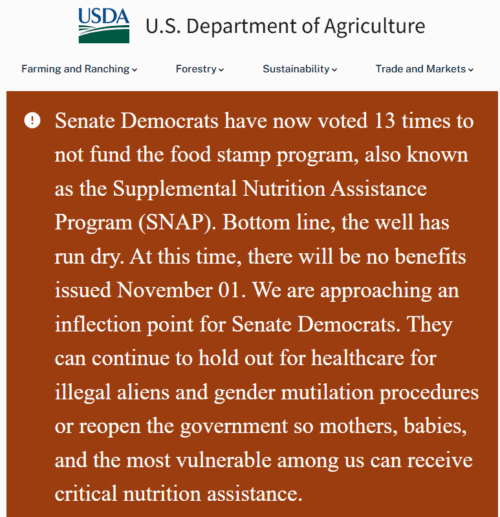
USDA uses partisan language in its SNAP announcements

I wish USDA Secretary Brooke Rollins would use less inflammatory language in making her announcements.  They sound right out of George Orwell’s 1984—or the 1950s McCarthy era—and do not speak well for American democracy.

Let’s start with the banner at the top of USDA websites.  If nothing else, it violates the Hatch Act, which prohibits federal employees from partisan public statements.


Next, take a look at ICYMI: Secretary Rollins Pens Newsweek Op-Ed “Theatrics Don’t Feed the Hungry” [my emphasis]

What began as a program for the neediest Americans, the Supplemental Nutrition Assistance Program (SNAP), commonly referred to as food stamps, has exploded to serve one in every eight Americans. The food stamp rolls have not only skyrocketed due to eligibility loopholes and regulatory boondoggles—each allowing for millions of work-capable adults with school age children to participate—but a program that has recently become a “leverage” point for Democrats in their self-inflicted government shutdown…So, the truth has revealed itself. Democrats’ support for programs like SNAP is now reduced to cynical control over people’s lives.

Instead of focusing on reopening the government and keeping programs like SNAP and WIC functioning…Senate Democrats are holding firm on propping up failed government programs with billions in health care subsidies that benefit corporations over people. Not to mention exposing their far left agenda items: illegal aliens, open borders, gender mutilation and more…It is unconscionable.

I agree on “unconscionable.”

On Monday, USDA Secretary Brooke Rollins’ filed this comment on X:

@POTUS is doing everything he can to help our most vulnerable mothers and babies while Radical Left Democrats continue to obstruct.

Name-calling does not help.

Red-baiting does not help.

Civility might.

Tags: ,
Jan 10 2025

Weekend reading: Three thoughts on the MAHA “movement”

I.  Darius Mozaffarian, a nutrition professor at Tufts University, has an editorial in the American Journal of Clinical Nutrition:“The Dietary Guidelines for Americans—is the evidence bar too low or too high?”

He writes about an analysis of the systematic literature reviews SRs) that form the basis of science-based decisions in the guidelines.  His comments gives an insight into the Dietary Guidelines process worth seeing.

For the 2025–2030 DGAC, I served as a peer reviewer for the SR on UPFs…I felt that the SR’s question, design, and planned methods were appropriate, but that its implementation and conclusions were weakened by important deviations from these standards. For example, contradicting its stated eligibility criteria, the SR included numerous studies that did not appropriately or adequately define or assess UPF. Following inclusion of such heterogeneous studies, the SR concluded that the scientific evidence on UPF was limited due to many studies having serious concerns around exposure misclassification as well as evaluating dietary patterns not directly varying in amounts of UPF. This demonstrated a circular and dismaying reasoning: the SR included studies it should not have that had heterogeneous and poorly characterized assessments of UPF, and then concluded that heterogeneous and poorly characterized assessments of UPF limited the strength of the evidence.

He observes:

Most importantly, the DGA and SR requirements make clear that guiding Americans toward a healthier diet is an unfair fight from the start. The food industry can do almost anything it wishes to our food, combining diverse ingredients, additives, and processing methods with virtually no oversight or required evidence for long-term safety  In contrast, the DGAs and other federal agencies can only make recommendations to avoid certain foods or limit certain manufacturing methods when there is extensive, robust, and consistent evidence for harm. In this severely imbalanced playing field, industry wins again and again.

II.  Senator Bernie Sanders posted on Facebook Sanders Statement on How to Make America Healthy Again.  Among other issues, he’s taking on the food industry.

Reform the food industry. Large food corporations should not make record-breaking profits addicting children to the processed foods which make them overweight and prone to diabetes and other diseases. As a start, we must ban junk food ads targeted to kids and put strong warning labels on products high in sugar, salt and saturated fat. Longer term, we can rebuild rural America with family farms that are producing healthy, nutritious food.

III.  California Governor Gavin Newsom “issues executive order to crack down on ultra-processed foods and further investigate food dyes.”

The food we eat shouldn’t make us sick with disease or lead to lifelong consequences. California has been a leader for years in creating healthy and delicious school meals, and removing harmful ingredients and chemicals from food. We’re going to work with the industry, consumers and experts to crack down on ultra-processed foods, and create a healthier future for every Californian.

Comment

Mozaffarian offers these opinions despite disclosing financial ties to food companies.  Sanders is a welcome addition to the handful of legislators concerned about food issues.  Newsom is making it easier for other states to take similar steps.

Maybe there’s a glimmer of hope for coalition building among advocates for healthier food systems.  Maybe this really is a movement!

How’s that for a cheery thought for 2025.  Happy new year everyone!

Apr 24 2024

American Diabetes Association: conflicted interests

Thanks to everyone who flooded my mailbox with this piece from The Guardian: She was fired after not endorsing Splenda-filled salads to people with diabetes. Why?

According to a lawsuit {Elizabeth] Hanna recently filed against the ADA, the organization – which endorses recipes and food plans on its websiteand on the websites of “partner” food brands – tried to get her to greenlight recipes that she believedflew in the face of the ADA’s mission. These included recipes like a “cucumber and onion salad” made with a third of a cup of Splenda granulated artificial sweetener, “autumnal sheet-pan veggies” with a quarter cup of Splenda monk fruit sweetener and a “cranberry almond spinach salad” with a quarter cup of Splenda monkfruit sweetener.

Guess which company gave more than $1m to the ADA in 2022? Splenda.

I also was sent an email from Georgia Warren, the  Guardian’s Interim membership editor: The link between investigative reporting, some nightmarish recipes and the diabetes epidemic.

Why would a public health charity promote a product that its own science shows contributes to the disease it is fighting? Well, as Neil Barsky reported for us this week, the ADA took more than $1m from Splenda in 2022 – and then fired their chief nutritionist when, according to a lawsuit she recently filed, she refused to sign-off on the Splenda-based recipes that her bosses wanted the ADA to publicly endorse.

Neil – creator of our new series ‘Death by diabetes: America’s preventable epidemic’ – told me…“The ADA has bought into a system that requires them to raise money from corporations to fund their research. I don’t for a second doubt that every single person who works there cares about people with diabetes and wants to do the right thing, but being beholden to these groups distorts your judgment.”

..And what else is pharma funding? The ADA. The organization – whose guidance doctors rely on when treating their diabetes patients – boasts a $100m annual budget. Between 2017 and 2024, pharmaceutical and device manufacturers contributed over $134m to the organization – or roughly 20% of its total funding.

Comment: The ADA has long appeared to be in thrall the the drug industry.  I well remember the talk I gave at one of its annual conventions years ago.  I was one of two speakers about diet and diabetes (the other was a session on the role of sugar in diabetes sponsored by Coca-Cola—truly you can’t make this stuff up).  The other talks, hundreds of them, were about drugs.  At that time, the ADA said virtually nothing about diet on its website.

It’s gotten much better.  Here’s what it says about carbohydrates:

  • Try to eat less of these: refined, highly processed carbohydrate foods and those with added sugar. These include sugary drinks like soda, sweet tea and juice, refined grains like white bread, white rice and sugary cereal, and sweets and snack foods like cake, cookies, candy and chips.

And here’s what the ADA says about artificial sweeteners:

It’s also important to know that at this time, there is no clear evidence to suggest that using sugar substitutes will help with managing blood sugar or weight or improving cardiometabolic health in the long run. So here’s the bottom line:

  • Sugar substitutes are effective alternatives to sugar for some people, but not a perfect fit for all—it’s a personal choice.
  • If you’re looking to reduce your intake of sugar or sugar substitutes, start slowly. For example, start by replacing one soda or juice with water or a no-calorie drink at a time.
  • Water will always be a great choice! If you start feeling yourself get bored with just water, you can always spruce it up with fruits or herbs like this sparkling strawberry mint infused water.

And, finally for now, here are the ADA’s corporate sponsors, and its national sponsors.

Conflicted?  Sure looks like it.

Oct 27 2023

Weekend reading: School food in Mexico

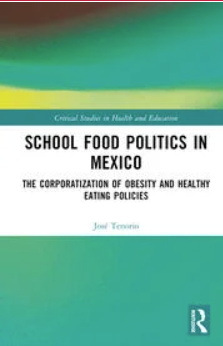
José Tenorio.  School Food Politics in Mexico: The Corporatization of Obesity and Healthy Eating Policies.  Routledge, 2023.  

I was asked for a blurb for this one:

From first-hand observations and deep research, José Tenorio makes it clear that school food in Mexico is about much more than feeding hungry kids; it’s about how food corporations have taken advantage of social inequalities to replace native food traditions with less healthful but profitable products.  School food politics, indeed!

This book may seem specialized, but it is a useful case study in the politics of school food—not confined to the United States, apparently.

Mexico leads the way in efforts to promote healthier diets.  It has  excellent dietary guidelines.   It also has warning labels on food products (see my post on these), soda taxes, a ban on trans fats, and other measures.

Mexico’s schools do not provide meals for kids in schools.  They sell foods at canteens.

The country set nutrition standards for foods sold in schools in 2011, but compliance is not great.

Public health and food advocacy groups support laws to ban unhealthy foods and drinks from schools.  Despite formidible industry opposition, this may actually happen.

This book provides evidence for why it should.

May 1 2023

American Society for Nutrition commissions highly conflicted meta-analysis

I was surprised to see a press release from the American Society for Nutrition (ASN—of which I am a member) announcing publication of a research paper the Society had commissioned and published on sugars and body weight: Important food sources of fructose-containing sugars and adiposity: a systematic review and meta-analysis of controlled feeding trials.

The paper, the press release said, “Illustrate[s] The Need for Nuance in Public Health Guidance Related to Consumption of Sugars: Findings call into question recommendations that imply all sources of fructose-containing sugars carry the same risk.

The press release notes that “this comprehensive review is timely as the 2025 Dietary Guidelines Advisory Committee currently assesses the latest science to inform updated evidence-based recommendations,” and it quotes the lead author: “There is an opportunity for more food-based guidance around sugars to help ensure Americans don’t inadvertently eat less health-promoting foods containing fructose – especially at a time when most people don’t eat enough of all forms of fruit, which offer significant health benefits.”

Uh oh.  This is an easily misinterpreted message.

My immediate question:  Who wrote the paper ?

No surprise.: authors with extensive conflicts of interest.

I’ve written about some of these authors’ conflicts of interest disclosures previously.  See, for example. this, this, and this.

Just for fun, I’ll post this particular statement of the conflicted interests at the end of this post.

Basically, these authors do not understand the difference between a conflict of interest (financial ties, which are discretionary) and non-discretionary viewpoints (all researchers have them).  In this case, consulting for a sugar company is a conflict; being a vegan or avoiding sugar-sweetened beverages is not.

My second question: Why did ASN commission this paper, and from these particular authors no less?

I contacted John Courtney, the long-time executive director of the ASN.  He said this was a leftover from an initiative started ten years ago.  Since then, the ASN has decided not to commission papers on controversial topics and this will not happen again.

Good.  It shouldn’t.  Commissioning papers like these make the ASN look like an arm of the food industry.  The ASN should avoid even teh appearance of conflicts of interest as much as it possibly can.

You don’t believe this is a problem?  Take a look at this conflict of interest statement.  Enjoy!

Conflict of Interest

JLS is a member of the Journal’s Editorial Board and played no role in the Journal’s evaluation of the manuscript.

LC was a Mitacs-Elevate postdoctoral fellow jointly funded by the Government of Canada and the Canadian Sugar Institute (September 2019–August 2021). She was previously (2010–2018) employed as a casual clinical coordinator at INQUIS Clinical Research, Ltd. (formerly Glycemic Index Laboratories, Inc.), a contract research organization.

AC and AA have received funding from a Toronto 3D MSc Scholarship award.

SA-C was funded by a Canadian Institutes of Health Research (CIHR) Canadian Graduate Scholarships Master’s Award, the Loblaw Food as Medicine Graduate Award, the Ontario Graduate Scholarship, and the CIHR Canadian Graduate Scholarship Doctoral Award. She avoids consuming NSBs and SSBs and has received an honorarium from the international food information council (IFIC) for a talk on artificial sweeteners, the gut microbiome, and the risk for diabetes.

NM was a former employee of Loblaw Companies Limited and current employee of Enhanced Medical Nutrition. She has completed consulting work for contract research organizations, restaurants, start-ups, the International Food Information Council, and the American Beverage Association, all of which occurred outside of the submitted work.

TAK has received research support from the Canadian Institutes of Health Research (CIHR), the International Life Science Institute (ILSI), and the National Honey Board. He has taken honorarium for lectures from International Food Information Council (IFIC) and Institute for the Advancement of Food and Nutrition Sciences (IAFNS; formerly ILSI North America).

FA-Y is a part-time Research Assistant at INQUIS Clinical Research, Ltd., a contract research organization.

DL reports receiving a stipend from the University of Toronto Department of Nutritional Sciences Graduate Student Fellowship, University of Toronto Fellowship in Nutritional Sciences, University of Toronto Supervisor’s Research Grant—Early Researcher Awards, and Dairy Farmers of Canada Graduate Student Fellowships; a scholarship from St. Michael’s Hospital Research Training Centre, and a University of Toronto School of Graduate Studies Conference Grant.

AZ is a part-time Research Associate at INQUIS Clinical Research, Ltd., a contract research organization, and has received funding from a BBDC Postdoctoral Fellowship. She has received consulting fees from the GI found.

RJdS has served as an external resource person to the World Health Organization’s Nutrition Guidelines Advisory Group on transfats, saturated fats, and polyunsaturated fats. The WHO paid for his travel and accommodation to attend meetings from 2012–2017 to present and discuss this work. He has also performed contract research for the CIHR’s Institute of Nutrition, Metabolism, and Diabetes, Health Canada, and the World Health Organization for which he received remuneration. He has received speaker’s fees from the University of Toronto and McMaster Children’s Hospital. He has held grants from the Canadian Foundation for Dietetic Research, Population Health Research Institute, and Hamilton Health Sciences Corporation as a principal investigator and is a co-investigator on several funded team grants from the CIHR. He has served as an independent director of the Helderleigh Foundation (Canada). He serves as a member of the Nutrition Science Advisory Committee to Health Canada (Government of Canada) and is a co-opted member of the Scientific Advisory Committee on Nutrition Subgroup on the Framework for the Evaluation of Evidence (Public Health England).

TMSW was previously a part owner and now is an employee of INQUIS and received an honorarium from Springer/Nature for being an Associate Editor of the European Journal of Clinical Nutrition.

CWCK has received grants or research support from the Advanced Food Materials Network, Agriculture and Agri-Foods Canada, Almond Board of California, Barilla, CIHR, Canola Council of Canada, International Nut and Dried Fruit Council, International Tree Nut Council Research and Education Foundation, Loblaw Brands Ltd, the Peanut Institute, Pulse Canada, and Unilever. He has received in-kind research support from the Almond Board of California, Barilla, California Walnut Commission, Kellogg Canada, Loblaw Companies, Nutrartis, Quaker (PepsiCo), the Peanut Institute, Primo, Unico, Unilever, and WhiteWave Foods/Danone. He has received travel support and/or honoraria from the Barilla, California Walnut Commission, Canola Council of Canada, General Mills, International Nut and Dried Fruit Council, International Pasta Organization, Lantmannen, Loblaw Brands, Ltd., the Nutrition Foundation of Italy, Oldways Preservation Trust, Paramount Farms, the Peanut Institute, Pulse Canada, Sun-Maid, Tate & Lyle, Unilever, and White Wave Foods/Danone. He has served on the scientific advisory board for the International Tree Nut Council, the International Pasta Organization, McCormick Science Institute, and Oldways Preservation Trust. He is a founding member of the International Carbohydrate Quality Consortium (ICQC), Executive Board Member of the Diabetes and Nutrition Study Group of the European Association for the Study of Diabetes, is on the Clinical Practice Guidelines Expert Committee for Nutrition Therapy of the EASD and is a Director of the Toronto 3D Knowledge Synthesis and Clinical Trials foundation.

DJAJ has received research grants from Saskatchewan & Alberta Pulse Growers Associations, the Agricultural Bioproducts Innovation Program through the Pulse Research Network, the Advanced Foods and Material Network, Loblaw Companies, Ltd., Unilever Canada and Netherlands, Barilla, the Almond Board of California, Agriculture and Agri-food Canada, Pulse Canada, Kellogg’s Company, Canada, Quaker Oats, Canada, Procter & Gamble Technical Centre, Ltd., Bayer Consumer Care, Pepsi/Quaker, International Nut & Dried Fruit Council, Soy Foods Association of North America, the Coca-Cola Company (investigator initiated, unrestricted grant), Solae, Haine Celestial, the Sanitarium Company, Orafti, the International Tree Nut Council Nutrition Research and Education Foundation, the Peanut Institute, Soy Nutrition Institute (SNI), the Canola and Flax Councils of Canada, the Calorie Control Council, the CIHR, the Canada Foundation for Innovation and the Ontario Research Fund. He has received in-kind supplies for trials as a research support from the Almond Board of California, Walnut Council of California, the Peanut Institute, Barilla, Unilever, Unico, Primo, Loblaw Companies, Quaker (Pepsico), Pristine Gourmet, Bunge Limited, Kellogg Canada, and WhiteWave Foods. He has been on the speaker’s panel, served on the scientific advisory board and/or received travel support and/or honoraria from Nutritional Fundamentals for Health (NFH)-Nutramedica, Saint Barnabas Medical Center, The University of Chicago, 2020 China Glycemic Index International Conference, Atlantic Pain Conference, Academy of Life Long Learning, the Almond Board of California, Canadian Agriculture Policy Institute, Loblaw Companies, Ltd., the Griffin Hospital (for the development of the NuVal scoring system), the Coca-Cola Company, Epicure, Danone, Diet Quality Photo Navigation, Better Therapeutics (FareWell), Verywell, True Health Initiative, Heali AI Corp, Institute of Food Technologists, SNI, Herbalife Nutrition Institute, Saskatchewan & Alberta Pulse Growers Associations, Sanitarium Company, Orafti, the International Tree Nut Council Nutrition Research and Education Foundation, the Peanut Institute, Herbalife International, Pacific Health Laboratories, Barilla, Metagenics, Bayer Consumer Care, Unilever Canada and Netherlands, Solae, Kellogg, Quaker Oats, Procter & Gamble, Abbott Laboratories, Dean Foods, the California Strawberry Commission, Haine Celestial, PepsiCo, the Alpro Foundation, Pioneer Hi-Bred International, DuPont Nutrition and Health, Spherix Consulting and WhiteWave Foods, the Advanced Foods and Material Network, the Canola and Flax Councils of Canada, Agri-Culture and Agri-Food Canada, the Canadian Agri-Food Policy Institute, Pulse Canada, the Soy Foods Association of North America, the Nutrition Foundation of Italy, Nutra-Source Diagnostics, the McDougall Program, the Toronto Knowledge Translation Group (St. Michael’s Hospital), the Canadian College of Naturopathic Medicine, The Hospital for Sick Children, the Canadian Nutrition Society, the American Society of Nutrition, Arizona State University, Paolo Sorbini Foundation, and the Institute of Nutrition, Metabolism and Diabetes. He received an honorarium from the United States Department of Agriculture to present the 2013 W.O. Atwater Memorial Lecture. He received the 2013 Award for Excellence in Research from the International Nut and Dried Fruit Council. He received funding and travel support from the Canadian Society of Endocrinology and Metabolism to produce mini cases for the Canadian Diabetes Association. He is a member of the ICQC. His wife, Alexandra L Jenkins, is a director and partner of INQUIS Clinical Research for the Food Industry. His 2 daughters, Wendy Jenkins and Amy Jenkins, have published a vegetarian book that promotes the use of the foods described in this study, The Portfolio Diet for Cardiovascular Risk Reduction (Academic Press/Elsevier 2020 ISBN:978-0-12-810510-8). His sister, Caroline Brydson, received funding through a grant from St. Michael’s Hospital Foundation to develop a cookbook for 1 of his studies. He is also a vegan. JLS has received research support from the Canadian Foundation for Innovation, Ontario Research Fund, Province of Ontario Ministry of Research and Innovation and Science, Canadian Institutes of health Research (CIHR), Diabetes Canada, American Society for Nutrition (ASN), International Nut and Dried Fruit Council (INC) Foundation, National Honey Board [the US Department of Agriculture (USDA) honey “Checkoff” program], Institute for the Advancement of Food and Nutrition Sciences (IAFNS), Pulse Canada, Quaker Oats Center of Excellence, The United Soybean Board (the USDA soy “Checkoff” program), The Tate and Lyle Nutritional Research Fund at the University of Toronto, The Glycemic Control and Cardiovascular Disease in Type 2 Diabetes Fund at the University of Toronto (a fund established by the Alberta Pulse Growers), The Plant Protein Fund at the University of Toronto (a fund that has received contributions from IFF), and The Nutrition Trialists Fund at the University of Toronto (a fund established by an inaugural donation from the Calorie Control Council). He has received food donations to support randomized controlled trials from the Almond Board of California, California Walnut Commission, Peanut Institute, Barilla, Unilever/Upfield, Unico/Primo, Loblaw Companies, Quaker, Kellogg Canada, WhiteWave Foods/Danone, Nutrartis, Soylent, and Dairy Farmers of Canada. He has received travel support, speaker fees, and/or honoraria from ASN, Danone, Dairy Farmers of Canada, FoodMinds LLC, Nestlé, Abbott, General Mills, Comité Européen des Fabricants de Sucre, Nutrition Communications, International Food Information Council, Calorie Control Council, the International Sweeteners Association, the International Glutamate Technical Committee, Phynova, and Brightseed. He has or has had ad hoc consulting arrangements with Perkins Coie LLP, Tate & Lyle, Phynova, and INQUIS Clinical Research. He is a former member of the European Fruit Juice Association Scientific Expert Panel and a former member of the Soy Nutrition Institute (SNI) Scientific Advisory Committee. He is on the Clinical Practice Guidelines Expert Committees of Diabetes Canada, European Association for the study of Diabetes, Canadian Cardiovascular Society, and Obesity Canada/Canadian Association of Bariatric Physicians and Surgeons. He serves or has served as an unpaid member of the Board of Trustees and an unpaid scientific advisor for the Carbohydrates Committee of IAFNS. He is a member of the International Carbohydrate Quality Consortium (ICQC), Executive Board Member of the Diabetes and Nutrition Study Group of the EASD, and Director of the Toronto 3D Knowledge Synthesis and Clinical Trials foundation. His spouse is an employee of AB InBev.

XYQ, SB, NM, VH, EL, SBM, VLC, and LAL declare no competing interests.

*******

For 30% off, go to www.ucpress.edu/9780520384156.  Use code 21W2240 at checkout.


Mar 28 2023

The Lancet series on commercial determinants of health (and, therefore, nutrition)

Executive Summary

Commercial actors can contribute positively to health and society, and many do, providing essential products and services. However, a substantial group of commercial actors are escalating avoidable levels of ill health, planetary damage, and inequity—the commercial determinants of health. While policy solutions are available, they are not currently being implemented, and the costs of harm caused by some products and practices are coming at a great cost to individuals and society.

A new Lancet Series on the commercial determinants of health provides recommendations and frameworks to foster a better understanding of the diversity of the commercial world, potential pathways to health harms or benefits, and the need for regulatory action and investment in enterprises that advance health, wellbeing, equity, and society.

  • Defining and conceptualising the commercial determinants of health: Anna B Gilmore, Alice Fabbri, Fran Baum, Adam Bertscher, Krista Bondy, Ha-Joon Chang, Sandro Demaio, Agnes Erzse, Nicholas Freudenberg, Sharon Friel, Karen J Hofman, Paula Johns, Safura Abdool Karim, Jennifer Lacy-Nichols, Camila Maranha Paes de Carvalho, Robert Marten, Martin McKee, Mark Petticrew, Lindsay Robertson, Viroj Tangcharoensathien, Anne Marie Thow

Although commercial entities can contribute positively to health and society there is growing evidence that the products and practices of some commercial actors—notably the largest transnational corporations—are responsible for escalating rates of avoidable ill health, planetary damage, and social and health inequity; these problems are increasingly referred to as the commercial determinants of health. The climate emergency, the non-communicable disease epidemic, and that just four industry sectors (ie, tobacco, ultra-processed food, fossil fuel, and alcohol) already account for at least a third of global deaths illustrate the scale and huge economic cost of the problem. This paper, the first in a Series on the commercial determinants of health, explains how the shift towards market fundamentalism and increasingly powerful transnational corporations has created a pathological system in which commercial actors are increasingly enabled to cause harm and externalise the costs of doing so….

Most public health research on the commercial determinants of health (CDOH) to date has focused on a narrow segment of commercial actors. These actors are generally the transnational corporations producing so-called unhealthy commodities such as tobacco, alcohol, and ultra-processed foods….Moving forward, it is necessary to develop a nuanced understanding of commercial entities that goes beyond this narrow focus, enabling the consideration of a fuller range of commercial entities and the features that characterise and distinguish them…Improved differentiation among commercial actors strengthens the capacity of practitioners, advocates, academics, regulators, and policy makers to make decisions about, to better understand, and to respond to the CDOH through research, engagement, disengagement, regulation, and strategic opposition.

This paper is about the future role of the commercial sector in global health and health equity. The discussion is not about the overthrow of capitalism nor a full-throated embrace of corporate partnerships. No single solution can eradicate the harms from the commercial determinants of health—the business models, practices, and products of market actors that damage health equity and human and planetary health and wellbeing. But evidence shows that progressive economic models, international frameworks, government regulation, compliance mechanisms for commercial entities, regenerative business types and models that incorporate health, social, and environmental goals, and strategic civil society mobilisation together offer possibilities of systemic, transformative change, reduce those harms arising from commercial forces, and foster human and planetary wellbeing. In our view, the most basic public health question is not whether the world has the resources or will to take such actions, but whether humanity can survive if society fails to make this effort.

Comment
Perspectives
Viewpoint

Infographics

*******

For 30% off, go to www.ucpress.edu/9780520384156.  Use code 21W2240 at checkout.