by Marion Nestle

Search results: the corporation not me

May 5 2021

Food companies should join the B Corporation movement

I read in DairyReporter.com that Danone reports an increased score in it B-Corporation certification.

I am interested in the B-Corporation phenomenon.

B Corporations are required to include social values—along with the usual profit motives—as established goals.

Society’s most challenging problems cannot be solved by government and nonprofits alone. The B Corp community works toward reduced inequality, lower levels of poverty, a healthier environment, stronger communities, and the creation of more high quality jobs with dignity and purpose. By harnessing the power of business, B Corps use profits and growth as a means to a greater end: positive impact for their employees, communities, and the environment.

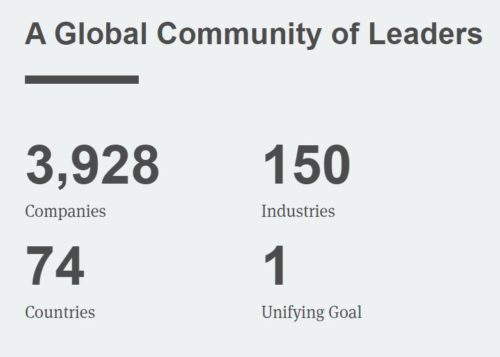
What is that one unifying goal?  “We envision a global economy that uses business as a force for good.”

Certified B Corporations are a new kind of business that balances purpose and profit. They are legally required to consider the impact of their decisions on their workers, customers, suppliers, community, and the environment. This is a community of leaders, driving a global movement of people using business as a force for good.

B Corporations promise:

  • That we must be the change we seek in the world.
  • That all business ought to be conducted as if people and place mattered.
  • That, through their products, practices, and profits, businesses should aspire to do no harm and benefit all.
  • To do so requires that we act with the understanding that we are each dependent upon another and thus responsible for each other and future generations.

Companies are assessed and rated on social value criteria.  They must achieve 80 of 200 points to be certified.

Food companies are among those certified as B corps

I’m not sure how this plays out in practice, but this certainly appears to be a step in the right direction.

If we want to encourage this effort:

  • Support food companies that sign up to be B corps.
  • Urge other food companies to join.
  • Hold them all accountable.
Dec 8 2020

The Cocoa industry’s big problems: farmer poverty and child labor

Everybody loves chocolate but there’s a lot about its production that’s not to love.  It is a classic example of an exploited commodity: cocoa is grown in developing countries, sold at low cost, and processed in industrialized countries which reap the profits.

Chocolate producers are under pressure (not enough, in my view) to pay farmers decently and to make sure their kids go to school, not work.

I’ve been seeing a lot of articles about these issues lately.   You can see what the issues are just from their headlines:

These are long-standing issues.  They should have been addressed more effectively years ago.   Here is some background reading:

Nov 11 2020

One reason why we need a more rational food policy: farm payments

I am all for making sure that farmers make a decent living but most agricultural subsidies go to Big Ag—the producers of corn and soybeans fed mainly to animals or, in the case of corn, as ethanol for car fuel.

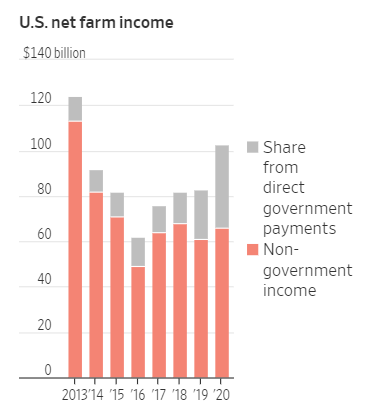
These taxpayer-funded payments are enormous and represent increasing percentages of the income of Big Ag.

For example, see this chart from the Wall Street Journal.

As part of the Trump administration’s effort to get votes from farmers and ranchers, it pledged $37.2 billion to them in the spring and summer with an addition $14 billion in September.

Why is this about the election?  The Washington Post says “Trump’s farmer bailout gave $21 billion to red counties and $2.1 billion to blue ones.”

At a campaign rally in Wisconsin last week, President Trump didn’t mince words about how much his administration had done to bolster the economic fortunes of farmers…I gave $28 billion to the farmers, many of them right here, $28 billion, $12 billion and $16 billion, two years”… That redistribution was facilitated through the Agriculture Department’s Market Facilitation Program. According to data obtained by the Environmental Working Group through a Freedom of Information Act request, that program disbursed more than $23 billion in the 2018 and 2019 program years.

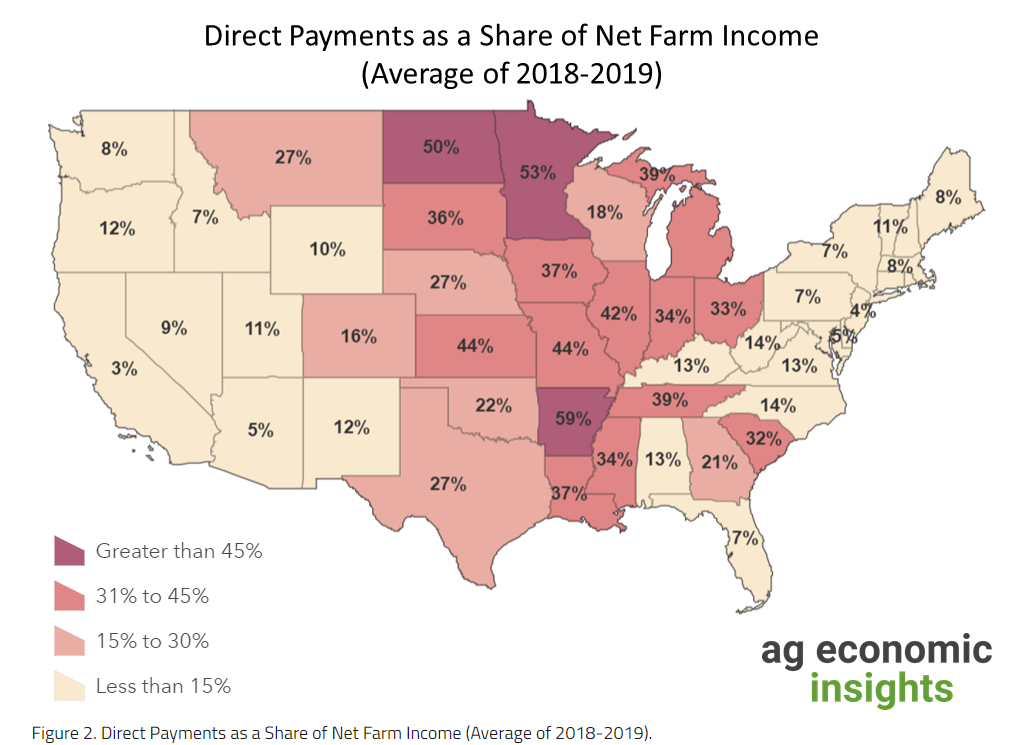
From a report from Agricultural Economic Insights:  USDA’s direct payments to Big Ag will equal 36% of net farm income, up from 22% in 2018=2019.  These payments used to account for around 10% of net farm income.

Check out its map:

Finally, it’s good to review the big picture of what happened to food and farming under Trump.  Civil Eats has an excellent review by Lisa Held.

To offset the effects of the tariffs, in 2018, USDA began distributing cash payments through the Commodity Credit Corporation at unprecedented levels, with no appropriations or oversight from Congress. In 2020, as the pandemic hit the farm economy, it added another source of government payments via the Coronavirus Food Assistance Program (CFAP). Overall, Trump’s USDA has handed out more government dollars to farmers than any administration prior. In both 2019 and 2020, more than 40 percent of farm incomes came from federal assistance—the only thing keeping farm incomes afloat.

Those payments have been controversial because they have almost exclusively benefited the largest farms and agriculture companies. Two-thirds of the trade aid payments went to agriculture producers in the top 10 percent, including corporations, such as the $67 million paid to JBS USA, a subsidiary of the Brazilian-owned meatpacking giant. Small farms, especially diversified operations and those run by socially disadvantaged Black, Indigenous, and People of Color (BIPOC) farmers, have largely been unable to access CFAP assistance.

All of this leaves plenty of room for improvement.

President-elect Biden: get to work!

Sep 28 2020

Industry-sponsored studies of the week: two on omega-3 supplements

I.  Expert Opinion on Benefits of Long-Chain Omega-3 Fatty Acids (DHA and EPA) in Aging and Clinical Nutrition, Troesch B, et al.  Nutrients 2020;12(9):2555.

Conclusion: The evidence to date indicates that the provision of DHA and EPA through capsules, oral nutrition supplements, or enteral or parenteral formulas can help to regulate the inflammatory environment in a number of medical conditions and that this is linked in many cases to improved function, clinical course and outcomes.

Funding: DSM Nutritional Products Ltd. provided financial support to organize and invite experts to participate as discussants, based on their expertise on the role of DHA and EPA in aging as well as different medical conditions, as well as financial support for the development of this review.
Conflicts of Interest: B.T. and I.W. are employed by DSM Nutritional Products Ltd.; M.E. acts as an advisor for DSM, received travel reimbursement from DSM and is a member of the Scientific Board of PM International and President of the Gesellschaft für angewandte Vitaminforschung; A.L. received consulting fees from BBraun, DSM, Nutricia and Smartfish and received honoraria for independent lectures from Abbott, Baxter, BBraun, Fresenius Kabi, Nestlé Health Science, Nutricia and Smartfish; Y.R. received travel reimbursement from DSM; AW receives speaker fees from Baxter Germany, Berlin Chemie, BBraun Melsungen AG, DSM, Ethicon, Falk Foundation Fresenius Kabi Deutschland GmbH, Medtronic and research grants from Baxter, Danone and Mucos; P.C.C. acts as a consultant for DSM, BASF, Danone/Nutricia, Cargill, Smartfish and Fresenius Kabi. A.D.S. has no conflict to declare.
Comment: DSM Nutrition Products is a major seller of dietary supplements, with a highly vested interest in demonstrating the benefits of the supplements it sells.  Evidence on the benefits of omega-3 fatty acid supplements tends to vary enormously.  Some studies, like this one, find benefits.  Other studies do not (see, for example, this, this, or this).  Could funding source have something to do with these differences?  I think yes.  
Before I had a chance to post this one, a reader, Dr. Eliška Selinger, who teaches science methods and nutrition in Prague, sent yet another example, this one not yet published.II.  Effect of Omega-3 Dosage on Cardiovascular Outcomes: An Updated Meta-Analysis and Meta-Regression of Interventional Trials. Aldo A. Bernasconi, PhD; Michelle M. Wiest, PhD; Carl J. Lavie, MD; Richard V. Milani, MD; and Jari A. Laukkanen, MD, PhD.  Article in press Mayo Clin Proc. n XXX 2020;nn(n):1-10 n https://doi.org/10.1016/j.mayocp.2020.08.034

Objectives: “To quantify the effect of eicosapentaenoic (EPA) and docosahexaenoic (DHA) acids on cardiovascular disease (CVD) prevention and the effect of dosage.”

Conclusion: “Cardiovascular disease remains the leading cause of death worldwide. Supplementation with EPA and DHA is an effective lifestyle strategy for CVD prevention, and the protective effect probably increases with dosage.”

Potential Competing Interests: “Dr Bernasconi is an employee of the Global Organization for EPA and DHA Omega-3s (GOED), a 501(c)6 not-for profit trade association. GOED’s goals are to increase consumption of omega3s to adequate levels around the world and to ensure that the industry is producing quality omega-3 products that consumers can trust. Dr Wiest has been a guest speaker with travel sponsored by DSM Nutritional Products and the Global Organization for EPA and DHA Omega-3s (GOED); and has received funding from GOED to conduct a meta-analysis on omega-3 fatty acids. Dr Lavie has been a speaker for Amarin Corporation on Vascepa, has consulted for DSM Nutritional Products, and has made an omega-3 educational video at the American Heart Association meeting on November 14, 2016, for the Global Organization for EPA and DHA Omega-3s and also gave a presentation at a GOED-hosted omega-3 conference in Barcelona, Spain, in February 2020. The remaining authors report no potential competing interests.”

Grant Support: “This study was supported by a grant from the Global Organization for EPA and DHA Omega-3s (GOED), Salt Lake City, UT.”

Comment: The Global Organization for EPA and DHA Omega-3s “represents the worldwide EPA and DHA omega-3 industry…Our mission is to increase consumption of EPA and DHA omega-3s…”   Omega-3 fatty acids are essential to human health and are widely available from green leafy vegetables (in the form of ALA) as well as from fish (EPA and DHA).   ALA is converted in the body to EPA and DHA.   The benefits of omega-3 supplements, as I just explained, are not well established.  This trade association for EPA and DHA supplements funded this study to demonstrate the benefits of these products.  Caveat emptor.

Jun 23 2020

Food companies respond to #BlackLivesMatter—and about time!

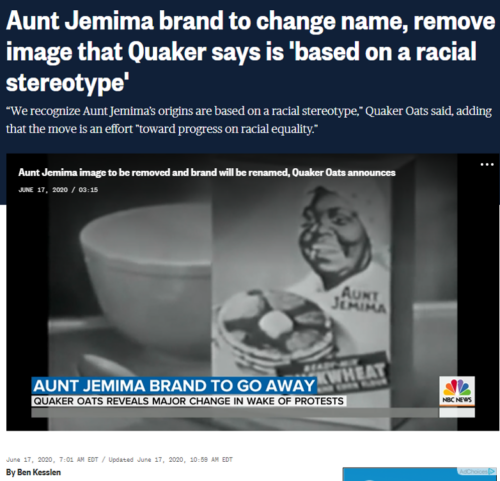
Here’s progress, and about time too.  This long called for, and long overdue decision has been covered by CNN (6/17), New York Times (6/17), Food Dive (6/17), USA Today (6/18), and Reuters (6/18).

CPG firms review, overhaul black brand mascots:  Following Quaker Oat’s decision to rebrand its Aunt Jemima line, the parent companies of brands Uncle Ben’s, Mrs. Butterworth’s and Cream of Wheat — all of which have black mascots — have plans to change or review the brands’ logos and packaging. “[W]e are committed to evaluating our packaging and will proactively take steps to ensure that we and our brands do not inadvertently contribute to systemic racism,” B&G Foods said about Cream of Wheat’s chef image in a statement.

PepsiCo’s CEO promises a complete overhaul:

So today, I am announcing the next step in PepsiCo’s journey for racial equality: a more than $400 million set of initiatives over five years to lift up Black communities and increase Black representation at PepsiCo. These initiatives make up a holistic effort for PepsiCo to walk the talk of a leading corporation and help address the need for systemic change.

These changes are steps in the right direction.  To make them meaningful, companies must push for a cultural transformation and be willing to openly confront deeply embedded but sometimes unconscious attitudes and behavior.

Let’s hope these promises result in real change.

For some context, take a look at Toni Tipton-Martin’s, The Jemima Code: Two Centuries of African American Cooking, and her article about the retirement of the image in Sunday’s New York Times.

And then there’s this perfect image for food politics (source unknown, alas):

Addition

A reader, who wishes to remain anonymous, writes: “The removal of the Aunt Jemima image reminds me of artist Betye Saar’s 1972 assemblage, “The Liberation of Aunt Jemima.”  I see that Betye Saar has responded: “She’s liberated! Finally at long last!”

May 5 2020

More on the crisis in meatpacking

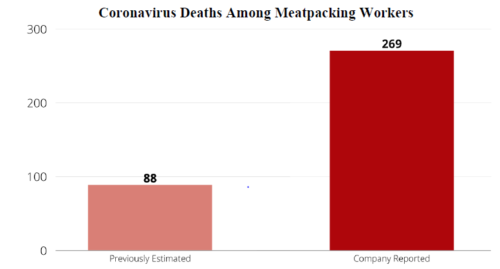
Who knew that meatpacking plants would become the flash point for everything that’s wrong with our food system.  An alarming 18% of packinghouse workers are infected with Covid-19—the ones known.

Public health authorities insisted that the plants be closed, and Food Dive lists the ones that did.

Because the plants closed, farmers have nowhere to send their ready-for-slaughter animals.  But, says Civil Eats , don’t blame them for having to cull their animals.  It’s not their fault; it’s the fault of the big companies that own the animals.

Farmers under contract don’t own the animals they are raising, and therefore cannot simply find a new market for them…The reality is that farmers don’t have to option sell the animals anywhere else. If the company tells them to euthanize an entire flock of the bird it owns on the spot, farmers have no choice but to comply—even as consumers clamber over empty shelves in the supermarkets, farmers are forced to depopulate.

What happens to the dead animals?  There really are no good options.

Burning, burying, or composting up to 70,000 hog carcasses a day—or even grinding them into dust—could have serious consequences for our air and drinking water.

What happens to the workers, now forced by presidential order to go back to the plants?

In interviews with poultry workers in Georgia, Arkansas and Mississippi a similar pattern of alleged negligence, secrecy and mismanagement emerged at facilities operated by some of the largest food manufacturers in America…For more than a century, the meatpacking industry has been a symbol of how corporations are able to exploit workers in the name of efficiency. The Covid-19 outbreak has opened another chapter.

Trump, says The Guardian,  is marching meatpacking workers off to their deaths.

With his executive order on Tuesday night, the president is in effect overruling safety-minded governors and mayors who have pressured numerous meat, pork and poultry plants into shutting temporarily after they had become hotspots that were spreading Covid-19 through their surrounding communities. With such a move, Trump is – let’s not mince words here – is showing contempt for both workers’ health and public health.

What is this really all about?  Read this analysis in Dissent.

Why has the pandemic thrived in meat factories? It was a perfect storm caused by a whole raft of dysfunctionalities, from the rise of giant agribusiness companies to the hollowing out of the nation’s regulatory state, and the hyper-exploitation of a vulnerable, largely immigrant working class which staffs the lines. Occupational Safety and Health Administration (OSHA) inspections have long been laughable at these plants. Fines, when leveled, tend to be a few thousand dollars, a pittance for billion-dollar corporations. The low-wage workers who staff the plants live in cramped quarters, sometimes with more than one family sharing the same dwelling—so if one person gets sick, the disease can spread quickly…By intervening so directly in the food-chain crisis, the Trump administration has thoroughly politicized the conditions under which food is produced.

I suppose we must thank the Covid-19 pandemic for so clearly exposing deep structural problems and inequities in our food system.

Will a new labor movement arise?  See tomorrow’s post.

Addition

State Attorneys General have written a letter expressing anti-trust concerns about how consolidation in the meat industry has led to this crisis.

Given the concentrated market structure of the beef industry, it may be particularly susceptible to market manipulation, particularly during
times of food insecurity, such as the current COVID-19 crisis. During an economic downturn, such as that caused by the current pandemic, firms’ ability to harm American consumers through market manipulation and coordinated behavior exacts a greater toll, providing an additional reason for conducting a careful inquiry into this industry.

Feb 21 2020

Weekend reading: Industry schemes to deny harm

David Michaels.  The Triumph of Doubt: Dark Money and the Science of Deception.  Oxford University Press, 2019.  

Image result for The Triumph of Doubt: Dark Money and the Science of Deception

Even though this book is not strictly about food politics, it has enough about the sugar and alcohol industries to qualify.  I did a blurb for it.

Triumph of Doubt is an industry-by-industry account of how corporations manipulate science and scientists to promote profits, not public health.  Nothing less than democracy is at stake here, and we all should be responding right away to David Michaels’ call for action.

Michaels, a former OSHA official, has written an insider’s look at a wide range of industries that follow the tobacco industry’s playbook for casting doubt on inconvenient science.  The range is impressive: football, diesel fuel, opioids, silica dust, Volkswagen cars, climate denial, food packaging chemicals, alcohol, sugar, and Republican ideology

He’s got some ideas about what to do—keep conflicted scientists out of policy making, for example—but in this political environment?

That leaves it up to us folks to take to the streets.  If only.

Dec 11 2019

Food corporations recognize need to improve their practices: a glimmer of hope?

I have a subscription to Politico’s Morning Agriculture daily newsletter, an invaluable source of information about doings in Washington DC that I would not otherwise know about.

Politico’s business model usually blocks access to articles from non-subscribers, which makes it difficult to refer to articles that you will not be able to read for yourself.  Sometimes I can find other sources for the same information, but not always.

Nevertheless, I want to point you to two recent Politico articles about how food corporations are getting together to jointly try to improve their production and supply chain practices.

Chocolate companies

The first was about how three large chocolate firms— Mars Wrigley, Mondelēz and Barry Callebaut—have called on the European Union to promote sustainable cocoa production and to enact regulations that will stop environmental and human rights abuses in production.

According to Politico’s behind-a-paywall article,

The Commission declined to comment on the corporates’ move but officials are considering due diligence schemes, market controls and product labeling with a possibility of specific measures for commodities such as soy, palm oil and beef.

Cocoa is a major driver of deforestation and human rights abuses, including child labor, in countries such as Ghana and the Ivory Coast, which together account for around two-thirds of global production.

Effects of agriculture on climate change

Politico, happily, released this magazine-length article titled “How a closed-door meeting shows farmers are waking up on climate change,” for open access.  It ought to win prizes for its author, Helena Bottemiller Evich.

In it, she describes how Big Ag companies, high-level US agricultural officials, and CEOs of major food companies are not only talking about climate change, but recognizing that they have to act to prevent it.

But that’s not all:

In Nebraska, farmers are exploring ways to reorient their farms to focus on rebuilding soil and sequestering carbon — a buzzy concept known as regenerative agriculture. In Florida, where rising sea levels are not a hypothetical discussion, farmers and ranchers have recently launched a working group to discuss climate change and how agriculture can help. Similar groups have cropped up in North Carolina, Ohio and Missouri and more states are expected to follow. In Iowa, faith leaders have been engaging farmers on the topic, hosting discussion groups in churches and building a network of farmers who are comfortable speaking publicly about climate change, whether it’s telling their story to reporters or 2020 Democratic candidates.

This is happening despite the politics of climate change.

Rural communities tend to be overwhelmingly Republican, which is one reason why talking about climate change has been politically taboo. It’s seen as a Democrat thing. Dig a little further, though, and the resistance runs much deeper than party politics. In many ways, climate change denial has become a proxy for rural Americans to push back against out-of-touch urbanites, meddlesome environmentalists and alarmist liberals who are seen as trying to impose their will on small towns and farming communities they do not understand.

Recognition of a problem is a necessary first step to getting it fixed.

Many of these companies are increasingly recognizing they can’t meet their goals without significant changes to farming practices at the base of their supply chains.

Yes!

This article is worth reading in its entirety.  It offers glimmers of hope that Big Ag and Big Food will change their practices and embrace sustainability and regenerative agriculture.

Our job?  To push them to change and cheer them on when they do.