by Marion Nestle

Currently browsing posts about: Uncategorized

Mar 10 2026

The latest push to get nutrition into medical education: maybe this time it will work?

Last week’s big announcement: Secretary Kennedy and Secretary McMahon Celebrate Medical School Commitments to Increase Nutrition Training for Future Doctors

The U.S. Department of Health and Human Services (HHS) and the U.S. Department of Education convened leaders from 53 of the nation’s top medical schools across 31 states today to announce commitments to require meaningful nutrition training for future doctors beginning in the next academic year…A 2022 survey published in the Journal of Wellness found that medical students reported receiving an average of 1.2 hours of formal nutrition education each year.

From the Fact Sheet on the initiative:

Even as our nation spends $4.4 trillion annually on treating chronic disease and mental health, an estimated one million Americans die from food-related chronic illnesses each year. To reverse the chronic disease epidemic, health care professionals must be trained to recognize, diagnose, treat, and prevent diet-related diseases.

Nutrition education is sorely lacking in America’s medical training. Historically, less than 1% of total lecture hours in U.S. medical schools has been devoted to nutrition education. As of 2024, 75% of U.S. medical schools required no clinical nutrition classes. Medical students surveyed in 2022 reported receiving an average of 1.2 hours of formal nutrition education each year. Only 14% of residency programs require a nutrition curriculum; only 14% of current health care providers feel comfortable discussing nutrition with their patients.

The list of medical schools that have agreed to participate is here.

Some background

In January, Secretary Kennedy sent a letter to medical schools calling on them to increase nutrition teaching.

HHS welcomes your participation to implement, beginning in fall 2026, either: 1) a minimum of 40 hours of required nutrition education across all four years of undergraduate medical education; or 2) a minimum 40-hour competency equivalent. We encourage your university to display on a public website a detailed plan for achieving, tracking, and assessing your progress.

The letter suggested 71 nutrition competiencies from which schools could pick.

Some ways your university could do this are:
1. Conduct a comprehensive baseline assessment of your current nutrition curriculum and identify any gaps or opportunities that exist.
2. Identify a faculty champion to lead development and ensure sustained implementation.
3. Formalize your institution’s commitment by posting your nutrition education implementation plan and participation as an active partner in this initiative on your website.

Comment

I have written any number of previous posts about this topic. I taught nutrition to students at the USCF School of Medicine fron 1976-1986 and had a federal grant to do so early on.  Even then, it had been 20 years since the American Medical Association held its first conference on nutrition education in medical schools.  It has now been more than 60 years since those first calls with remarkably little progress.

This is not for lack of trying.

But the barriers have been—and remain—formidible.

  • The focus of medical care on treatment, not prevention
  • The lack of qualified instructors (“champions”)
  • The lack of nutrition departments in medical schools (departments own curriculum time)
  • The lack of curriculum time
  • The lack of reinforcement of didactic training at the bedside
  • The absurdly short time available for encounters between doctors an patients
  • The complexities of diet and health

Yes, medical students should be taught nutrition, no question.  But how?  From my now lengthy experience with all this, I think medical students need to know:

  1. How to recognize a nutrition problem in a patient (not as easy as it sounds)
  2. How to refer patients to professional dietetions or nutritionists
  3. How to identify good ones to work with (not as hard as it sounds)

What I find utterly remarkable about RFK Jr’s list of competencies is how closely most of them resemble the required competencies for dietitians.

And this entire initiative is voluntary.

If Secretary Kennedy really wants medical schools to teach nutrition, he needs get the medical schools to develop a core curriculum and require it, and also get them funded to support that work.

Press account: The New York Times — Dozens of Medical Schools Back Kennedy Plan on Nutrition After Pressure

One last comment: some of the competencies go way beyond dietetics and address food systems, such as:

#48: Regenerative agriculture as clinical intervention: understand practices restoring soil microbiota and yielding nutrient-dense food
#66  Nutrient density and soil health: understand relationship between soil microbiota diversity and minerat/nutrient content of foods
#67 Regenerative agriculture immersion: participate in on-site learning at farms including soil sampling, composting, crop rotation
#70 Environmental contaminant case studies: review clinical cases linking food-based
exposures to patient outcomes
Mar 9 2026

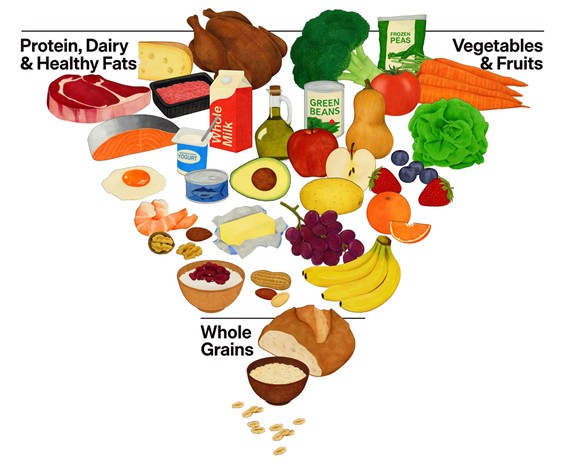
Why the dietary guidelines matter: Avocado marketing!

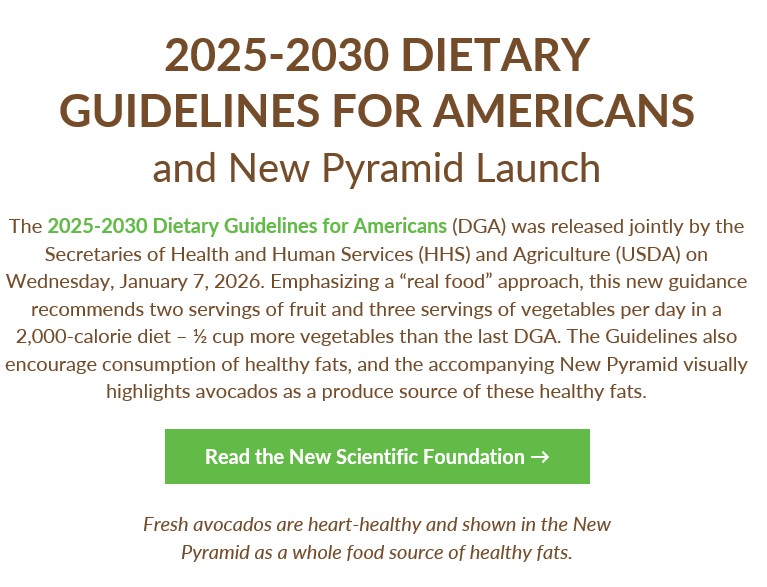
I received this e-mailed message from the Avocado Nutrition Center, sponsored by the Hass Avocado Board (a USDA-sponsored research & promotion—checkoff—program).


Indeed, the New Pyramid does highlight avocados.  What a gift to the Hass Avocado Board!

Comment: As I’ve pointed out repeatedly (see my previous posts on these guidelines), the new guidelines and pyramid have losers (ultra-processed foods, sugars, refined carbohydrates, and even whole grains) and winners (meat, dairy, beef tallow—and avocados.  The avocado board is not missing a chance to take advantage of this.  That’s its job!

Mar 6 2026

Sweet thought for the weekend: Reese’s v. Hershey’s

This story starts here with this post.

Really? When I go to the Hershey’s site, I get this:

Milk Chocolate (Sugar, Cocoa Butter, Chocolate, Skim Milk, Milk Fat, Lactose, Lecithin, PGPR); Peanuts; Sugar; Dextrose; Salt; TBHQ & Citric Acid (TO MAINTAIN FRESHNESS)

Four kinds of sugar and ultra-processed; it’s hard to believe it could get worse.

Even so, the Reese family doesn’t like what is happening to its iconic brand.

Hershey blasted by Reese’s family over core ingredient changes: Reese family sends open letter to Hershey, challenging whether the confectionery giant is protecting the Reese’s legacy… Read more

Hershey facing criticism from Reese family

  • Reese family member accuses Hershey of lowering core product quality
  • Brad Reese claims formulations replaced milk chocolate and real peanut butter
  • Open letter argues changes threaten brand heritage and consumer trust foundations
  • Criticism pressures Hershey to address transparency concerns amid evolving brand strategy
  • Debate highlights tension between cost efficiencies and protecting long-held product identity

Comment

As described in yesterday’s post, the chocolate industry is in trouble because of diminishing supplies, increased costs, and climate change.  Hershey’s must think its customers can’t tell the difference between simple real food ingredients and ultra-processed concoctions.

Real foods cost more.  That’s a problem for food companies.

Tags:
Mar 5 2026

Keeping up with chocolate; the crisis and what to do about it

The chocolate industry, it appears, is in crisis.  Here’s my collection of recent items on the topic.  

Trends

Challenges

Addressing the crisis

Tags:
Mar 4 2026

How to explain glyphosate hypocrisy? Bayer’s lobbying and revolving door

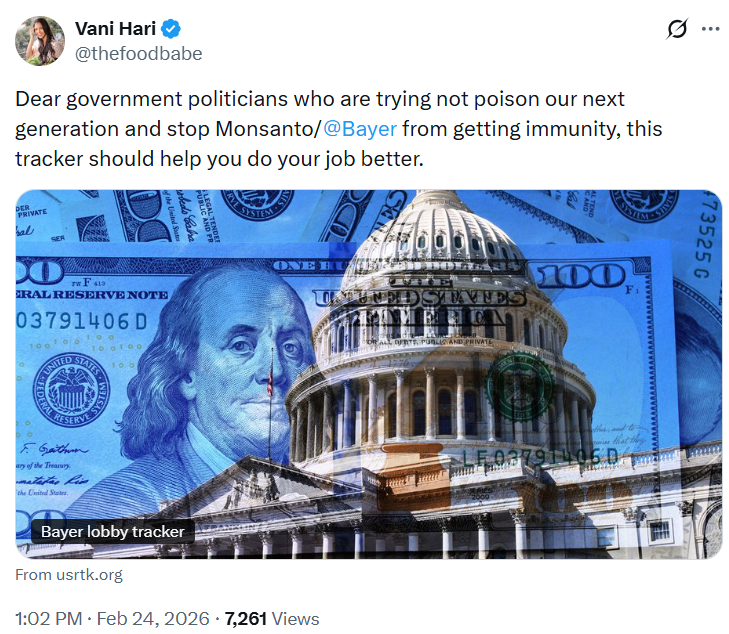
Here’s one place where the MAHA and Food Justice movements agree: on glyphosate.  Here is a post from thefoodbabe (@Vani Hari):

LOBBYING

This refers to U.S. Right to Know’s Bayer lobby tracker.

Federal disclosures show Bayer reported spending $9.19 million on lobbying Congress and the executive branch in 2025, which includes fees paid to at least 13 outside lobbying firms. As of the fourth quarter of 2025, 45 lobbyists were registered to lobby for Bayer under the Lobbying Disclosure Act.

The tracker comes from Stacy Malkan’s reporting: Tracing Bayer’s ties to power in Trump’s Washington; From lobby firms to top officials, a look at how Bayer built access and secured favors

The White House invokes the Defense Production Act to guarantee supplies of elemental phosphorus and glyphosate-based herbicides. Regulators reapprove dicamba, a Bayer herbicide twice blocked by federal courts, and clear the way for new pesticides containing toxic, persistent PFAS “forever” chemicals.

And the U.S. Justice Department urges the U.S. Supreme Court to erase billions of dollars of Bayer’s liability for its glyphosate-based Roundup weed killer – placing the weight of the executive branch on the side of a foreign company against thousands of Americans who say Bayer’s products caused their cancers.

Over the past year, the administration under President Donald J. Trump has delivered a string of victories to Bayer, the German agrichemical and pharmaceutical giant that merged with Monsanto in 2018 to become the world’s leading manufacturer of genetically modified seeds and pesticides.

REVOLVING DOOR

The term refers to government regulators taking jobs with corporations and vice versa.  US Right to Know reports:

The Trump administration yesterday handed Bayer another win, urging the Supreme Court in a new brief to side with the German pesticide company in a high-stakes legal case that could wipe out thousands of cancer lawsuits and potentially billions of dollars in liability tied to glyphosate-based Roundup weed killer.

Three out of nine U.S. officials who signed the brief previously worked for law firms that have represented Bayer, raising questions about whether the Trump administration is providing special favors and benefits to Bayer and siding with a foreign corporation against Americans with cancer.

COMMENT

It’s pretty amazing what Bayer gets away with.  Despite Robert F. Kennedy Jr’s insistence that glyphosate is carcinogenic and needs to get out of the food supply, he has now backtracked on that.  In his backtracking statement, he says:

Unfortunately, our agricultural system depends heavily on these chemicals. The U.S. represents 4% of the world’s population, yet we use roughly 25% of its pesticides. If these inputs disappeared overnight, crop yields would fall, food prices would surge, and America would experience a massive loss of farms even beyond what we are witnessing today. The consequences would be disastrous.

This sounds like he’s looking out for farmers.  But glyphosate is used in industrial agriculture, not small- and medium-sized family farms, and certainly not in organic and regenerative farms.  As an herbicide, it’s used on feed for animals and fuel for automobiles.  It’s also used for drying wheat and oats.  It should not be used for food for people at all.

Why is this still allowed?  The Bayer Lobby Tracker makes that clear.

Mar 3 2026

More MAHA hypocrisy in action: Dicamba, Mercury, and PFAS

One of the major items on HHS Secretary Robert F. Kennedy’s agenda has been to get toxic chemicals out of the food supply.

He’s not doing a good job on that.

Last week, I discussed his hypocritical backtracking on glyphosate.

Here, I mention three more:

DICAMBA

The Environmental Protection Agency has announced its reapproval of the pesticide dicamba as a spray on genetically engineered cotton and soybeans—despite how it drifts onto everyone else’s crops, whether growers want it or not.

Federal court decisions in 2020 and again in 2024 said such approvals were unlawful.

As the Center for Food Safety puts it,

Since its first approval in 2016, dicamba drift has damaged millions of acres of farmland and caused devastating damage to orchards, vegetable farms, home gardens, native plants, trees, and wildlife refuges across the country. Experts have found dicamba drift damage to be the worst of any herbicide in the history of U.S. agriculture. Yet the current approval provides even fewer protections from dicamba drift and damage than past approvals.

The first lawsuits have already been filed.

MERCURY

RFK Jr particularly wanted mercury out of fish.

Mercury gets into fish from two sources: volcanos and coal-burning power plants.  We can’t stop volcanos, but we sure could insist that coal-burning power plans clean up their emissions.

No such luck.

The New York Times writes: E.P.A. Plans to Loosen Mercury Rules for Coal Plants, Documents Show

In particular, the administration is taking steps to improve the economics of coal, the most polluting fossil fuel, by rolling back several regulations that would have made it much more expensive, if not impossible, for many coal plants to keep operating. Over the past nine months, the Energy Department has taken the extraordinary step of ordering eight coal-burning units that had been headed for retirement to stay open and keep running….the E.P.A. is arguing that it would reduce “unwarranted costs” for utilities that own and operate coal plants across the country.

The administration is, however, banning mercury from dental fillings (where it s use is declining rapidly and currently accounts for less than 6% of fillings).

PFAS

A report from the National Academies of Sciences says the USDA has plenty of opportunities do so something about PFAS on farmland.

As the New Lede explains, 

On Feb. 13…the House Agriculture Committee released its draft 2026 Farm Bill, which includes language that would permit research grants on the agricultural impacts of PFAS in land exposed to firefighting foams, sewage sludge or compost containing the chemicals…But US Rep. Chellie Pingree from Maine said the draft bill reflected a “willful neglect of the PFAS crisis.”

“The bill acknowledges PFAS contamination on farmland — but then stops at research,” said Pingree. “While further research is a critical component to addressing PFAS contamination on farmland, we also need to support farmers who have already lost their livelihoods, their markets, and their land.”

COMMENT

To state the obvious, what all this tells us is that when public (or even personal) health comes up against corporate health, corporate profits win.

Make America Healthy Again?  American corporations, yes,  American citizens?  Not so much.

Mar 2 2026

The supplement industry: questions of safety, adulteration, corruption

Since passage of the Dietary Supplement Health and Education Act of 1994, supplement products became basically unregulated.  The FDA is no longer allowed to monitor these products and only gets involved in situations of egregious harm.  Otherwise, you have no way of knowing if their labels have anything at all to do with what is in those bottles.

Here are recent items on safety and adulteration issues with supplements (particularly turmeric), and the Nobel-winning economist Paul Krugman’s comments on corruption in the supplement industry.

SAFETY

  • New outbreak traced to moringa capsules under investigation: Investigators from the Food and Drug Administration are looking into a new outbreak of Salmonella Newport infections traced to moringa powder capsules. The implicated capsules are sold under the Rosabella brand…there is great concern that consumers may have the moringa capsules in their homes because of their long shelf life, which stretches into late 2027. This outbreak is separate from an outbreak of Salmonella Richmond infections traced to Member’s Mark and other brands of moringa.
  • South Korea re-evaluating turmeric, green coffee bean due to adverse reports: South Korea’s Ministry of Food and Drug Safety (MFDS) is re-evaluating the safety and functionality of turmeric extract and eight other functional ingredients.
  • Health Canada calls for warnings on turmeric/curcumin supplement labels: Health Canada has mandated warning labels on turmeric and curcumin natural health products (NHPs) to indicate the risk of hepatotoxicity, following a review that found potential liver health risks, although rare.

ADULTERATION


CORRUPTION

Paul Krugman on dietary supplements: How the Kakistocracy Became a Quackistocracy

It may seem strange to think of the wellness industry as a corrupt and corrupting force comparable to the fossil-fuel sector. But wellness is big business. McKinsey estimates that U.S. spending on wellness is running at around $500 billion a year, while spending on nutritional supplements alone was close to $70 billion last year.

And sellers of nutritional supplements, unlike companies selling pharmaceuticals, are effectively allowed to make false, outlandish claims about what their products do…It’s OK to peddle snake oil with false medical claims as long as you mumble some content-free boilerplate.

And where do the snake-oil salesmen peddle their wares? Largely on right-wing media. After all, that’s where they can find customers who have the right mix of anti-intellectualism and disdain for experts. And the snake-oil purveyors are, in turn, a key part of the extreme right’s financial ecosystem.

I wrote about this almost five years ago. The relationship between quack medicine and right-wing extremism has a long history…But now we have entered a new era. As many observers have noted, the Trump administration is a kakistocracy: rule by the worst. A history of personal corruption is no longer a bar to high office — it’s practically a requirement.


Feb 27 2026

Weekend reading: My latest publication: Dietary guidelines: Brazil vs. U.S.

I was invited by Brazilian colleagues to collaborate on a brief paper comparing the new US guidelines to those in Brazil.

Neves FS, Nilson EAF, Mendes LL, Khandpur N, Nestle M.  The 2025-2030 US Dietary Guidelines: A retreat from scientific integrity and global health governance.  Lancet Regional Health—Americas.  2026; 56:101402

The United States (US) has recently released the Dietary Guidelines for Americans 2025–2030. While the policy introduces sound recommendations for vegetables, fruits, and whole grains, and limits added sugars and ultra-processed foods (UPFs) (termed “highly processed foods” within the text), it fails to reflect the contemporary scientific consensus by prioritising animal proteins, animal fats, and full-fat dairy products. Additionally, this political position follows a supplementary institutional report that dismisses previous efforts to include health equity and social determinants in the empirical evidence base, labelling such integration a “methodological deficiency”. Consequently, these guidelines depart from the international standards required for non-communicable diseases (NCDs) prevention., Given US normative influence, this regression legitimises corporate interests, threatening transnational health governance and food and nutrition security.
          The inherent contradiction within the 2025–2030 guidelines is profound. By promoting animal-source proteins and full-fat dairy, the document proposes a dietary pattern fundamentally inconsistent with its own goal of limiting saturated fat intake below 10% of total calories. This internal incoherence reflects decision-making that continues to prioritise the economic interests of specific industrial sectors over NCDs prevention. The paradoxical nature of the guidelines is evidenced by the reliance on an anachronistic visual communication tool. While the inclusion of processing-based terminology is a progressive step, the reintroduction of a hierarchical food pyramid model represents a semiotic retreat into a reductionist era of public health. This abstraction fails to capture the complexity of modern food systems or the distinction between food types and the extent of industrial processing. While the international community moves towards representations emphasising fresh foods and the social context of eating, the US return to a pyramid isolates nutrients from the food matrix.
           In sharp contrast, the Dietary Guidelines for the Brazilian Population remains the gold standard for food and nutrition frameworks. Published in 2014, the Brazilian approach introduced an epistemological shift away from the dominant reductionist paradigm by moving dietary advice towards the degree and purpose of industrial food processing. This strategy, facilitated by the Nova classification system, acknowledges that industrial alterations to food matrices have wide-reaching implications for biological integrity, metabolic health, social structures, and environmental sustainability.
            As Table 1 illustrates, the contrast between the US and the Brazilian standards is defined by their diverging methodological and conceptual foundations. By prioritising an adequate and healthy diet centred on fresh and minimally processed foods, Brazil provides a robust template for addressing the interactions between human biology, cultural identity, and planetary health, achieving maximum scores across metrics of public health and sustainability.,,
Feature Dietary Guidelines for Americans 2025–2030 Dietary Guidelines for the Brazilian population
Guiding paradigm Focus on nutrient density and individual responsibility; health is framed as a matter of personal choice and moral deficit. Multidimensional approach integrating biological, social, and environmental health; focus on food systems and collective well-being.
Scientific integrity Supplementary report authored by experts with documented conflicts of interest with the beef, dairy, and food industries. Independent process led by academic researchers, strictly free from commercial influence and industry sponsorship.
Classification system Traditional food groups with an absence of technical criteria for industrial processing; focus remains on isolated nutrients. Nova classification categorising foods by the degree and purpose of industrial processing (fresh and minimally processed foods, culinary ingredients, processed foods, and UPFs).
Visual communication Reintroduction of an anachronistic hierarchical food pyramid model, representing a semiotic retreat into reductionism. Rejection of the pyramid in favour of food-based representations that emphasise meals and the social context of eating.
Core recommendations Prioritisation of animal proteins and full-fat dairy; selective recommendations against processed products. Dietary foundation of fresh, plant-based foods and the categorical avoidance of UPFs.
Saturated fat management Mathematical paradox between a 10% intake limit and the promotion of animal fats; absence of guidance on unsaturated fat substitution. Achieved through patterns based on fresh foods; explicit emphasis on replacing animal fats and UPFs with plant-based oils and whole foods.
Environmental sustainability Omission of the climate crisis and planetary boundaries from the policy framework; silence on the environmental impact of livestock. Sustainability as a core principle; promotion of biodiverse, just, and resilient food systems that respect planetary limits.
Equity and determinants Rejection of the “health equity lens”; social and environmental determinants dismissed as a “methodological deficiency”. Structural pillars: integration of social justice, social determinants of health, and the promotion of food sovereignty.
Global influence and sovereignty Functions as a permissive framework that dilutes the narrative on food sovereignty and serves as a scientific alibi for industrial actors. A paradigm of regulatory sovereignty; provides the conceptual framework for pioneering policies like warning labels and fiscal measures.

Table 1

Conceptual and methodological comparison between the 2025–2030 US Dietary Guidelines and the Dietary Guidelines for the Brazilian Population.
UPFs = ultra-processed foods.
           The conceptual divergence between these frameworks reflects a broader tension between public health principles and the narrative of personal responsibility. By rejecting social and environmental determinants, the 2025–2030 US guidelines shift the entire burden of health onto individual choice, ignoring the structural barriers defining the food environment., The reintroduction of individual responsibility as the central axis of food policy is an ideological framework that converts systemic failures into individual moral deficits, thereby legitimising state regulatory inaction., In an era where NCDs prevention requires robust environmental and policy interventions, the US return to a personal responsibility framework represents a dangerous abdication of the state-led public health mandate.
            The erosion of scientific integrity within the US policy framework is a manifestation of the commercial determinants of health. The formulation of these guidelines suggests a clear case of corporate capture. While official political discourse promises to “Make America Healthy Again” by addressing corporate influence, the supplementary scientific report was authored by experts with documented conflicts of interest with the beef, dairy, and food industries., These commercial interests have effectively undermined the promotion of an adequate and healthy diet. Reversing this trend requires decisive state-led interventions beyond individual choice, necessitating robust policies to restrict UPF production and structural reforms to address the corporate actors dominating global supply.,
            The failure of the 2025–2030 US guidelines to address the environmental dimensions of diet is negligent in an era of ecological instability. While the international community aligns with the EAT-Lancet 2.0 consensus, which emphasises that food systems must operate within planetary boundaries, the US guidelines remain silent on the climate crisis. Transitioning towards plant-forward diets is a foundational requirement for mitigating the environmental degradation caused by intensive livestock systems. The omission of these factors ignores the reality of the Global Syndemic, in which obesity, undernutrition, and climate change are interconnected pandemics driven by the same food system failures. By failing to address environmental impacts, the US promotes a model of consumption linked to planetary health degradation, further endangering global food and nutrition security.
             The axis of scientific integrity has shifted to the Global South, where Latin American nations—including Brazil, Chile, Colombia, Mexico, Peru, and Uruguay—uphold food systems that are socially just and environmentally sustainable. These countries have pioneered transformative interventions, such as Brazil’s focus on food processing, Chile’s warning labels, and UPF taxation in Mexico and Colombia. The political and economic power of the US increases the likelihood that its guidelines will be leveraged by transnational corporations to dismantle these regulations. In international bodies like the Codex Alimentarius, the US framework provides a scientific alibi for industrial actors to dispute sovereign policies, framing evidence-based regulations as barriers to trade. This reflects documented precedents, such as the use of US policy to circumvent international protections for breastfeeding, illustrating how domestic guidelines can function as instruments to impede global health progress.
           Ultimately, the 2025–2030 US Dietary Guidelines do not represent a legitimate departure from scientific progress, but a case of corporate capture with direct implications for national and global morbidity. The World Health Organization, the Food and Agriculture Organization of the United Nations, and the global public health community must act decisively to protect the integrity of dietary guidelines against the corporate concessions represented in the US guidelines, which dismiss established evidence on the health impacts of food processing and social determinants. Transnational health governance must be insulated from the influence of corporations that seek to undermine public health for private gain., Resisting the global influence of this flawed framework is essential to ensure that future generations have access to an adequate and healthy diet that respects both cultural heritage and planetary limits.
           The leadership vacuum created by the US concessions offers a pivotal opportunity for the Global South to redefine public health governance. Latin American nations, supported by regional networks such as the Latin American Inter-institutional Network for Technical Cooperation on Food Environments and the Prevention of NCDs, are already demonstrating the efficacy of science-based, conflict-of-interest-free leadership. Safeguarding global health now requires fostering cross-regional collaborations, securing independent funding, and consolidating Brazil and the region as the pioneers of food system transformation. The era of corporate concessions has ended; the era of evidence-based leadership has begun.

Contributors

FSN conceptualised the study. FSN, EAFN, LLM, NK, and MN performed the formal analysis. FSN drafted the original manuscript. EAFN, LLM, NK, and MN provided critical revisions and edited the manuscript. All authors had full access to all the data in the study and had final responsibility for the decision to submit for publication.

Declaration of interests

The authors declare no competing interests.

Acknowledgements

None.
Funding: This manuscript did not receive any specific funding.

References

United States
Department of Health and Human Services; Department of Agriculture. Dietary Guidelines for Americans, 2025–2030
Department of Health and Human Services and U.S. Department of Agriculture, Washington (DC), 2026
[cited 2026 Jan 10]. Available from: https://cdn.realfood.gov/DGA.pdf
United States. Department of Health and Human Services; Department of Agriculture
The Scientific Foundation for the Dietary Guidelines for Americans, 2025–2030
Department of Health and Human Services and U.S. Department of Agriculture, Washington (DC), 2026
[cited 2026 Jan 10]. Available from: https://cdn.realfood.gov/Scientific%20Report.pdf
Monteiro, C.A. ∙ Louzada, M.L. ∙ Steele-Martinez, E. ∙ et al.
Ultra-processed foods and human health: the main thesis and the evidence
Lancet. 2025; 406(10520):2667-2684
Scrinis, G. ∙ Popkin, B.M. ∙ Corvalan, C. ∙ et al.
Policies to halt and reverse the rise in ultra-processed food production, marketing, and consumption
Lancet. 2025; 406(10520):2685-2702
Gilmore, A.B. ∙ Fabbri, A. ∙ Baum, F. ∙ et al.
Defining and conceptualising the commercial determinants of health
Lancet. 2023; 401(10383):1194-1213
Brazil. Ministry of Health
Dietary Guidelines for the Brazilian Population
Ministry of Health of Brazil, Brasília, 2015
Ahmed, S. ∙ Downs, S. ∙ Fanzo, J.
Advancing an integrative framework to evaluate sustainability in national dietary guidelines
Front Sustain Food Syst. 2019; 3:76
Rockström, J. ∙ Thilsted, S.H. ∙ Willett, W.C. ∙ et al.
The EAT-Lancet Commission on healthy, sustainable, and just food systems
Lancet. 2025; 406(10512):1625-1700
Swinburn, B.A. ∙ Kraak, V.I. ∙ Allender, S. ∙ et al.
The global syndemic of obesity, undernutrition, and climate change: the Lancet Commission report
Lancet. 2019; 393(10173):791-846
Baker, P. ∙ Slater, S. ∙ White, M. ∙ et al.
Towards unified global action on ultra-processed foods: understanding commercial determinants, countering corporate power, and mobilising a public health response
Lancet. 2025; 406(10520):2703-2726