by Marion Nestle

Search results: USDA meat

Jan 20 2009

USDA defines “natural” meats

The USDA has finally posted its rules for health claims on meats in the January 16 Federal Register. After dealing with the 44,000 or so comments it received on the issue, the USDA defines what “naturally raised” means for meat and livestock.  In sum: no growth promoters, antibiotics, animal by-products, or fish by-products. This is a voluntary standard, but should help.

Tags: , ,
Dec 14 2008

USDA to test meat and poultry for melamine

The USDA says it will be taking samples of meat and poultry products that contain ingredients derived from milk to find out whether they contain melamine and, if so, how much.   It will be sampling five kinds of products: baby foods, cooked sausages, breaded chicken, meatballs, and meat and poultry wrapped in dough (including calzones).  Great.  I’m hoping they will be using the same kinds of methods used by FDA and coordinating closely with that agency.  If ever we needed a reason to have just ONE food safety agency instead of the multiple ones we have now (USDA, FDA, EPA, etc), melamine is as good as any.

Tags: ,
May 12 2026

Meat industry consolidation: a national security issue?

Let me start with a summary from Food Safety News:

The final four in the [meat] consolidation game are:

  • JBS – This Brazil-based food giant is the world’s largest beef processor. It owns facilities that slaughter and pack over 20,000 cattle per day in the U.S.
  • Tyson Foods – Known for chicken, Tyson is also the second largest U.S. beef processor. Their five beef plants process thousands of cattle daily.
  • Cargill – This agribusiness conglomerate is the third largest U.S. beef packer and also owns one of the nation’s largest feedlot operations, Cargill Cattle Feeders.
  • National Beef – Majority owned by Brazilian meatpacker Marfig, National Beef operates three U.S. packing facilities that process thousands of cattle per day.

Those are the four companies that control about 80 percent of the U.S. beef market, and there is no reason to believe that any of them are satisfied with their share. American consumers are paying some of the highest, inflation-adjusted prices for steaks and hamburgers than at any time in history.

The Trump administration says it is taking this on.  In a series of announcements on X (formerly Twitter), USDA Secretary Brooke Rollins says:

We must work to address this to protect our ranchers and consumers. @POTUS  and this administration are focused on promoting fairness and competition — ensuring our producers have options and a level playing field.

Not only that, she adds,

Half of these meatpacking giants, including the largest meat packer in the world, are either foreign-owned or have significant foreign ownership and control, making them a threat not just to our cattle producers, but a threat to America itself.

Here’s what she says they doing about it:

We’re putting forward short- and long-term solutions through the @USDA  Beef Plan and a major DOJ investigation into anti-competitive practices ordered by @POTUS.  Food security is national security.

And what is the USDA Beef Plan?  This will enhance disaster relief, increase grazing access, and build demand.

Anti-trust regulation?

Not a chance.

Apr 15 2026

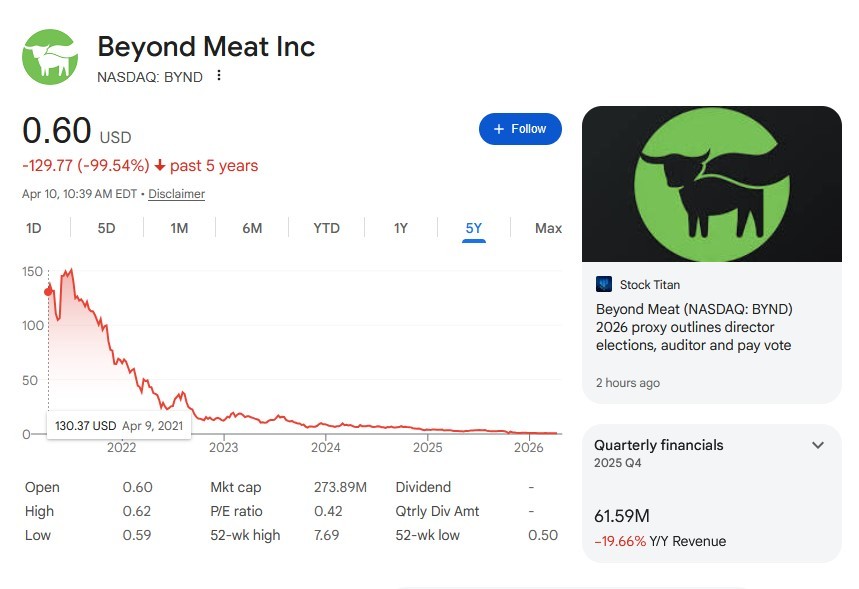
What’s happening to Beyond Meat?

I’ve been writing about Beyond Meat’s financial troubles since at least 2022, so the latest problems come as no surprise.

Beyond Meat, you will recall, makes plant-based meat alternatives: nutrition powerhouses, clean protein, fiber essential for the gut microbiome.

Recently, Beyond Meat announced that it would be moving into beverages—“a logical move—and not an admission of defeat—after another grim quarter.”

Grim quarter?  Indeed yes (thanks to Steve Zwick for sending)

As another commentator points out:

1. Beyond Meat has never made a profit.

2. Each $1 of product it sold in 2025 cost it $1.95 to make.

3. That’s a dramatic change since 2024, when each $1 of product it sold cost $1.32 to make.

4. It has $1.2 billion of accumulated losses on its balance sheet.

In the meantime, according to USDA, the per capita availability of red meat has increased by 10 pounds since 2014 and is now 105 pounds per capita per year or roughly a third of a pound a day for every man, woman, and baby in the country—and that’s for boneless.

We would all be healthier, and so would the planet, if we ate less red meat on average.  That was the point of developing plant-based alternatives; these were supposed to substitute for real meat.  Apparently, they don’t.

This means: If you want to reduce the impact of your diet on climate change, reduce your intake of red meat however works for you.

Apr 2 2026

USDA’s newest label: Made in America

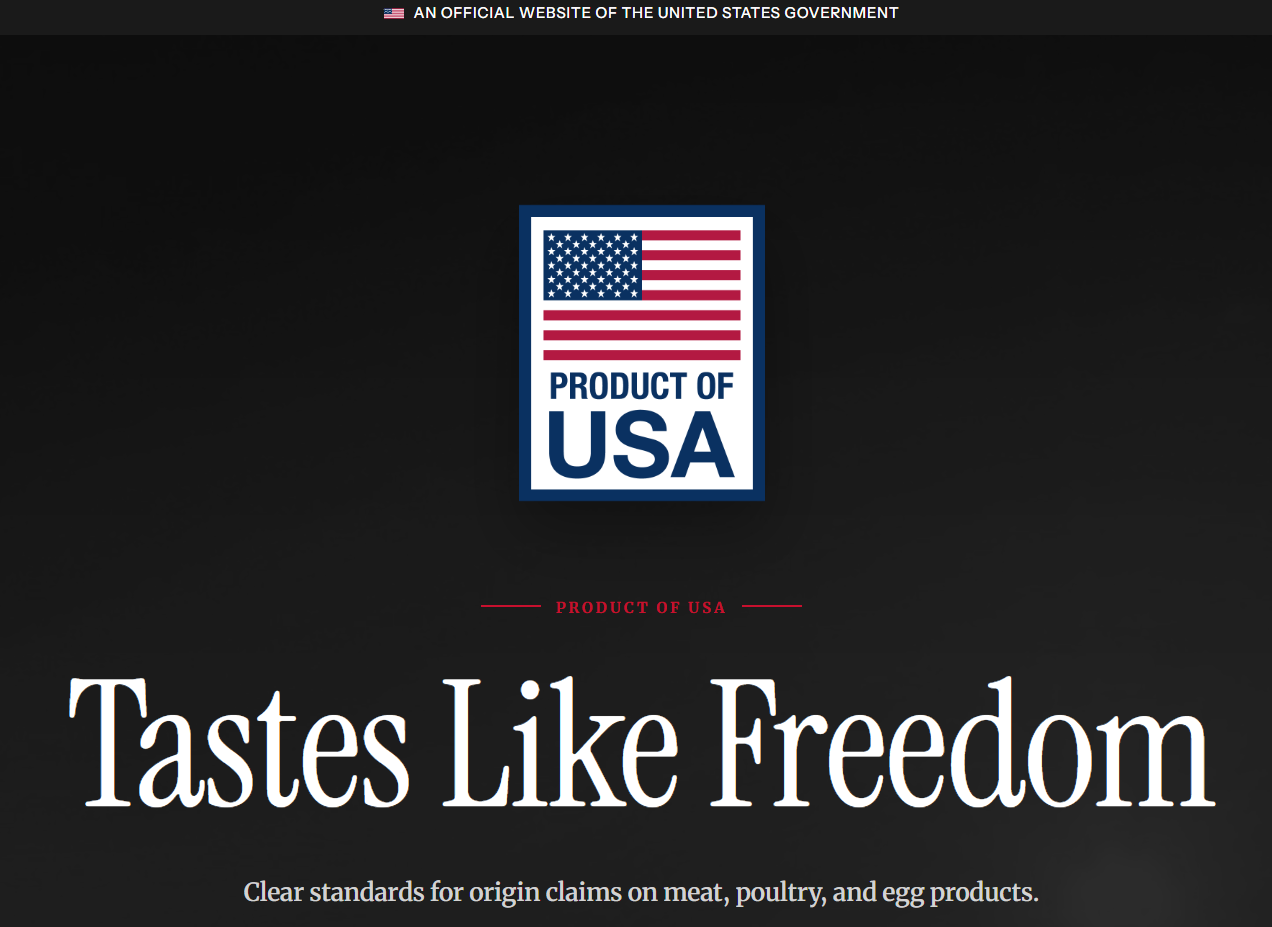
While we are on the topic of labels, here’s the USDA’s newest:

“Tastes like freedom?”  You have to love the Orwellian rhetoric.

“Our great patriot ranchers and producers grow, raise, and harvest the world’s safest, most affordable, and abundant food supply. American consumers want to support America by buying American and this label will strengthen our food supply chain through transparency, fairness, and trust,” said USDA Secretary Rollins. “This new standard policy ensures producers who invest in a fully American supply chain can compete fairly, and it gives consumers the confidence they deserve about the food they bring home.”

It is part of the USDA Plan to Fortify the American Beef Industry.  This “focuses on rebuilding domestic capacity, improving transparency across the supply chain, and ensuring U.S. ranchers can compete on a level playing field.”

And, you can “Learn more at productofusa.gov,”

Tags: ,
Feb 12 2026

Is the Dietary Guidelines’ prioritizing of meat about industry lobbying or personal ideology?

In my post last week, “The government is actively promoting meat and dairy intake,” I said

The new Dietary Guidelines for Americans actively promote meat and dairy intake, especially full-fat dairy.  The USDA has long acted as a marketing arm of those industries through its research and promotion (checkoff) programs.

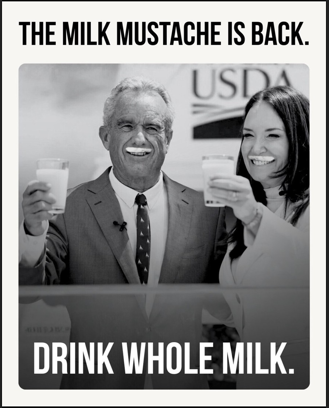
I then noted that this government takes promotion to new levels through its milk mustache ads and pronouncements that we have ended the war on protein (protein has long been understood as a euphemism for meat).

I ended with this comment: “I chalk all this up to the extraordinary lobbying power of the meat and dairy industries.”

Whew.  Did that ever get a response.

Readers raised two issues:

I.  The guidelines and inverted pyramid give equal weight to plant foods.

That’s not how I read them.  I see them as giving lip service to plants but prioritizing meat.  They visually present meat most prominently in the interactive graphic at realfood.gov.  Subsequent statements of the USDA and HHS secretaries also support this view.  And then there are the authors with financial links to beef industry groups who wrote the scientific reports relevent to meat.

II. This is not about meat industry lobbying; it is about Robert F. Kennedy, Jr’s ideology.  Well, yes.  That too.  “Ideology” refers to belief systems that structure views of the world.  Everybody has them.

I, for example, am ideologically in favor of the dietary guidelines’ advice to eat real food and avoid highly processed food, but ideologically opposed to advice to prioritize animal protein over plant protein.  I would argue that the vast preponderance of research supports that view.

People holding other ideological views disagree, evidently.  They pick different studies to read and come to different conclusions.

Two members of the nine people writing scientific reviews for the guidelines assure me that their reviews are unbiased.  But those reviews invariably reflect the ideology of the people who wrote them.

As I often point out, nutrition research is impossible to control rigorously, unless you lock people up for extended periods of time.  That is why the best controlled studies, those done in monitored metabolic wards, can only be done for a few weeks at most.  Diets are complicated; eaters are complicated; research is complicated.  Complicated research requires interpretation.  Interpretation depends on the interpreter’s particular ideology.

That is why appointing a diverse committee to look at research questions has its benefits; people with differing ideologies have to work out points of agreement.

I will say this for RFK, Jr.  He makes his ideology clear.  It prioritizes personal experience over science.

My ideology: We need science to distinguish anecdote from fact.

Let’s agree that on the meat priority issue, RFK Jr’s ideology fits well with meat industry objectives.

The meat industry has a long history of lobbying around dietary guidelines (see my book, Food Politics).

I have not seen specific reports of meat industry lobbying around the new dietary guidelines.  Apparently, no lobbying was necessary.

Feb 4 2026

The government is actively promoting meat and dairy intake

The new Dietary Guidelines for Americans actively promote meat and dairy intake, especially full-fat dairy.  The USDA has long acted as a marketing arm of those industries through its research and promotion (checkoff) programs.

But the current government takes this new levels.

Here are the Secretaries of HHS and USDA:

More on the milk mustache campaign here, here, here, and here.

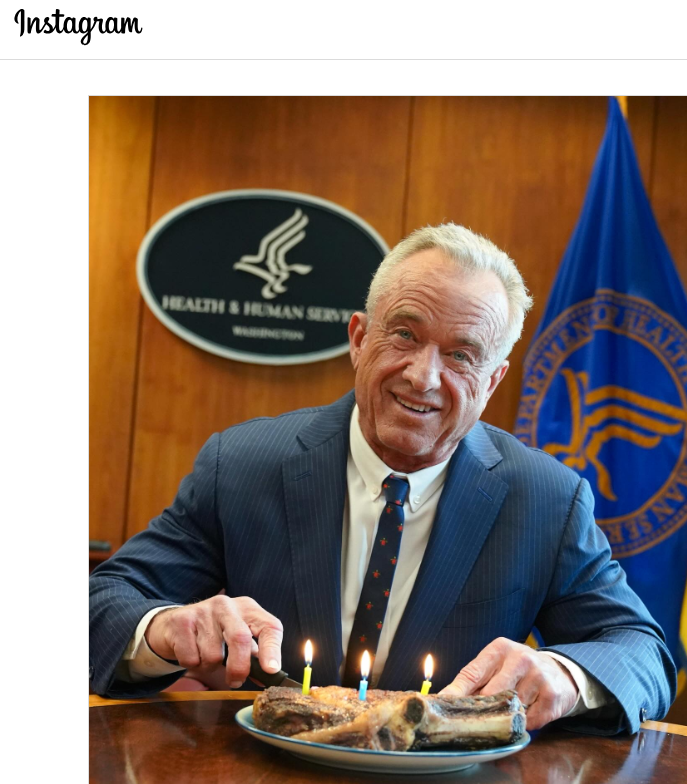
And how about RFK Jr’s birthday celebration:

Earlier, in 2025, USDA announced its plan to “fortify the American beef industry.

  • USDA Action: USDA FNS is encouraging schools, sponsors, and institutions participating in any USDA Child Nutrition Programs (CNP) to source and serve locally grown foods, including beef, in program meals.,,,These efforts will improve access to local foods, including high-quality meat, for American students, and will improve child health and nutrition and reinvigorate American livestock producers by better connecting them with USDA’s Child Nutrition Programs.
  • USDA Action: Together with HHS, ensure the 2025–2030 Dietary Guidelines for Americans (DGA) reflect sound science and practical advice for the American family, including encouraging protein as the foundation for every meal.

Comment

I chalk all this up to the extraordinary lobbying power of the meat and dairy industries.  Fruit and vegetable growers (“specialty crops”) do not have this kind of clout.  Will eating more meat and dairy foods Make America Healthy Again?  That seems highly unlikely.  In my reading of the evidence, we—and the planet—would be healthier getting more of our calories from plant foods.I

Jan 13 2026

The MAHA Dietary Guidelines IV: Eat more meat!

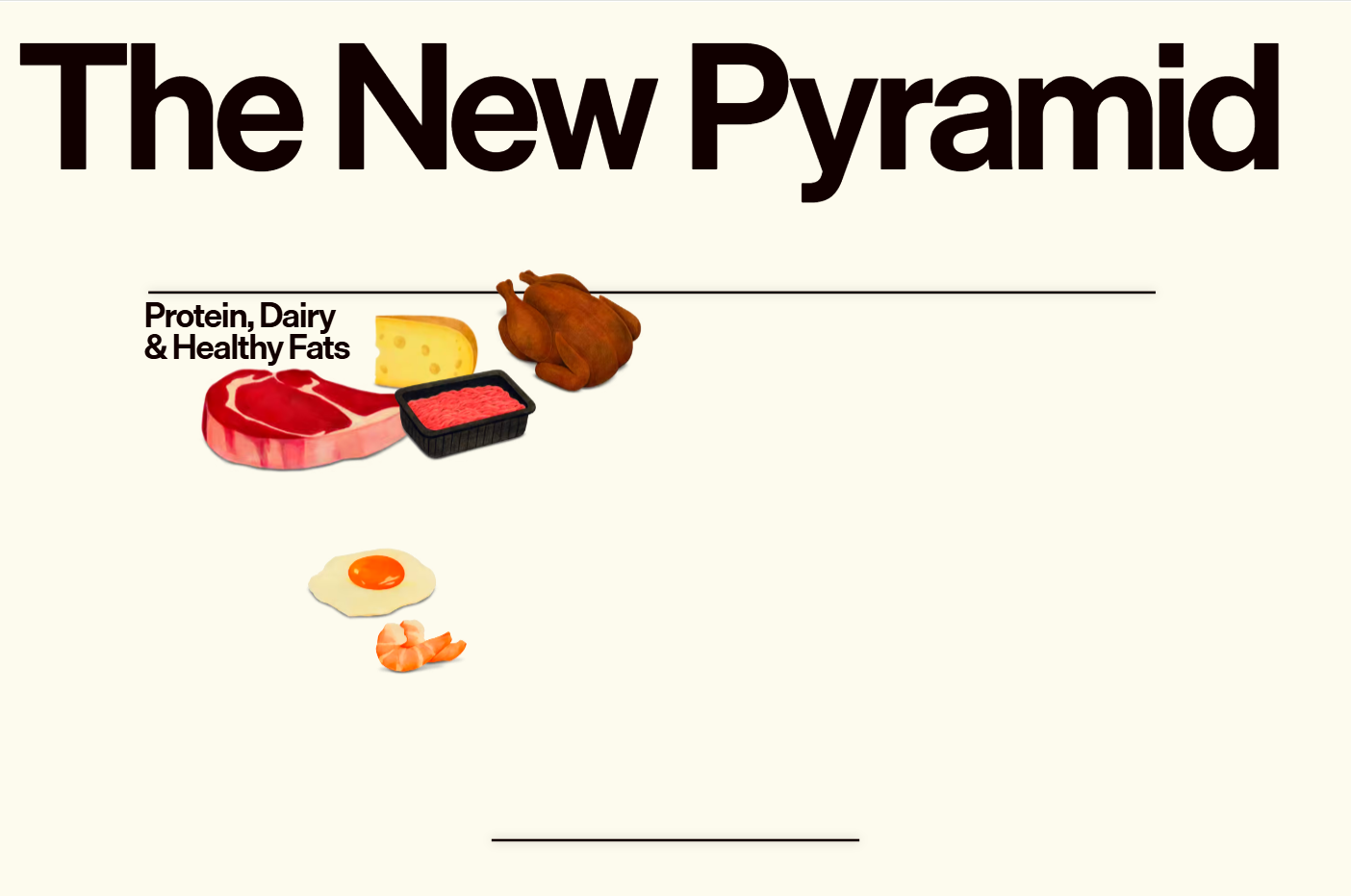
The Eat Real Food Website says “We are ending the war on protein. Every meal must prioritize high-quality, nutrient-dense protein from both animal and plant sources….” But here’s what comes up first and is clearly the first priority.

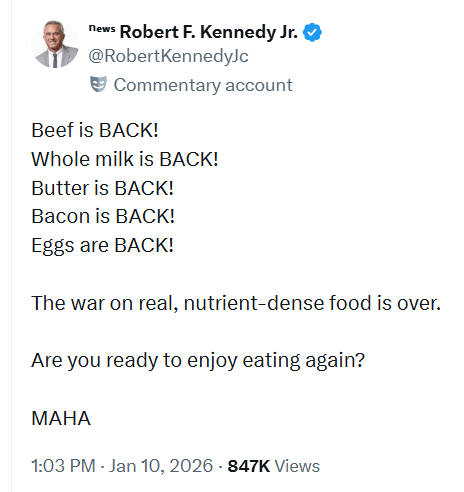
And here’s an exultant RFK Jr on X:

Protein is well understood to be a euphemism for meat.  I’ve already written about how most people already eat twice the protein needed so advice to eat more of it is unlikely to do anyone any good.

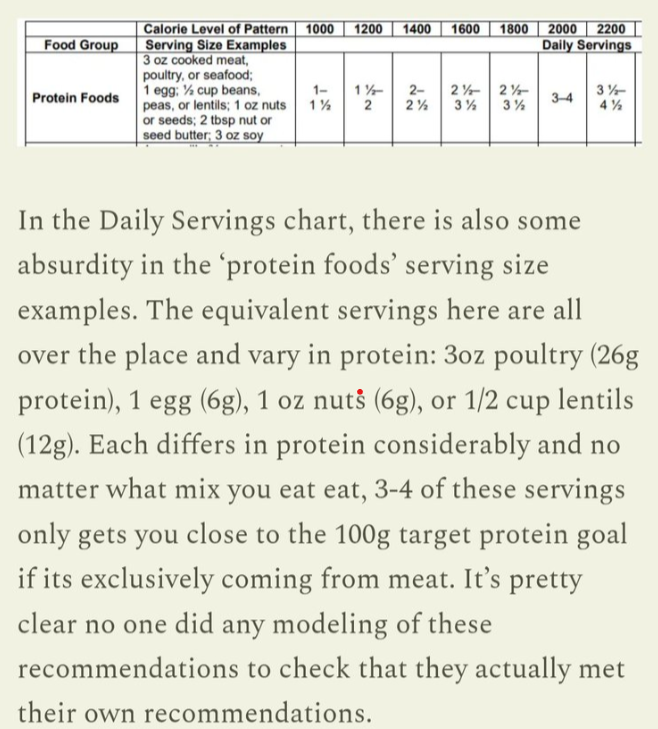
And the document, Daily Servings by Calorie Level, makes it clear that you have to eat meat if you are going to reach the level of protein intake recommended.  For this, I am indebted to Kevin Klatt, who posted this on X.

What’s wrong with recommending more meat?

  • It’s healthier getting protein from plant sources.
  • The way we produce meat pollutes the environment with pesticides and herbicides to grow their feed.
  • It also presents major food safety hazards (see Eric Schlosser’s update on Fast Food Nation)
  • Cattle burp methane and are the single largest food source of greenhouse gas emissions.
  • Beef cattle are raised in CAFOs under crowded and dirty conditions.
  • The meat industry exploits workers.
  • Consolidation in the meat industry keeps prices high (Tyson’s just agreed to an $82.5M settlement in a beef price-fixing lawsuit)
  • Producing meat the way we do is not sustainable and adds to inequities.

Of course, sustainability and equity are non-topics for this administration.  But they matter and should very much be on the table for discussion.

We already eat plenty of meat—more than 100 pounds per capita per year of red meat alone (according to USDA).  We don’t need to be eating more.

Correction

In my first post on these dietary guidelines, I said:

Some of the instructions don’t make sense: “Consume meat with no or limited added sugars?”  Who does this?

Several readers wrote to object.  Renata M, for example, said she could think of so many examples, she just had to say something.

  • BBQ sauce
  • Ketchup
  • Teriyaki sauce
  • Other popular “Chinese” foods
  • Brown sugar-glazed pork chops
  • Pasta sauce
  • Sloppy Joe’s
  • Brines and marinades
  • and more, if honey and maple syrup are considered added sugars [they are]

Oops. Sorry about that.  Thanks!