by Marion Nestle

Currently browsing posts about: marketing

Feb 10 2026

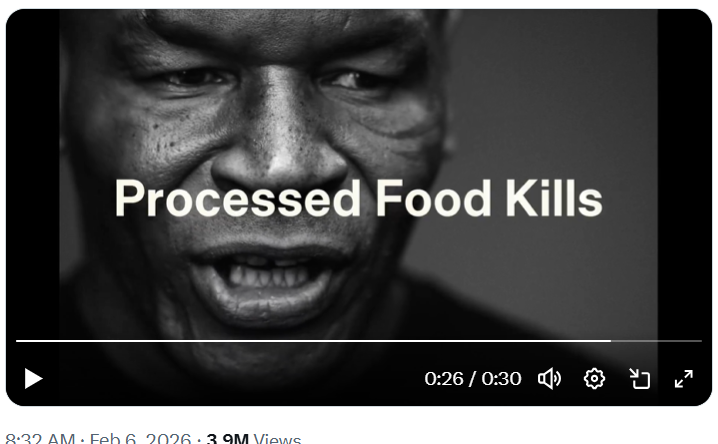
The Super Bowl ads: Processed food kills

I guess I have to say something about the Super Bowl ads.

Much as I am in favor of eating real food and reducing ultra-processed foods, I was trained in science.  I would never go as far as this astonishing Super Bowl ad featuring Mike Tyson.

The scientist in me says yes, diets high in ultra-processed foods promote poor health and raise the risk of chronic disease and overall mortality, but no single food or food category is going to do that alone.

The sociologist in me appreciates that Mike Tyson has a powerful redemption story: His sister died at 25 from a heart attack caused by obesity, he has a weight problem, is now a vegan, and is atoning for his conviction as a rapist.

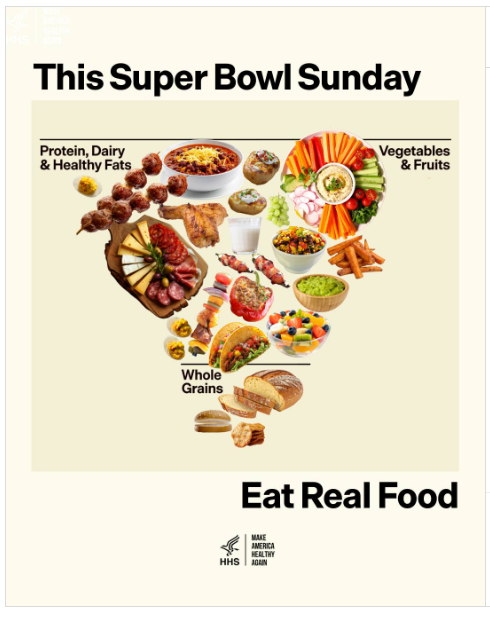
Coming from him, “Processed Food Kills” and “Eat Real Food” are powerful messages.

The Super Bowl venue ensures that they will reach a wide audience.

MAHA endorses these messages Even on taxicabs.

So do food advocates, although some of us wish so much of the burden of healthy eating did not fall on individuals.  As I like to put it, trying to eat healthfully in today’s food environment means that you are fighting an entire food system on your own.

Michael Jacobson, former founding director of the Center for Science in the Public Interest adds:

Another ad that will run during the Super Bowl is an amusing Pepsi ad that attacks Coke. That ad immediately reminded me of CSPI’s classic The Real Bears video (almost 3 million views!) that used polar bears to attack Coke (but did not promote Pepsi!).

How much to Super Bowl ads cost?

A minimum of $8 million.  Why are they worth it?  See this contextual analysis: shared experience.

Who paid the $8 million for this one?  The MAHA Center, according to this analysis.

Think of that when you watch the other food ads, courtesy of the New York Times.

And then there’s this.  MAHA sure does have a terrific graphic designer.  If only calories didn’t matter…

Feb 4 2026

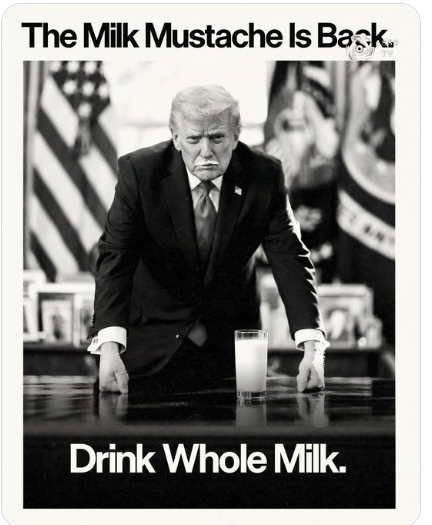
The government is actively promoting meat and dairy intake

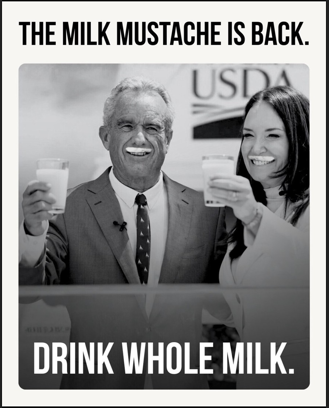
The new Dietary Guidelines for Americans actively promote meat and dairy intake, especially full-fat dairy.  The USDA has long acted as a marketing arm of those industries through its research and promotion (checkoff) programs.

But the current government takes this new levels.

Here are the Secretaries of HHS and USDA:

More on the milk mustache campaign here, here, here, and here.

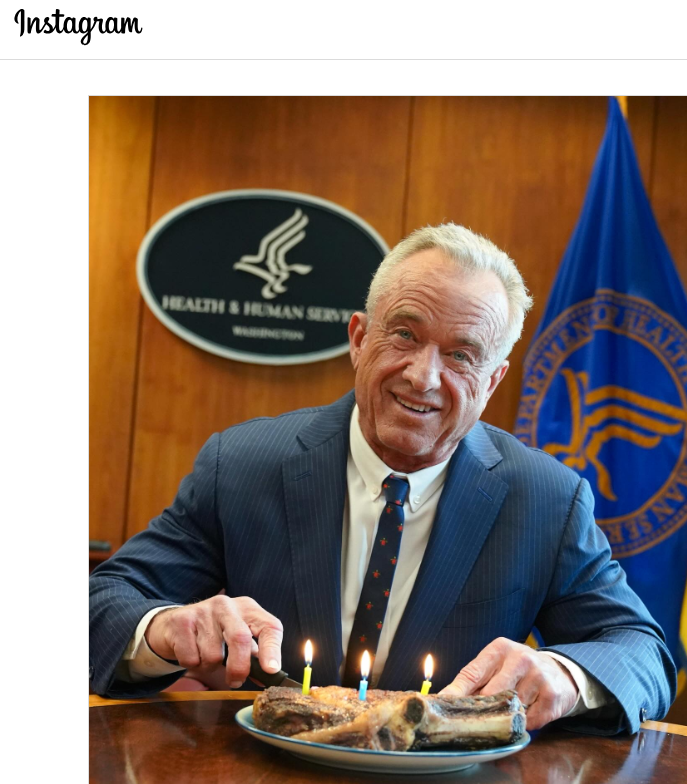
And how about RFK Jr’s birthday celebration:

Earlier, in 2025, USDA announced its plan to “fortify the American beef industry.

  • USDA Action: USDA FNS is encouraging schools, sponsors, and institutions participating in any USDA Child Nutrition Programs (CNP) to source and serve locally grown foods, including beef, in program meals.,,,These efforts will improve access to local foods, including high-quality meat, for American students, and will improve child health and nutrition and reinvigorate American livestock producers by better connecting them with USDA’s Child Nutrition Programs.
  • USDA Action: Together with HHS, ensure the 2025–2030 Dietary Guidelines for Americans (DGA) reflect sound science and practical advice for the American family, including encouraging protein as the foundation for every meal.

Comment

I chalk all this up to the extraordinary lobbying power of the meat and dairy industries.  Fruit and vegetable growers (“specialty crops”) do not have this kind of clout.  Will eating more meat and dairy foods Make America Healthy Again?  That seems highly unlikely.  In my reading of the evidence, we—and the planet—would be healthier getting more of our calories from plant foods.I

Jan 2 2026

Weekend reading: protein

Alert to readers: Amazon.com displays listings for several more workbooks, study guides, and cookbooks purportedly based on my book, What to Eat Now (see previous post on this).  I did not write any of them.  Caveat emptor!

___________________________

Protein is the #1 food marketing trend for 2026 and is expected to be a big issue in the forthcoming 2025-2030 dietary guidelines.

The main drivers of the trend:

  • Aging 
  • Weight management
  • Fitness.
  • GLP-1 drugs
  • Marketing!!!

I put exclamation points after marketing because average protein intake among anyone who eats enough calories is already way above minimum requirements  (also see this).  Adding more is unlikely to do any good.  And current evidence is insufficient to change existing recommendations for protein intakes

That’s why the protein trend is really about marketing.

And that’s why protein is now added to everything.

One other point: although protein is in most foods (exceptions: sugar and fats), people commonly understand protein as a euphemism for meat (plant-based sources of protein seem healthier).

If advice to eat more protein gets translated to eat more meat, this will not be good for the health of people or the planet.

Here are a few items from industry publications about taking advantage of the protein trend.

Feb 29 2024

How to sell plant-based products: Use red packaging?

The headline got my attention: New study finds meat eaters are more willing to try plant-based products when packaged in red.

This e-mailed press release came from ProVeg International, a German “food awareness organisation with the mission to replace 50% of animal products globally with plant-based and cultivated foods by 2040.”

A groundbreaking new report released by ProVeg International, titled, “The Power of Colour: Nudging Consumers Toward Plant-Based Meat Consumption,” reveals key insights into the hidden influence of colour on people’s perceptions of a plant-based product’s flavour and appeal. Remarkably, simply using appealing colours in product packaging has the power to reshape consumer behaviour and prompt a shift toward plant-based meat.

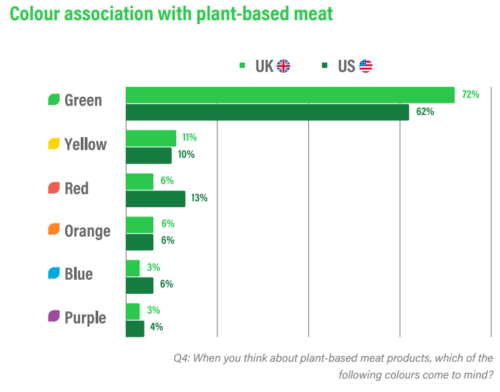
Survey participants associated red with good taste,  green with health and eco-friendliness, and blue (their favorite color) with budget consciousness, but also quality.

Food companies go to a lot of trouble to encourage sales.  I knew that package color and design influence sales, but had never seen the research.

In looking at this report, I’m not sure how ProVeg came to these conclusions (this graph shows the most profound differences), but it sure is interesting to see how these things are done.   Enjoy!

Sep 27 2023

Annals of Marketing: Coca-Cola innovations

As I keep saying, it’s a Brave New World.  Try this one: Coca-Cola launches beverage created with the help of artificial intelligence.

Earlier this year, Becks rolled out the world’s first beer and full marketing campaign made with artificial intelligence. The AB InBev-owned brand said the beer, called Beck’s Autonomous, was selected by AI as its favorite among millions of different flavor combinations it generated.

….For Coca-ColaCreations, the use of AI is a natural step that positions the drink in a way that could pique the interest of younger consumers who will want to try it, before potentially increasing their consumption of other Coca-Cola products. Similar to other beverages released under the Creations platform, the latest beverage doesn’t promote or reveal a flavor profile, such as cola, cherry or vanilla, but rather a mood or experience.

As for mood and experience, we have this: More than the Real Thing: Chinese consumers want emotion and culture, not just drinks – Coca-Cola.

Of course China is very rich in culture and heritage, but beyond this there are also many elements of the lifestyle today that consumers will also link to local culture, such as popular trends locally

…One of these is the rise in popularity of the game League of Legends locally, and with this in mind we launched a limited edition “The Hero Has Arrived” product in collaboration with the game, creating an entire platform for players and consumers to really connect with it—this was also designed to have a unique limited edition flavour with zero sugar, so it remains in line with current trends as well.

Here it is clear that this sort of innovation requires thinking that is less dependent and far beyond just the science of beverage creation—it comes from a focus on understanding local trends, consumers, items and the connections between them to form the culture, and integrating this culture into the innovation.

Comment: Yes, Coca-Cola sells bottled water but that’s not how it makes its money.  The real money is in sugary beverages and other ultra-processed drinks.  I suppose AI is as good as any other marketing expert but I sure hate to see these products flood China.  The country is having enough of a problem with its rising prevalence of obesity and related chronic diseases.

Jun 1 2023

Annals of marketing: the American Beverage Association

The American Beverage Association, which represents Big (and also Medium) Soda, is now advertising in Politico.

America’s leading beverage companies – The Coca-Cola Company, Keurig Dr Pepper and PepsiCo – are bringing consumers more choices with less sugar. From sparkling, flavored and bottled waters to zero sugar sodas, sports drinks, juices and teas, consumers have more options than ever. In fact, nearly 60% of beverages sold today have zero sugar. Americans are looking for more choices to support their efforts to find balance, and America’s beverage companies are delivering. Explore choices at BalanceUS.org.

My translation: The ABA is saying: “We produce plenty of water and diet sodas.  If you insist on drinking full sugar sodas, it’s not our fault.  (Never mind that we sink fortunes into advertising our full-sugar drinks…).”
Aug 24 2022

Task force on Hunger, Nutrition, Health report: a missed opportunity?

The Task Force on Hunger, Nutrition, and Health released its comprehensive report yesterday.

The report’s purpose is to inform the upcoming White House Conference on Hunger, Nutrition, and Health.  If so, it’s going to leave the White House in a quandary.

The report has lots of useful information, beautifully presented, and does all it should on adddressing hunger.

But as I read it, the report, titled Ambitious, Actionable Recommendations to End Hunger, Advance Nutrition, and Improve Health in the United States,” is not nearly ambitious enough when it comes to nutrition and health.

It makes far too many recommendations—30.  That’s always a bad sign (too many to do).  .

Really, only 2 recommendations are needed.  These should establish or expand federal agriculture, food, and nutrition policies to ensure:

  1.  Adequate, affordable food and nutrition for everyone.
  2.  Healthy diets for everyone, meaning those that follow Dietary Guidelines and are largely plant-based, balanced in calories, and low in undesirable fats, sugars, and salt (i.e., ultra-processed foods).

The hunger recommendations do the job: they call for ensuring benefits sufficient to meet households’ basic needs.

But the second?  A mess.

Here is the most obvious example [my comments follow] .

Recommendation #9: “Reduce the marketing of foods that do not align with the latest DGA and increase the marketing of foods that align with the latest DGA to children and populations with disproportionate rates of diet-related chronic conditions” [Good! But not through the recommended voluntary methods by industry.  That won’t work; it requires legislation]

But here’s Recommendation #25: “Increase the ability of food companies to communicate with consumers about the evidence for healthfulness of certain food products and nutrients.”  [Uh oh]

This comes with three action items:

  1. FDA should expeditiously update its definition of the word “healthy” [good] and incentivize food companies to use the terminology and/or associated symbol in their food packaging and marketing [Yikes!] and increase the proportion of products on the market that meet the “healthy” definition [OK, as long as they are not gaming the system].
  2. Congress and/or FDA should improve and streamline the process for application, review, approval, and use of health claims and qualified health claims on food packages. [No!  If it’s one thing we don’t need, it’s more misleading health claims]. 
  3. Congress and/or FDA should create a new process for communicating about foods, nutrients, and other bioactive ingredients that may prevent or treat disease through label claims. [No!  We do not need more claims for the benefits of ultra-processed food products].

What’s missing from this report?

  • Anything about ultra-processed foods and their effects on calorie intake and overall health.  The term is mentioned once, but only in the context of ‘more research needed’ (Recommendation #19).
  • A clear statement of the benefits of soda taxes in reducing consumption of sugar-sweetened beverages.  Why isn’t there one?  A box explains: “Task Force members voiced diverse perspectives on this topic.”
  • A clear statement about making SNAP align with Dietary Guidelines.  This is mentioned, but only in the context of pilot research (recommendation #2), and therefore contradicts recommendations #3 and #5.  #3:  Increase nutrition security by promoting dietary patterns that align with the latest Dietary Guidelines for Americans (DGA) through federal nutrition programs.  #5:  Leverage the federal nutrition programs’ power in economic stimulus to support food systems that promote foods that align with the latest DGA.”
  • Firm calls on Congress to pass legislation to do what is needed.

What happened?  One member of the committee explained to me that its membership included everyone from anti-hunger advocates to food industry representatives, and too many vested interests were at stake.  Members could not agree on anything that would make a real difference to policy.  Anything substantive met strong resistance.

When it comes to public health policy, which this most definitely is, the food industry has no business being at the table.

This was a recommendation of the 2019 Lancet Commission on the Global Syndemic of Obesity, Undernutrition, and Climate Change.  Read that report.  It explains why including the food industry in policy recommendations that might reduce sales is not a good idea.

If I had been a member of this Task Force, I would have called for a minority report on policies for reducing consumption of sugary drinks and ultra-processed foods.  But that, of course, is why I’m no longer appointed to such committees.
Jul 1 2022

Weekend reading: Discouraging breastfeeding: digital strategies

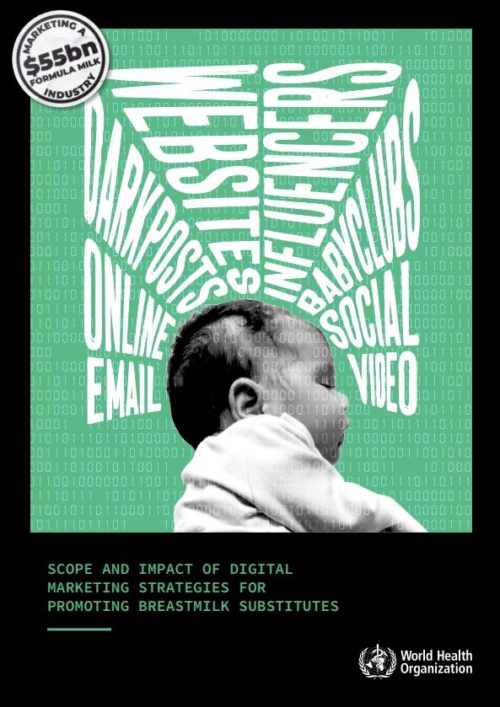
Here’s a recent report from WHO: Scope and impact of digital marketing strategies for promoting breastmilk substitutes


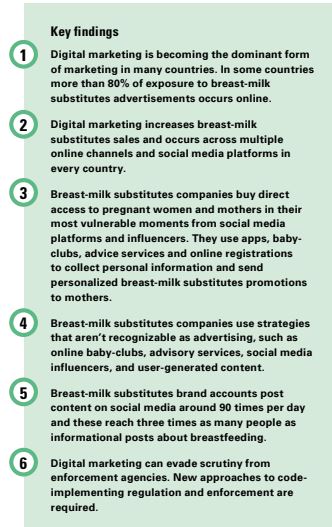
The report’s findings:

Why should we care?  Because it is so easy to discourage breastfeeding, and digital marketing does just that.

Here are some comments on this report:

And here are links to the first WHO report and to other reports on digital marketing.